The Uniform of Resilience
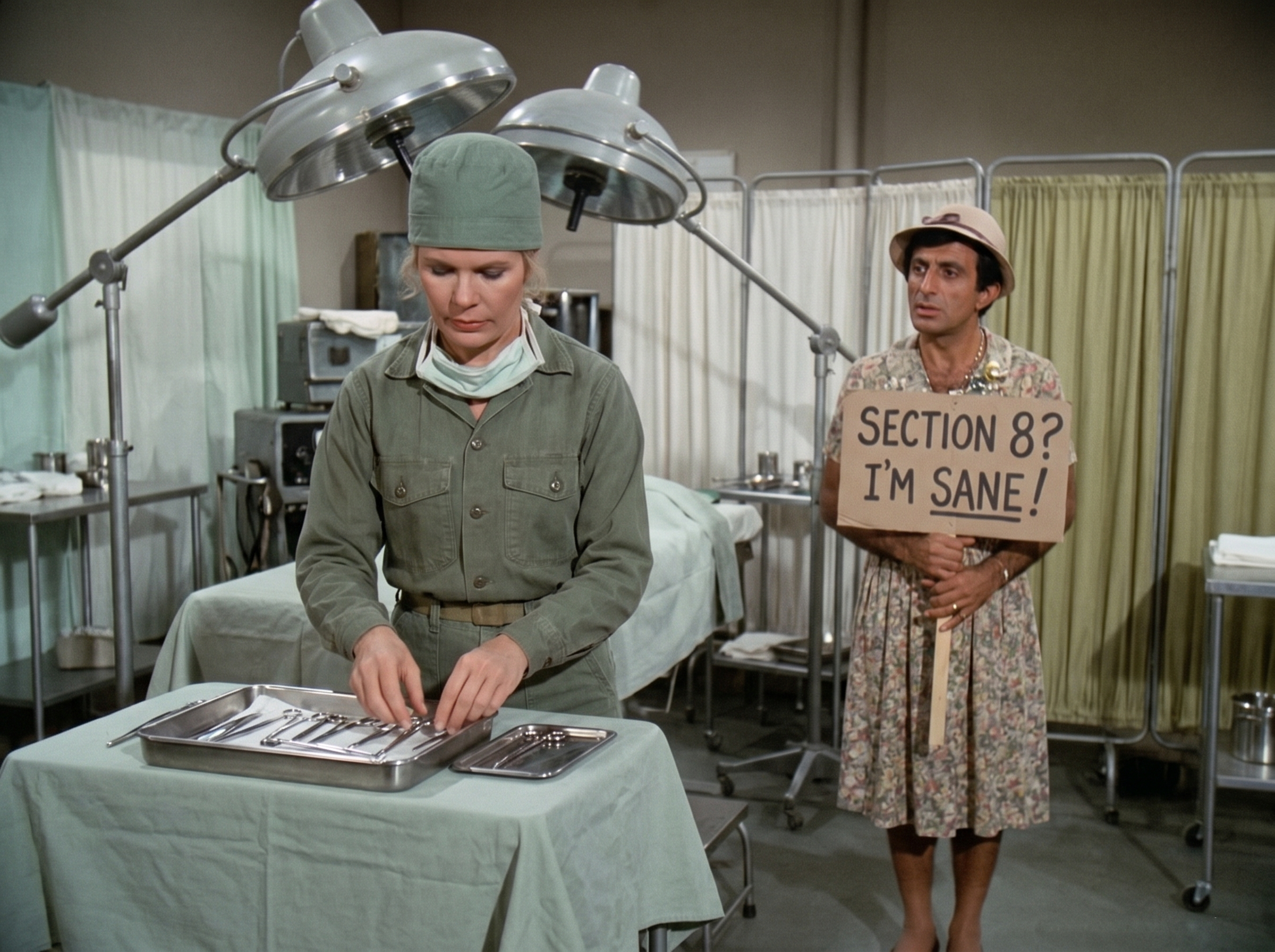
The hum of the generator was the only heartbeat the 4077th knew that night, a steady, droning reminder that we were still here, suspended in the mud of Korea between nowhere and tomorrow.
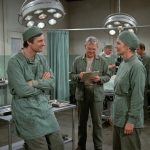
Inside Pre-Op, the air was thick with the scent of antiseptic and the quiet desperation of a long shift that had bled from twilight into the small hours of the morning.
Margaret Houlihan stood by the instrument tray, her hands moving with a mechanical, practiced precision that masked the exhaustion etched into the lines around her eyes. She was arranging forceps, her focus absolute, trying to keep the war at bay by organizing the tools of its trade.
Then, the tent flap rustled.
Max Klinger didn’t just walk into a room; he made an entrance, even if the only audience was a tired nurse and a pile of steel.
He was wearing a floral print dress that looked like it had seen better days in a suburban garden, topped with a jaunty little hat that sat precariously on his brow. But it was the cardboard sign clutched in his hands that stopped Margaret in her tracks.
“SECTION 8? I’M SANE!” it proclaimed in bold, black marker.
Margaret paused, a retractor held mid-air. She looked at the sign, then up at Klinger, whose face was a mask of theatrical indignation struggling to hide a very human vulnerability.
“Klinger,” she sighed, her voice devoid of its usual sharp edge, weary from the bone. “I don’t have time for your fashion critique or your career counseling.”
Klinger stepped closer, the floorboards creaking under his sensible heels.
“Major, look at me,” he insisted, tapping the cardboard. “I’m wearing daisies in a war zone. If I were really crazy, I’d be wearing stripes. This is a cry for help from a perfectly rational man who just wants to go home to Toledo.”
He looked past her, his eyes searching the shadows of the tent as if looking for someone to back him up. For a moment, the humor drained out of his expression, replaced by a raw, jagged loneliness that silenced the room.
Margaret gripped the edge of the metal table until her knuckles turned white, the weight of the night—and the boys on the stretchers waiting just outside—finally crashing down on her.
—
The silence stretched, tight as a suture, until it was broken by the clatter of another instrument hitting the tray.
Margaret didn’t look up immediately. She couldn’t.
If she looked at him, she knew she might cry, and the Major didn’t do tears while on duty.
“Klinger,” she whispered, her voice cracking just enough to give her away. “Do you think any of us are sane? We’re in a tent, in the middle of a conflict we don’t understand, playing God with broken bodies while the world forgets we’re here.”
She finally raised her eyes. They weren’t angry. They were just tired—profoundly, soul-wearily tired.
Klinger blinked, his shoulders slumping. The bravado, the theatrics, the stubborn insistence on his own discharge—it all withered in the face of her honesty.
He slowly lowered the sign, the cardboard bending slightly in his grip.
“I know, Major,” he said, his voice dropping from its usual register to something quiet and genuinely soft. “I just… I thought if I made you laugh, maybe for a second, you wouldn’t have to think about what’s waiting out there.”
Margaret looked at the sign again, then at the man in the floral dress.
A ghost of a smile, fragile and small, touched her lips. She reached out, not to take the sign, but to straighten the lapel of his dress, a motherly, instinctual gesture of care.
“You’re a pain in the neck, Corporal,” she said, her tone softening into a reluctant, deep-seated affection. “But you’re our pain in the neck. And you’re right. I did need a distraction.”
Klinger straightened up, pulling his hat back into place with a tentative sense of dignity.
“I’ve got a silk scarf in my locker that would go great with your fatigues, Ma’am,” he offered, a small, genuine grin returning to his face. “Just to brighten up the place.”
“Don’t push your luck,” she countered, turning back to her instruments, but her movements were less jagged now, smoother, guided by the quiet connection they had just shared in the dim light.
They stood there for a few more seconds, two people from different worlds, both wearing masks of one kind or another, finding a rare moment of equilibrium amidst the chaos.
There were no easy answers, no discharges waiting for Klinger, and no end in sight for the war, but the crushing weight of the isolation had lifted, just a fraction.
As the call came for the next patient, they both turned toward the tent flap, ready to face whatever the night demanded, side by side.
Sometimes, all it takes to survive the madness is a friend who knows how to wear it well.