The Weight of the Clipboard
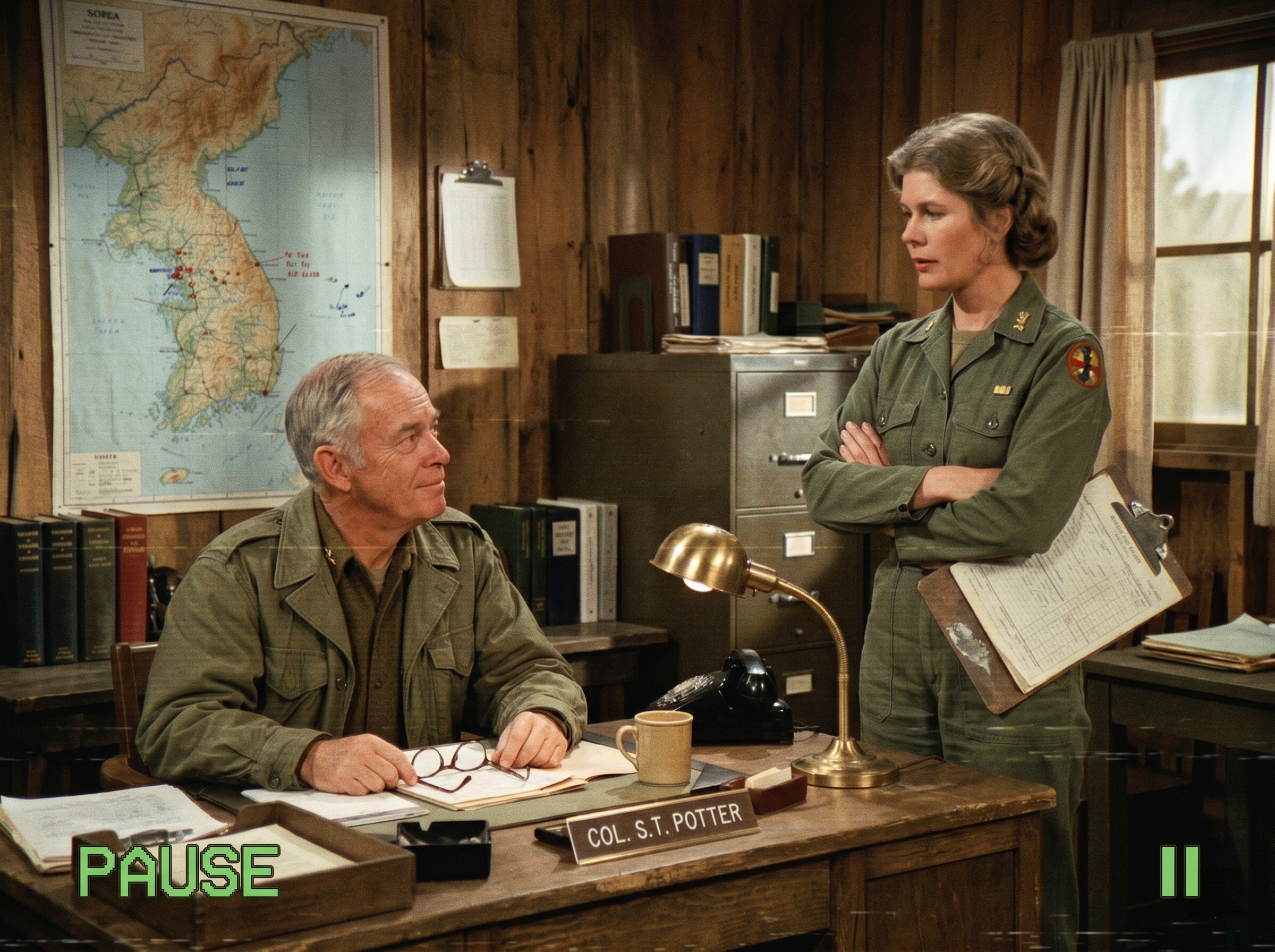
The silence that descended on the 4077th after a grueling marathon in the Operating Room was never truly silent. It was a heavy, ringing quiet. It was the sound of freezing wind rattling the thin wooden walls of the compound, the distant, rhythmic hum of the diesel generators, and the phantom echo of clattering surgical instruments still playing on a loop in a tired mind.
Inside the commanding officer’s office, the air was thick with the smell of stale coffee, old canvas, and the sharp tang of antiseptic that never quite washed out of their clothes.
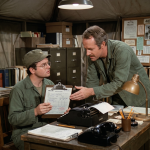
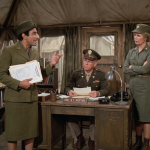
Colonel Sherman T. Potter sat behind his simple wooden military desk. He was a man who had spent a lifetime in uniform, an old cavalryman who had traded a horse for a Jeep, and a doctor who had seen more broken boys than any man ever should.
The small brass desk lamp cast a localized, warm glow over the mountains of endless army paperwork. Next to the lamp sat a heavy black rotary phone, silent for the moment, and a wooden nameplate that read: COL. S.T. POTTER.
Potter rested his hands near his reading glasses on the desk. He leaned forward slightly, his posture projecting the quiet, steady authority of a man who held the entire camp together through sheer force of will.
The door opened with a soft, familiar creak.
Major Margaret Houlihan stepped into the room. She didn’t announce herself with her usual crisp, parade-ground bark. She simply stepped inside and closed the door behind her, shutting out the biting Korean cold.
Margaret stood before the desk in her standard-issue green fatigues. The fabric was worn and lived-in, bearing the invisible stains of a thirty-six-hour surgical shift. On her left shoulder, the distinctive patch of her unit stood out against the drab olive green.
She stood upright, her posture undeniably military, but her arms were folded tightly across her chest in a deeply protective gesture. Tucked against her body was a battered wooden clipboard holding a single medical chart.
Potter looked up. His face, etched with lines of age and exhaustion, softened instantly. He looked at her with a stern but deeply loving expression, his eyes filled with a gentle, fatherly pride.
She looked incredibly capable and impossibly sharp. Yet, beneath that perfect, iron-willed composure, Potter could clearly see the raw, frayed edges of vulnerability.
“It’s late, Major,” Potter said, his voice a low, gravelly rumble that somehow always made the room feel a little warmer. “The choppers are grounded until sunrise. You should be in your tent.”
Margaret didn’t move. She stared at the large map of the Korean peninsula pinned to the wooden planks behind him. She traced the shifting, bloody battle lines with her tired eyes.
“It’s Private Miller, Colonel,” she said. Her voice was unusually tight, stripped of its normal commanding volume.
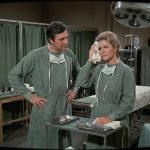
Miller was the nineteen-year-old kid from the last wave of casualties. He had arrived with a devastating chest wound. They had spent four agonizing hours elbow-deep in the boy’s chest, with Hawkeye making desperate jokes that didn’t land and B.J. working in grim, breathless silence.
Margaret gripped the clipboard tighter. Her knuckles turned white. Her perfectly braided hair framed a face that was suddenly struggling to maintain its professional mask.
“I just finished my final rounds in post-op,” she continued, her breathing growing shallow. “I was checking his chart. I…”
She stopped. The silence in the office stretched out, heavy and suffocating.
The Head Nurse of the 4077th, the woman who commanded respect from every doctor and corpsman in the camp, swallowed hard. Her eyes glistened in the soft lamplight.
“Colonel,” Margaret whispered, her voice finally cracking under the immense weight of the past two days. “I…”
Potter didn’t leap to his feet. He didn’t reach for the phone or sound an alarm. He simply sat there, radiating the steady, grounding calm of an old oak tree in a storm.
He had seen that look a thousand times before. He knew the profound difference between the panic of a crashing patient and the sudden, overwhelming emotional crash of a caregiver’s adrenaline.
“Take your time, Margaret,” Potter said gently. He didn’t use her rank. In this small, dimly lit room, there were no majors or colonels. There were just two very tired doctors trying to survive the long night.
Margaret closed her eyes for a brief second. When she opened them, a single tear threatened to spill, but she held it back with sheer, practiced willpower.
“His fever broke,” she breathed out, the words tumbling rapidly from her lips as if she were afraid they might suddenly become untrue. “His vitals stabilized twenty minutes ago. The bleeding has completely stopped. He actually woke up, Colonel. He asked me for a glass of water.”
The unbearable tension that had been filling the wooden office suddenly vanished, evaporating into the chilled night air.
Potter smiled. It wasn’t a wide, boisterous grin. It was a quiet, profound turning up of the corners of his mouth. It was a smile born of deep relief and a shared, quiet victory.
“He’s a tough kid from Ohio,” Potter said softly. “Farm boy. They don’t give up the ghost that easy.”
Margaret let out a long, shaky exhale. She uncrossed her arms just slightly, letting the heavy clipboard rest against her hip. The sharp, demanding, regulations-obsessed officer melted away, leaving only a deeply tired, profoundly caring woman.
“I really thought we had lost him on the table,” she confessed, her voice dropping to a vulnerable whisper. “When Pierce couldn’t find the bleeder, and the pressure kept dropping… I was looking at his face beneath the surgical drapes. He looked so terribly young. He looked exactly like my younger brother.”
Potter nodded slowly in understanding. He picked up his reading glasses and turned them over thoughtfully in his weathered hands.
“That’s the ultimate trap of this miserable place, Margaret,” Potter said, leaning back in his chair. “You stand over those tables long enough, and you start seeing brothers, sons, and nephews staring back at you. It’s exactly what makes you such a brilliant, dedicated nurse. But it’s also what makes this job feel like trying to carry a mountain on your back.”
Margaret looked at him, her eyes shining with unshed emotion. The soft, practical light from the desk lamp illuminated the deep exhaustion lining her face, but it also highlighted her remarkable, unbreakable spirit.
“How do you do it, Colonel?” she asked earnestly. “How do you keep doing this, war after war? How do you carry that mountain and not just let it crush you?”
Potter looked past her, gazing at the empty, dark compound visible through the small window. He was quiet for a long moment.
“You think I don’t feel the weight?” he asked softly, returning his gaze to her. “Margaret, I feel it every single time I hear those chopper blades thumping over the ridge. Every time.”
He gestured toward her with his glasses.
“But then I walk into that OR,” Potter continued, his voice thick with quiet emotion. “And I see you standing there. I see Pierce and Hunnicutt working miracles out of meatball surgery. I see Father Mulcahy holding a boy’s hand, and Radar anticipating needs before they are spoken. I see a family of people who utterly refuse to let the madness of this war win.”
Margaret listened, her breath catching softly in her throat.
“You put the pieces back together, Margaret,” Potter said, leaning forward to meet her eyes. “And not just the broken boys on those tables. You put the rest of us back together, too. Your strength keeps this camp from falling apart.”
Margaret stood a little taller. The words landed exactly where they needed to, soothing a deep bruise she hadn’t realized she was carrying.
She took a slow, deep breath. The familiar, rigid steel returned to her spine, but this time, it was beautifully tempered with a profound, quiet warmth. She was capable. She was sharp. And in this small wooden office, she was perfectly safe to be human.
“Thank you, Colonel,” she said, her voice steady and quiet.
“Don’t mention it,” Potter replied, reaching for the lukewarm mug of coffee on his desk. “Now, get out of my office. Go to your tent and get some sleep. That is a direct order, Major.”
“Yes, sir,” she said. A faint, genuine smile finally broke through her composed expression.
She turned and walked gracefully toward the door. Just before she stepped out into the freezing Korean night, she paused and glanced back at the aging cavalryman sitting alone at his desk. He was a father figure guarding the quiet night, watching over his flock.
“Goodnight, Sherman,” she said softly.
“Goodnight, Margaret.”
The wooden door clicked shut. Colonel Potter picked up his pen, looked once more at the map of a country torn in two, and quietly went back to work.
Because in a place surrounded by war, the strongest medicine they ever had was each other.