The Unofficial O.R. Inventory and a Stitch of Grace
The smell of antiseptic and boiled coffee always lingered in the post-op ward, a stark reminder that the 4077th never truly slept. After a grueling sixteen-hour session in the operating room, the silence of the morning felt less like peace and more like a collective exhale.
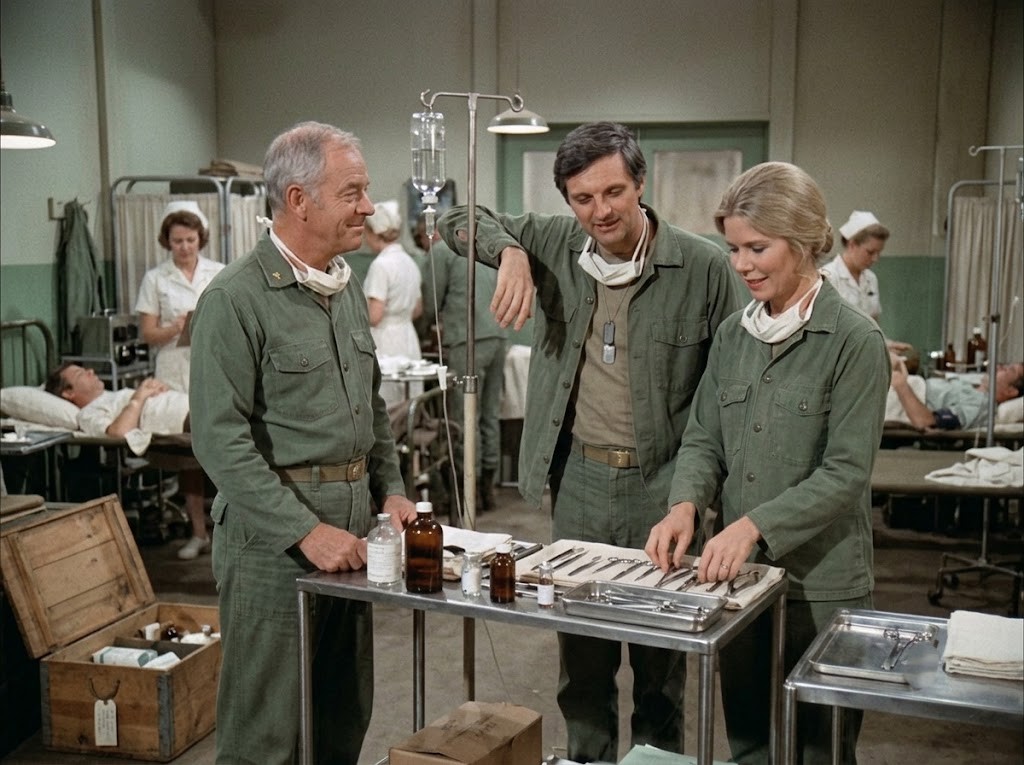
Colonel Potter stood by the metal supply table, his hands resting on his hips, his seasoned eyes scanning the room with a fatherly, albeit exhausted, vigilance. His surgical mask hung loosely around his neck, a white cotton collar of survival.
Next to him, Hawkeye leaned heavily against an IV stand, his posture a masterclass in controlled collapse. A weary, lopsided smile tugged at the corner of his mouth as he looked down at Margaret, who was meticulously counting surgical scissors and hemostats.
“You know, Margaret, if you count those forceps a third time, they might just multiply,” Hawkeye quipped, his voice a gravelly whisper meant to cut through the exhaustion. “And frankly, I don’t think the camp has the formula to feed a litter of baby surgical instruments.”
Margaret didn’t lift her head, though her lips twitched into a rare, quiet smile. Her fingers softly adjusted a pair of scissors on the towel, ensuring they lined up with military precision.
“Someone has to keep track of the inventory, Pierce, especially when certain doctors treat the supply room like a souvenir shop,” she countered smoothly. Her voice lacked its usual sharp command, softened by the shared trials of the long night they had just left behind.
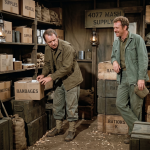
In the background, nurses moved quietly between the cots, checking charts and adjusting blankets for the sleeping soldiers. A wooden supply crate sat open on the floor, its contents offering a small glimpse of the constant, unglamorous upkeep required to keep their piece of the world spinning.
Colonel Potter watched the two of them, a soft, knowing look on his face. He had seen this dance a hundred times—the way they used small, trivial tasks and dry banter to tether themselves back to reality after looking into the abyss of the operating room.
“We did good work tonight, people,” Potter said quietly, his voice steadying the room like an anchor. “But the supply lines from Seoul are delayed again. We are down to our last two bottles of localized anesthetic on that table.”
Hawkeye’s smile faded just a fraction, the reality of their isolation creeping back in. He shifted his weight on the IV pole, looking toward the door of the ward as the distant sound of an approaching jeep began to rumble through the floorboards.
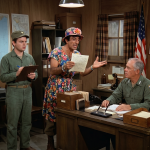
Suddenly, the door swung open, and Radar burst in, his oversized cap slightly askew and his face pale, holding a clipboard tightly against his chest. “Colonel! Major! We’ve got a problem with the morning casualty report, and… and you need to see this right now.”
Colonel Potter’s brow furrowed as he stepped forward, his paternal instincts instantly taking over. “Take a breath, Radar. What is it? Speak English, son.”
Radar swallowed hard, looking between the Colonel, Hawkeye, and Margaret. “The jeep that just arrived… it’s not a new patient. It’s an old one. Corporal Danny Miller. The kid you operated on three days ago, the one we sent down to the evac hospital in Seoul.”
Margaret froze, her hand hovering over a row of gleaming silver instruments. “Miller? His vitals were perfectly stable when we cleared him for transport. What happened?”
“He didn’t make it to Seoul, Major,” Radar said, his voice dropping to an earnest, trembling whisper. “The transport vehicle hit a bad ditch near the crossroads. The driver says the sudden jolt ruptured the internal arterial sutures. He’s out in the jeep right now, bleeding out, and the driver says he’s slipping away fast.”
The exhaustion that had weighed so heavily on Hawkeye’s shoulders vanished in an instant. He straightened up, the cynical wit completely gone, replaced by the fierce, protective instinct of a man who refused to let the war win another round.
“We don’t have time to get him back into the O.R. scrubbed and prepped,” Hawkeye said, his eyes locking onto Potter’s. “We have to do it right here, right now, on the post-op table.”
“Pierce, we’re out of sterile drapes here, and the localized anesthetic is practically gone,” Margaret warned, though she was already clearing the metal table with practiced, lightning-fast efficiency, moving the bottles and trays to make room. “It’s a massive infection risk.”
“We’ve fought bugs before, Margaret. Right now, we’re fighting time,” Potter barked, his voice commanding and resolute. “Radar, get B.J. and Father Mulcahy in here. Tell Klinger to bring every clean sheet he can find. Margaret, prep the instruments on that table. Pierce, you’re with me.”
Within minutes, the post-op ward transformed from a quiet sanctuary into a battlefield of its own. The young soldier was carried in, his face ghostly pale, his breathing shallow.
There were no bright overhead surgical lamps, no pristine environment—just the raw, human determination of a found family refusing to give up on a boy who was miles away from his own home.
Hawkeye worked with a quiet, intense focus, his hands steady despite the hours of fatigue. Margaret stood right beside him, anticipating his every move, placing the exact instrument he needed into his palm before he could even ask for it.
B.J. arrived moments later, immediately stepping in to manage the blood transfusion, his calm presence keeping the frantic energy of the room grounded. Father Mulcahy stood at the head of the cot, softly reciting a prayer, his gentle voice acting as a soothing counterpoint to the sharp clinking of metal tools.
“Hold that clamp, Margaret,” Hawkeye muttered, sweat breaking out on his forehead. “Just a little further… B.J., how’s his pressure?”
“Low, Hawk. Very low. Keep going,” B.J. urged quietly.
For twenty tense, breathless minutes, the only sounds in the ward were the clinking of instruments, the soft murmurs of prayer, and the steady, rhythmic breathing of Colonel Potter as he guided Hawkeye’s hands through the delicate repair.
Then, with a final, precise movement, Hawkeye tied off the deep suture. He stepped back, his chest heaving, his eyes fixed on the patient’s monitor.
The young soldier’s breathing gradually shifted from a ragged gasp to a deep, even rhythm. The color began to creep back into his cheeks.
“He’s stable,” B.J. announced, a collective, exhausted sigh washing over the entire room.
Colonel Potter placed a firm, warm hand on Hawkeye’s shoulder, giving it a gentle squeeze. “Good work, son. Heck of a piece of stitching.”
Hawkeye looked down at his hands, then looked over at Margaret, who was already calmly wiping down the instruments once again, her professional composure fully restored. A slow, tired, but deeply affectionate smile returned to Hawkeye’s face.
Leaning back against the very same IV stand from earlier, he looked at the family around him—the doctors, the nurses, the priest, and the farm boy from Iowa—all bound together by a thread of shared humanity in the middle of nowhere.
“You know, Margaret,” Hawkeye said softly, his voice rich with affection, “I think we’re still missing one pair of forceps. But I’ll let it slide if you promise to buy me a drink at the Swamp.”
Margaret looked up, her expression filled with a quiet, beautiful tenderness. “It’s a deal, Hawkeye. But you’re paying.”
In a place where life was measured in seconds, it was the quiet, unspoken love between friends that kept the clock ticking.