The King of Toledo
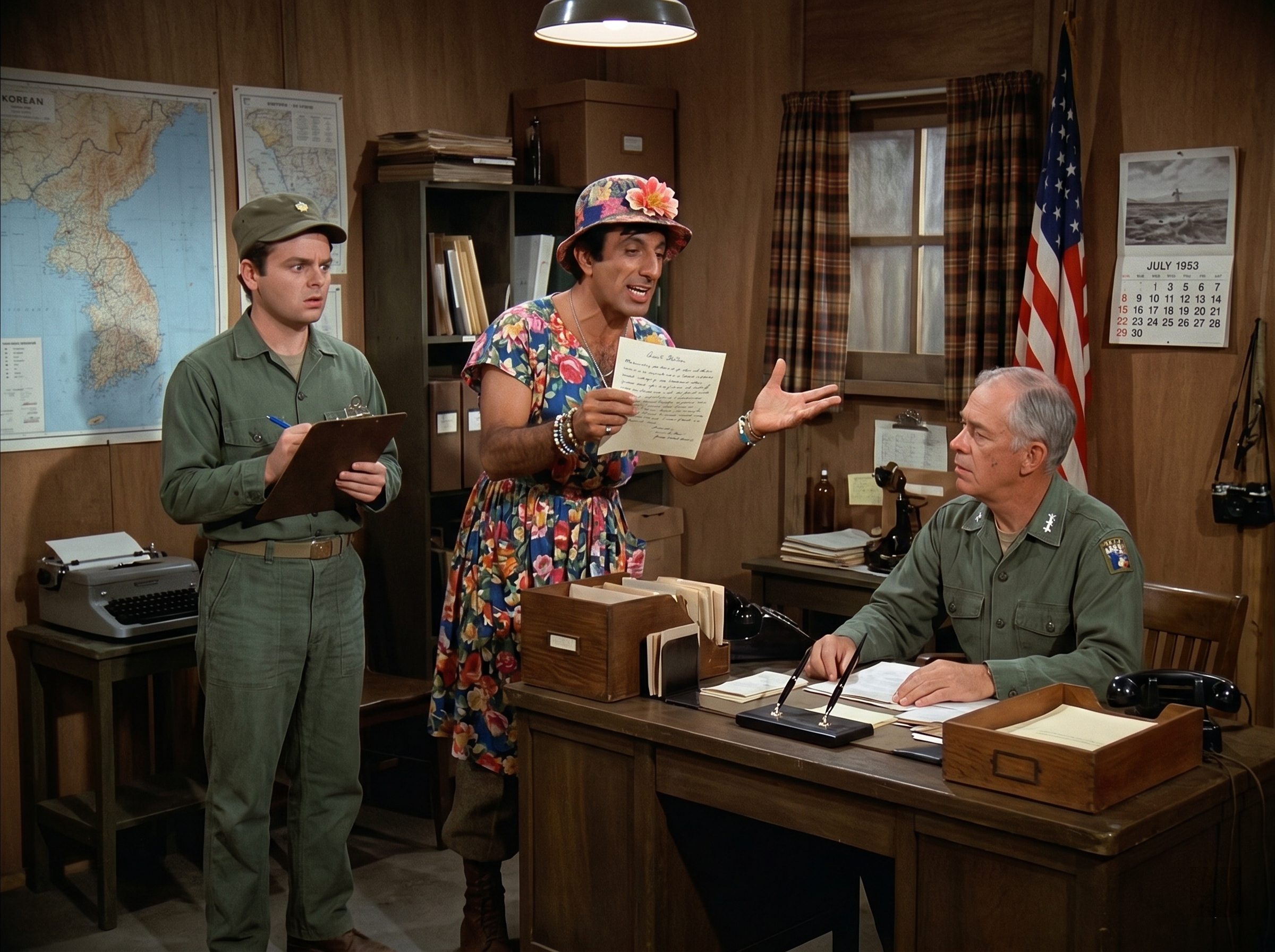
The war always had a funny way of standing perfectly still just before Maxwell Q. Klinger walked into a room.
It was a quiet Tuesday afternoon at the 4077th. The kind of rare, golden afternoon where the choppers stayed away, the dust settled, and the camp held its collective breath.
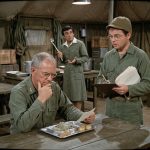
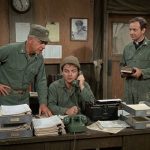
Inside the commanding officer’s office, the air was warm and heavy. Colonel Sherman T. Potter sat behind his modest wooden desk, surrounded by the usual clutter of a mobile army hospital. Stacks of requisition forms, a battered field phone, and neatly stacked filing boxes framed his weary silhouette.
Potter leaned slightly forward, resting his elbows on the desk. His hands were clasped together, his face a perfect portrait of weary wisdom and fatherly exasperation.
Standing dead center in front of the desk was Klinger.
He wasn’t wearing his usual array of velvet gowns or feathered hats today. He was in standard, wrinkled olive drab. But what he lacked in chiffon, he more than made up for in sheer, theatrical presentation.
Klinger stood with his chest puffed out, one arm sweeping grandly through the air as if he were addressing the Roman Senate rather than a tired cavalry officer in South Korea. His face was lit up with comic pride, completely absorbed in the absolute certainty of his latest scheme.
Slightly to the side, hovering near the filing cabinets, stood Radar O’Reilly.
Radar clutched his trademark clipboard tightly against his chest like a wooden shield. His eyes were wide with nervous confusion, darting back and forth between Klinger’s grand gestures and Colonel Potter’s unblinking stare.
“And so, Colonel, as the documents clearly state,” Klinger proclaimed, his voice echoing off the thin canvas walls. “I am not, in fact, an American corporal subject to the draft. I am the sole surviving heir to the ancient, sovereign Kingdom of the Antioch Basin!”
Potter didn’t move. He didn’t blink.
“Therefore,” Klinger continued, striking a triumphant pose, “holding me in this terrible place is a direct violation of international treaty. I demand to be repatriated to my royal homeland. Or, failing that, to my aunt’s apartment in Toledo, which serves as the monarchy’s government-in-exile.”
Radar swallowed hard. The sound was audible in the quiet room.
“Uh, sir?” Radar squeaked, holding out a badly crumpled piece of paper covered in crayon seals and mismatched stamps from the mess tent. “He, um… he gave me this. It has a wax seal on it, Colonel. I think it’s from a wheel of Edam cheese.”
Potter slowly reached out and took the paper from Radar.
He adjusted his glasses, lowered his eyes, and began to read the “royal decree.” The silence in the office stretched out, thick and heavy.
Klinger held his breath, his proud posture trembling just a little at the edges. Radar looked absolutely terrified, waiting for the inevitable explosion that would surely blow the roof right off the office.
Potter let out a long, slow sigh that seemed to carry the weight of the entire war. He took off his glasses, folded them carefully on the desk, and looked up at his corporal.
“Klinger,” Potter said, his voice dropping to a dangerously quiet rumble. “I have seen a lot of things in my time in this man’s army…”
“…I have seen men try to ride horses backward. I have seen a private try to convince a general he was legally a duck,” Potter continued, his voice steady and dry. “But this? This is a new frontier of horse hockey.”
Klinger’s grand posture instantly deflated. His shoulders slumped, and the royal heir to the Antioch Basin vanished, leaving behind only a very tired, very homesick kid from Ohio.
“It’s legally binding, sir,” Klinger tried, though his voice had lost its theatrical boom. It was barely a whisper now. “I used the good cheese for the seal.”
Potter leaned back in his chair, the wood groaning in protest. He looked at Klinger, really looked at him.
Beneath the comic pride and the ridiculous story, Potter saw the dark circles under the corporal’s eyes. He saw the faint tremor in Klinger’s hands, hidden half-heartedly behind his back.
It had been a brutal week at the 4077th. Three days of non-stop wounded, endless hours in the freezing compound, and a lingering sense of despair that seemed to seep into the canvas of the tents. Klinger hadn’t slept in days. None of them had.
The ridiculous schemes weren’t just about getting out of the army anymore. They were a survival mechanism. They were Klinger’s way of keeping his mind anchored to a world that made sense, a world far away from the blood and the mud of Korea.
“Radar,” Potter said softly, his eyes never leaving Klinger.
“Yes, sir?” Radar answered, standing at rigid attention.
“Take this royal decree,” Potter instructed, handing the cheese-stained paper back to his clerk. “And file it under ‘B’ for ‘Bologna’.”
“Yes, sir. Right away, sir.” Radar took the paper, his nervous confusion melting into a small, relieved smile. He gave Klinger a sympathetic look before quietly stepping back toward the door.
Potter stood up slowly, his joints popping. He walked around the modest wooden desk and stood in front of Klinger.
Klinger braced himself, expecting the usual chewing out. He expected extra guard duty, or latrine duty, or a loud lecture about the dignity of the United States Army.
Instead, Potter reached out and gently placed a firm, fatherly hand on Klinger’s shoulder.
“Son,” Potter said, his voice stripped of all military authority, leaving only the warmth of a man who understood exactly how much it hurt to be far from home. “I know it’s hard. I know you’re tired. We’re all tired.”
Klinger looked down at his boots. “I just wanted to smell the Maumee River again, Colonel. Even when it stinks, it smells like home. I just… I can’t be a soldier today, sir. I just can’t.”
The honesty in the room was sudden and heartbreaking. The comedy had completely stripped away, leaving the raw, tender humanity of the 4077th exposed.
“Nobody is asking you to be a soldier today, Klinger,” Potter said quietly. “I’m just asking you to be here. With us. We need you.”
Klinger looked up, his dark eyes shining with unshed tears. He swallowed hard and nodded slowly.
“Tell you what,” Potter said, giving Klinger’s shoulder a reassuring squeeze. “The Kingdom of the Antioch Basin doesn’t exist. But… I happen to know there’s a fresh pot of coffee in the mess tent that tastes almost exactly like mud. And I think the royal family is entitled to at least two hours of uninterrupted sleep in the supply room.”
A small, genuine smile broke through the exhaustion on Klinger’s face. “Two hours, sir?”
“By royal decree,” Potter smiled back, his eyes crinkling at the corners.
Radar, still standing near the door, couldn’t help but beam. He clutched his clipboard, feeling that familiar, comforting warmth spread through his chest. They were a strange, broken family, but they were a family.
“Go on now,” Potter waved his hand gently. “Get some rest, your majesty.”
“Thank you, Colonel,” Klinger said softly. He didn’t salute. He just offered a grateful nod, turned, and walked out of the office with a little more dignity than he had walked in with.
Potter watched him go, a fond, bittersweet smile lingering on his lips. He walked back to his desk, sat down heavily, and picked up a requisition form.
“Alright, Radar,” Potter sighed, reaching for his pen. “Let’s get back to the real war.”
“Yes, sir,” Radar smiled, stepping up to the desk. “Though, if you ask me, sir… I think he would have made a pretty good king.”
Potter chuckled softly, the sound warming the small, cluttered room. “Maybe so, son. Maybe so.”
In a place where the world felt entirely broken, they survived by holding onto the only thing that made sense: each other.