A Quiet Walk Through the 4077th
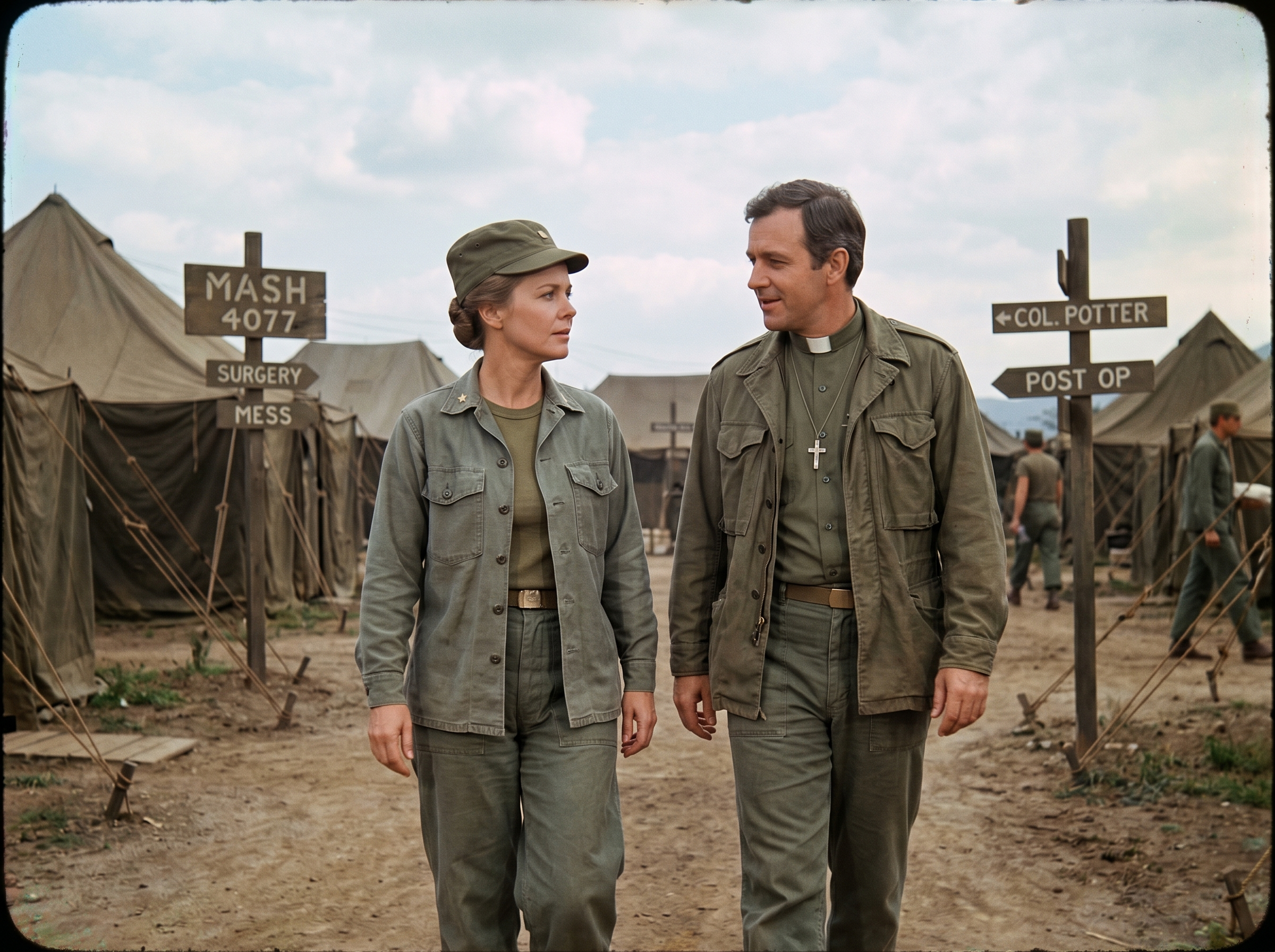
The mud of Korea has a way of clinging to you, both to your boots and to your spirit. It was one of those rare, breathless afternoons at the 4077th where the chopper blades weren’t thumping overhead and the PA system wasn’t screeching out the day’s menu of creamed corn or Spam surprise.
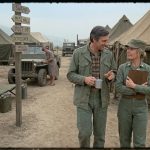
Major Margaret Houlihan and Father Mulcahy were crossing the compound, their footsteps rhythmic against the dry, packed earth. Margaret had her hands tucked firmly into her pockets, her cap pulled low—the look of a woman who had spent twelve hours in OR and was currently trying to convince her shoulders to stop hugging her ears.
Mulcahy walked beside her, his habitual gentle smile softened by a lingering exhaustion. He was likely headed toward Colonel Potter’s tent, perhaps to discuss the dwindling supply of altar wine or to barter for a few crates of medical supplies he needed for the local orphanage.
They fell into an easy, companionable silence. It was the kind of quiet that only develops after months of shared trauma and endless cups of lukewarm coffee.
“You know, Margaret,” the Father said, his voice barely rising above the distant rustle of the wind against the canvas tents, “you really ought to sit down for a while. Even the Energizer Bunny of the 4077th needs a recharge.”
Margaret glanced at him, her eyes tired but sharp, a small, wry smirk playing on her lips. She opened her mouth to deliver a classic, sharp-tongued retort about nurses having work to do while chaplains enjoyed the luxury of contemplation.
But as she turned to face him, her expression caught on something—a sudden, sharp wince of pain that flashed across the Father’s face. He stumbled, just a fraction, his hand reaching instinctively for his side. He tried to hide it, shifting his weight and readjusting his cross, but the sharp, pale look of alarm he couldn’t quite mask told a different story.
Margaret stopped dead in her tracks, her professional instincts overriding her fatigue instantly. She reached out, her hand hovering near his arm, her eyes scanning his face with a mixture of confusion and genuine, mounting fear.
“Father?” she asked, her voice dropping into a register of pure, unguarded concern. “What just happened? Don’t you dare lie to me.”
Mulcahy let out a long, shaky breath, leaning slightly against a tent pole as he tried to regain his composure. “It’s nothing, Margaret, honestly. Just a—a bit of a stitch in my side. I believe I may have been too enthusiastic during my morning exercise routine.”
Margaret didn’t buy it for a second. She stepped closer, her posture shifting from that of a military officer to that of a woman who had seen enough sudden collapses to know the difference between a stitch and something more serious.
“Father John Patrick Francis Mulcahy, if you are having a cardiac event, I am going to be extremely annoyed with you,” she said, her voice trembling just enough to betray how much she truly cared. “Now, stand still. Let me see your color.”
She reached out, gently but firmly adjusting the collar of his shirt, her eyes searching his for any sign of dizziness or distress. The Father sighed, his shoulders slumping. He looked up at her, and for a moment, the roles they usually played—the tough-as-nails head nurse and the perpetually patient chaplain—melted away. There was only two people, a world away from home, looking out for one another in a place that didn’t specialize in mercy.
“I haven’t been sleeping well,” he confessed, his voice barely a whisper. “I keep thinking of the boys we saw this morning. Sometimes, I wonder if the prayers reach them, Margaret. I wonder if I’m doing enough.”
The tension in Margaret’s chest snapped. It wasn’t a medical emergency; it was a crisis of faith, the kind that hit the best of them in the quiet hours. She let out a breath she hadn’t realized she was holding and took his hand, giving it a firm, steady squeeze.
“Father, look at me,” she said, her voice soft but authoritative. “You are the only thing holding this place together half the time. You’re the one who keeps us sane. If you’re tired, you have the right to be tired. We all are.”
He looked at her, truly looked at her, and saw the weariness in her own eyes—the subtle crinkles that hadn’t been there when she first arrived, the weight of a dozen wars on her young shoulders. A faint, genuine smile returned to his lips. “I suppose you’re right. Though, I don’t think I’ve ever been diagnosed by a Major before.”
“Well,” she said, pulling him gently toward the Mess tent, “there’s a first time for everything. I’m prescribing you a seat in the shade, a cup of coffee that actually tastes like coffee, and five minutes where you don’t have to save anyone’s soul but your own.”
He chuckled, the sound light and airy, cutting through the heavy atmosphere of the camp. They started walking again, the distance between them just a fraction smaller than it had been a moment before.
They passed the signpost, the arrows pointing toward home, toward surgery, toward the Colonel. They were just two small figures in a sprawling, chaotic camp, but in that moment, the world felt a little less vast and a little less lonely. They reached the edge of the mess tent, the smell of burnt toast and pine wafting out to meet them, and for the first time that day, the fatigue felt manageable. They weren’t just soldiers; they were friends, and for now, that was enough.
In the heart of the 4077th, the greatest mercy was simply knowing you weren’t walking through the mud alone.