The Quiet Hours in Post-Op
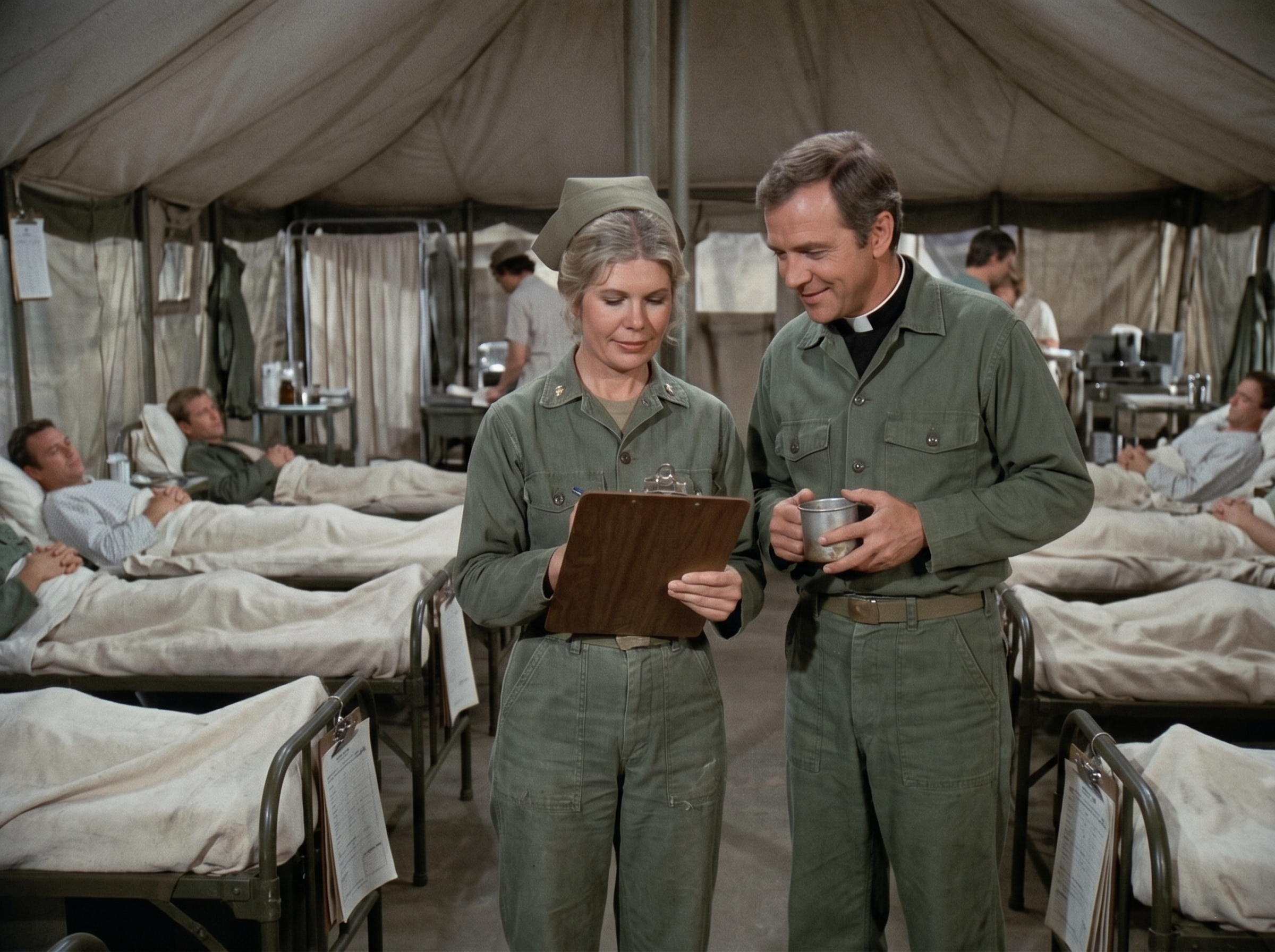
The hardest part of the war was never the chaotic noise of the operating room. It was the heavy, echoing silence of Post-Op at four in the morning.
The 4077th had just survived another brutal, eighteen-hour marathon of meatball surgery. The choppers had finally stopped coming. The blood had been scrubbed from the floorboards. Now, there was only the canvas tent breathing in the cold Korean wind, and the uneven, ragged breathing of three dozen heavily bandaged boys.
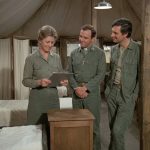
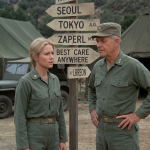
Major Margaret Houlihan walked quietly down the center aisle.
Even in the dead of night, after standing on her feet for nearly a full day, her posture was perfect. Her green fatigue uniform was remarkably neat. Her blonde hair remained tucked firmly beneath her nurse’s cap. To the doctors, she was the strict, by-the-book disciplinarian. To the nurses, she was the demanding commanding officer who expected nothing less than perfection.
But here, in the dim, soft light of the recovery ward, the brass was stripped away.
She paused at the foot of an iron cot halfway down the row. She picked up the brown wooden clipboard hanging from the rail. The paper was rough, filled with the hurried, exhausted scrawl of Captain Pierce.
The boy in the bed couldn’t have been more than nineteen. He was swathed in muted white blankets, his pale face barely visible against the pillow. He had taken shrapnel to the chest. For three hours on the table, it had been a terrible, agonizing coin toss whether he would ever see Ohio again.
Margaret stared down at the medical chart, her thumb tracing the edge of the paper. Her eyes were burning with fatigue. Her shoulders ached with a dull, familiar throbbing. She was trying so hard to hold her invisible armor together, but the sheer, relentless weight of the war was pushing her toward the edge.
A few feet away, Father Francis Mulcahy slipped quietly through the canvas partition.
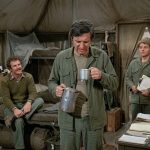
He moved like a shadow in his faded green shirt and white clerical collar, careful not to wake the sleeping soldiers. In his hands, he held a small, dented aluminum camp cup, its sides radiating a faint, comforting heat.
He stopped when he saw Margaret.
Usually, the Major moved through Post-Op with crisp, efficient purpose, checking IV drips and vital signs with military precision. But right now, she was entirely still.
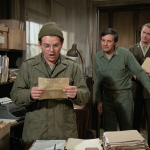
Margaret’s eyes were locked on a small, folded piece of paper tucked behind the official medical chart. Her face, usually set in lines of rigid authority, had suddenly dropped its guard.
Father Mulcahy watched her knuckles turn white as she gripped the clipboard. He saw a sudden, sharp intake of breath lift her shoulders. She bit her lower lip, her eyes shining in the low light.
The iron-willed Head Nurse of the 4077th looked as though she was about to shatter right there in the middle of the ward.
Mulcahy stepped forward quickly, his heart aching with genuine concern. “Margaret?” he whispered softly, afraid of what she had just found.
Margaret didn’t look up immediately. She kept her eyes fixed on the clipboard, but at the sound of the priest’s voice, she let out a long, slow, trembling exhale.
“Father,” she whispered back, her voice thick but remarkably steady.
Mulcahy moved to her side, leaning in close so as not to disturb the sleeping boys. He glanced down at the young soldier in the cot, checking for the steady rise and fall of the boy’s chest beneath the pale blankets. The breathing was slow, but deep and rhythmic.
“Is he alright?” Mulcahy asked, his voice filled with that gentle, familiar cadence of quiet bravery.
“He’s fine,” Margaret said softly. “His fever broke about an hour ago. Captain Pierce did… well, he did good work.”
Mulcahy let out a breath of relief. But he kept his eyes on Margaret. “Then what is it, my dear? You looked a million miles away. And quite distressed, if I may say so.”
Margaret finally looked up. The harsh lines of her command persona were entirely gone. Instead, her expression was incredibly composed, yet radiating a profound, hidden warmth. Her eyes were bright, shimmering with unshed tears that had nothing to do with sorrow.
She tilted the clipboard slightly toward him.
“It’s this,” she said, her voice dropping to a tender murmur.
Mulcahy leaned in compassionately. Tucked beneath Hawkeye’s messy surgical notes was a piece of cheap, lined stationary. It was stained with a thumbprint of iodine and folded in half. On the outside, written in shaky, barely legible cursive, were the words: For the blonde Major.
“He made one of the corpsmen write it down for him right after he woke up in recovery,” Margaret explained, a very subtle, soft smile touching the corners of her mouth. “Before the morphine put him back under.”
Mulcahy smiled his gentle, hopeful smile and looked at her. “May I ask what it says?”
Margaret looked back down at the paper. “It says… ‘Ma’am, I was real scared. But you held my hand when they put me to sleep. You smell like my mom’s fancy soap. Thank you for not letting me die.’“
A deep, profound silence settled between them, heavier and sweeter than the fatigue in their bones.
Mulcahy looked at Margaret. He saw the fierce, maternal love she harbored for every single wounded kid that passed through her doors—a love she disguised as strict discipline because she knew, if she didn’t, the grief of losing them would tear her apart entirely.
“They notice, Margaret,” Mulcahy said softly, his voice full of deep reverence. “They notice the grace you bring to this awful place. Even when you think they don’t.”
Margaret took a deep breath, visibly pulling her professional composure back around her shoulders like a warm shawl. But the tenderness remained in her eyes. She carefully tucked the note back behind the medical chart, making sure it wouldn’t get lost in the shuffle of paperwork.
“They’re just babies, Father,” she whispered, her voice carrying the eternal, tired lament of the combat nurse. “They should be at high school dances. Not here.”
“I know,” Mulcahy replied quietly. He stood slightly to the side, finally lifting his hands to offer her the battered metal camp cup he had carried in.
“I saw the light on in the nurse’s tent, but you weren’t there,” he said. “I ventured over to the mess tent. I’m afraid it’s only motor pool coffee, brewed by Igor sometime during the Truman administration. But it is hot.”
Margaret looked at the small cup, then at the priest. The corners of her eyes crinkled. It was a simple, deeply human gesture. A small act of salvation in the middle of hell.
“Thank you, Father,” she said, taking the cup with her free hand. The heat seeped instantly into her cold palms.
She didn’t drink it right away. She just stood there, upright and dignified, the warmth of the cheap aluminum grounding her in the present moment.
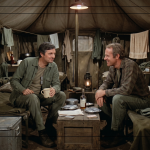
Mulcahy remained beside her, not needing to say anything else. They stood together in the soft, even light of the recovery tent. Around them, the muted colors of the ward—the beige canvas, the pale green fatigues, the soft gray shadows—seemed to wrap around them like a protective blanket.
They weren’t just a major and a captain. They weren’t just a nurse and a priest. They were two tired people, thousands of miles from home, holding the line against the dark.
Margaret took a slow sip of the terrible coffee. For a moment, the war outside didn’t matter. The only thing that mattered was the steady breathing of the boy in cot number four, the sturdy wooden clipboard in her hand, and the quiet, unwavering presence of a friend standing by her side in the early morning hours.
She let out a quiet sigh, finally at peace, ready to face the sun when it rose over the 4077th.
In a place that constantly broke your heart, the only way to survive was by carrying the pieces for each other.