The Yellow Paper from Iowa
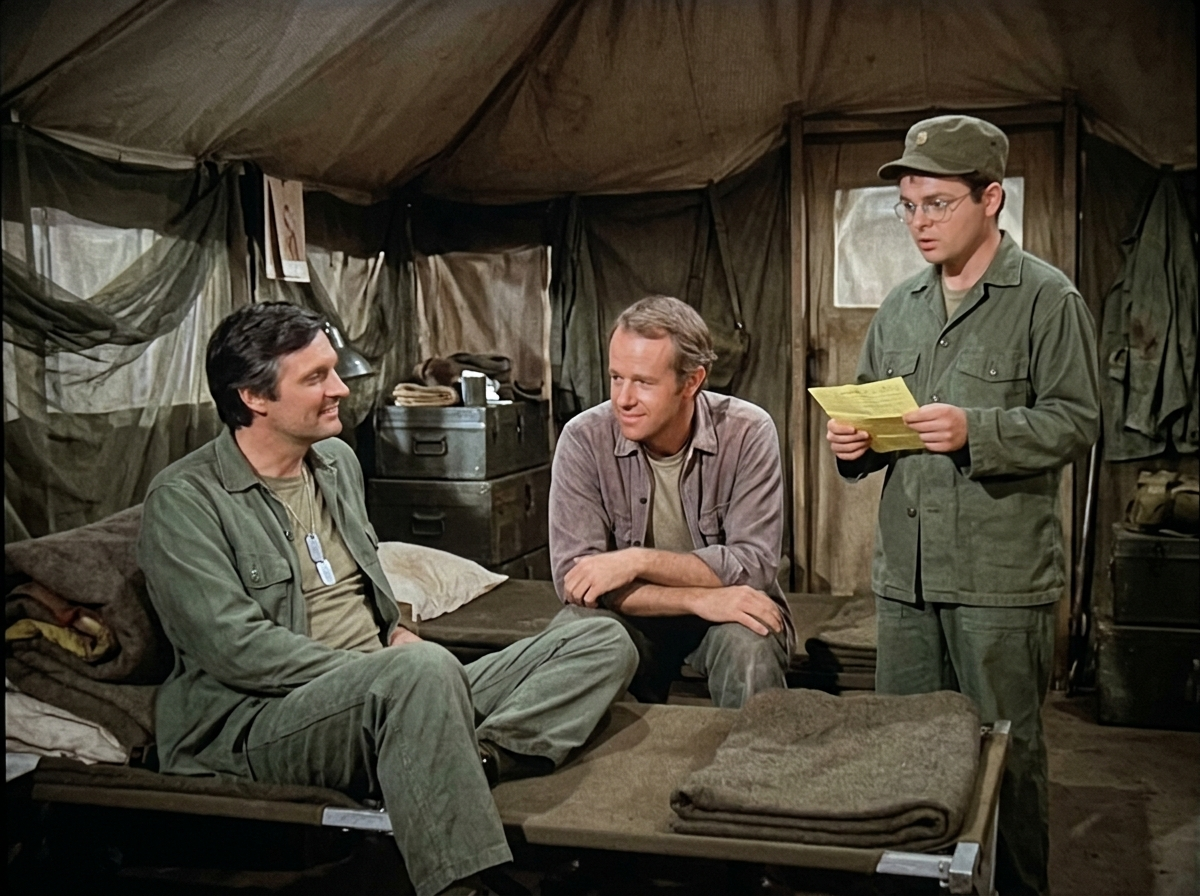
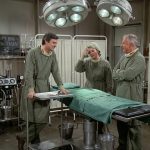
The Swamp always smelled exactly the same, no matter the season. It was a potent, inescapable cocktail of damp canvas, kerosene, stale coffee, and the metallic tang of the home-brewed gin dripping slowly from their beloved, jury-rigged still. On this particular afternoon, the heavy air was thick with the exhaustion that only a thirty-six-hour shift in the Operating Room could leave behind. The war was still going on just beyond the hills, but inside the tent, time had temporarily ground to a halt.
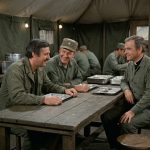
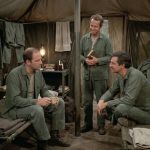
Hawkeye Pierce sat on the edge of his cot, his long legs crossed casually as he leaned back against a pile of olive-drab blankets. His dog tags dangled loosely over his chest, catching the dim light filtering through the mesh windows. To anyone else, he looked perfectly relaxed, the faint trace of a trademark cynical smirk playing on his lips. But B.J. Hunnicutt, sitting opposite him on his own cot, knew better. He could see the deep, dark violet shadows under Hawkeye’s eyes, the slight tremor in his hands, and the way his shoulders sank under the weight of the lives they had spent the last day and a half trying to piece back together.
B.J. leaned forward, resting his forearms on his knees, his face a picture of quiet, grounded empathy. He didn’t need to say anything; just being there, a steady anchor in the middle of the chaos, was enough. They were waiting for the inevitable—the next chopper, the next bugle call, the next influx of broken bodies. In the 4077th, peace was never an enduring state; it was just a fragile, fleeting intermission between acts of a tragedy.
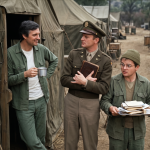
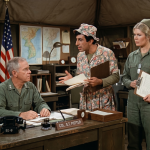
The screen door creaked open, breaking the silence, and Radar O’Reilly stepped into the tent. He wasn’t wearing his usual clipboard, but held a single sheet of yellow paper tightly in both hands. He stood near the door, his oversized cap tilted slightly back, his thick glasses magnifying eyes that were wide with a mixture of nervousness and profound earnestness. He swallowed hard, looking between the two surgeons as if he were carrying a document of absolute, historical importance.
“What’s the word, Radar?” Hawkeye asked, his voice laced with his usual dry, rapid-fire wit, though it was softer than usual. “Did General MacArthur finally realize I’m the secret ingredient missing from his strategy, or is it just another supply memo stating we’re being rationed on tongue depressors again?”
Radar didn’t smile at the joke. He shifted his weight from one foot to the other, his fingers crumpling the edges of the yellow page. “It’s not an official memo, Pierce. It’s… well, it’s a letter. It came through Tokyo with the morning pouch, addressed to the company clerk. But it’s not really for me. It’s about a patient.”
B.J. raised an eyebrow, his expression turning attentive. “A patient? We’ve had about a hundred pass through here since Tuesday, Radar. Which one?”
“Private Miller,” Radar said softly, reading from the paper. “The kid from the third battalion. The one who kept asking for water even though he was NPO. You operated on him yesterday morning, Captain. You both did.”
Hawkeye’s smirk faded completely, replaced by a sudden, sharp stillness. Private Miller had been a nineteen-year-old boy with a chest wound that had taken three hours of intense, agonizing suturing to close. He remembered the boy’s face vividly—the pale skin, the terrified eyes, the way he had clutched Hawkeye’s sleeve before the ether took hold.
“What about him, Radar?” B.J. asked, his voice dropping an octave, braced for the kind of news they received all too often in this place.
Radar looked up from the paper, his eyes reflecting a deep, painful vulnerability that no amount of time in the army could ever erase. “It’s from his mother. She didn’t know where he was, so she just wrote to the nearest M*A*S*H unit hoping someone would get it. She says… she says he has a little sister who won’t stop waiting by the mailbox, and she’s asking if anyone can tell her if her boy is still breathing.”
The silence that followed was deafening. The distant hum of a generator outside seemed to amplify the stillness inside the tent. Hawkeye looked away, staring intently at the floorboards, his jaw tightening. This was the part of the job that didn’t stay in the OR—the human cost, the invisible threads connecting a muddy tent in Korea to a quiet front porch somewhere in the American heartland.
“She writes a lot about their farm,” Radar continued, his voice trembling slightly as he looked back down at the yellow paper. He began to read aloud, his innocent, midwestern cadence bringing a strange, comforting piece of home into the bleak canvas tent. “She says the corn is coming in high this year, higher than Walter expected. And she wants him to know that the old hound dog, Buster, still sleeps on his side of the bed every night, just waiting for him to come home.”
B.J. closed his eyes for a moment, a wave of intense homesickness washing over him. He thought of Peg, and his little girl, Erin, back in San Francisco. He thought about the letters he wrote, and the letters he prayed he would never have to send. He looked up at Radar, his eyes filled with a warm, fierce tenderness. “Go on, Radar. Read the rest.”
“She says…” Radar cleared his throat, blinking rapidly behind his thick spectacles. “She says, ‘Dear sir, if you see my Walter, please tell him to keep his socks dry. And please tell whoever is looking after him that a mother is praying for them every single night.’ That’s… that’s all it says.”
Radar folded the paper carefully, his movements methodical and full of reverence. He looked at Hawkeye, then at B.J., waiting for them to interpret the weight of the world for him, the way he always did when the reality of the war became too heavy for his young shoulders to bear.
Hawkeye let out a long, slow breath. The cynical armor he wore so defensively completely melted away, leaving only the raw, deeply compassionate humanity that made him the extraordinary doctor he was. He looked up at Radar, a gentle, tired smile touching the corners of his mouth.
“He’s going to make it, Radar,” Hawkeye said quietly, his voice steady and full of reassurance. “We patched him up. It was touch and go for a while, but his heart is strong. He’s already on a transport headed to the evacuation hospital in Incheon. He’s going to go home to that farm. He’s going to see that high corn, and that old hound dog.”
Radar’s face instantly transformed. A look of profound relief swept over his features, his shoulders visibly relaxing. “Really, Captain? You’re sure?”
“I’m positive,” B.J. chimed in, leaning over to place a comforting hand on Radar’s sleeve. “Pierce and I do excellent work when we aren’t arguing about whose turn it is to wash the martini glasses. You write her back, Radar. You tell her that her boy is on his way home, and you tell her that her prayers didn’t get lost in the mail.”
Radar nodded quickly, a bright, bright smile breaking through his exhaustion. “Yes, sir. Right away, Captain. Thank you.” He turned and scurried out of the tent, the screen door banging shut behind him with its familiar, comforting clatter.
Inside the Swamp, the quiet settled back in, but the heavy, suffocating air had lifted. Hawkeye looked across the space at B.J., and B.J. looked back. No words were spoken; none were needed. They had saved one boy, comforted one mother, and managed to keep a small piece of their own souls intact for one more day.
Hawkeye reached over to the small table beside his cot, picking up a tin cup of lukewarm coffee, raising it slightly in B.J.’s direction. “To the corn in Iowa,” he murmured.
B.J. smiled softly, raising his own cup in return. “To the corn in Iowa, Hawk. May it always grow high.”
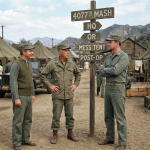
Amidst the mud and the madness of the 4077th, it was the small echoes of home that kept the darkness at bay.