The Quiet After the Storm
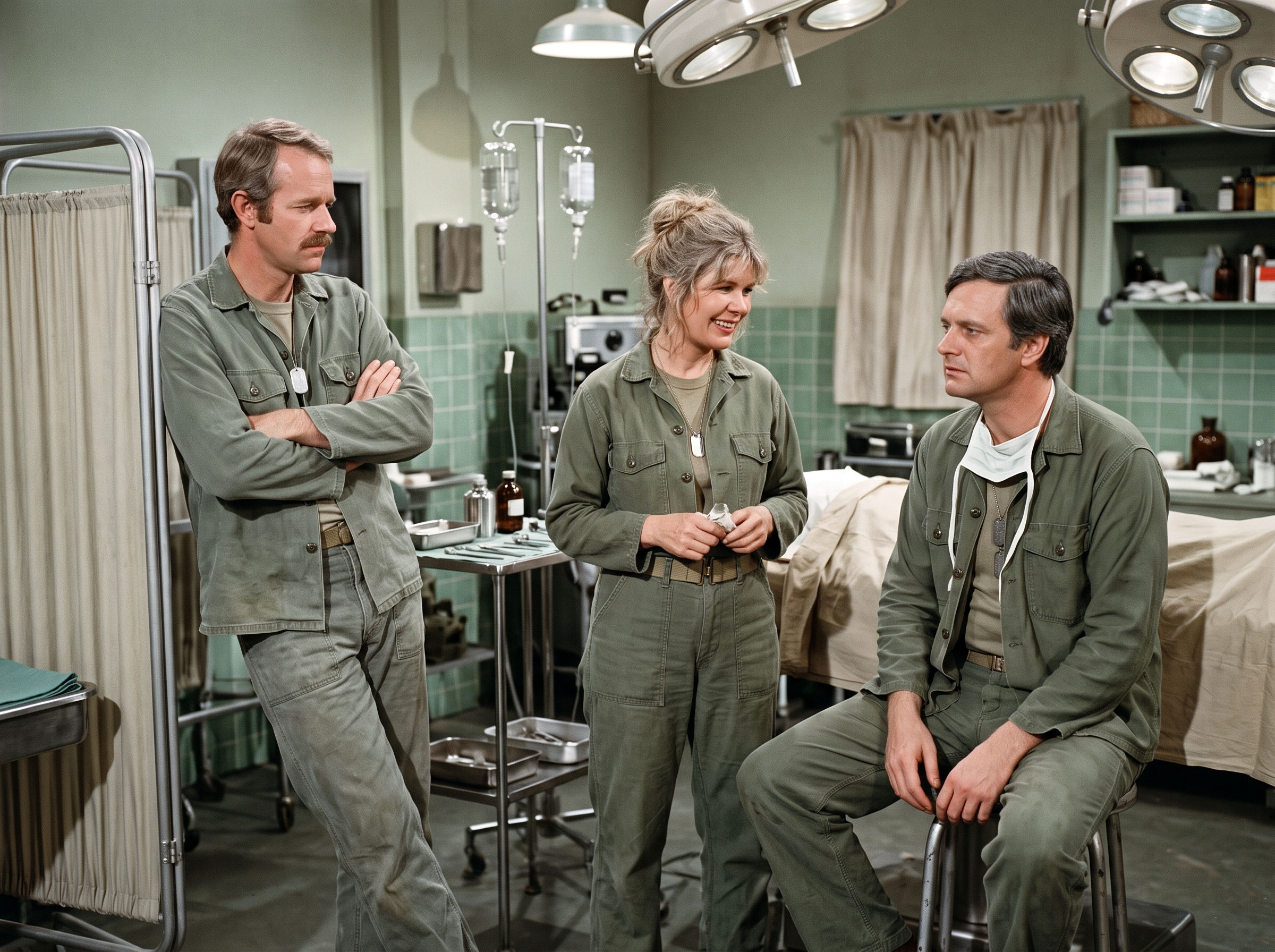
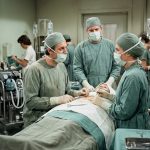
The silence in the operating room was heavier than the noise. For thirty-two consecutive hours, the room had been a symphony of chaos, shouting, and the endless ping of metal on metal.
Every surface felt permanently coated in the grim reality of their work. Now, the final stretcher had been wheeled out, leaving only the relentless, rhythmic thrumming of the camp’s overworked generator.
The pale green walls and harsh overhead surgical lamps offered no warmth. They were just a stark, sterile reminder of exactly where they were, and how far they were from home.
Major Charles Emerson Winchester III slowly pulled his surgical mask down beneath his chin. He simply didn’t have the physical strength left to untie it and take it off completely.
His usually immaculate posture, a point of deep personal pride, was entirely gone. It was replaced by a deep, hollow slouch that seemed to age him ten years in a single afternoon.
Charles stared blankly at the empty surgical table, his eyes heavily bloodshot. His face was drawn with an exhaustion so profound it seemed to settle deep in his marrow.
Across the room, Captain B.J. Hunnicutt leaned heavily against a wooden partition, looking as though a strong gust of wind would knock him flat. His scrub shirt was dark with sweat, clinging tightly to his tired frame.
B.J. rubbed the bridge of his nose, his eyes closed tight against the glaring lights. He was too tired to even search for a punchline, too drained to offer a witty observation to fill the heavy quiet.
He just let out a long, ragged exhale that echoed softly in the cavernous, empty room. It was the sound of a man who had given absolutely everything he had, and then was asked for a little bit more.
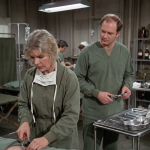
Major Margaret Houlihan stood quietly by the scrub sinks, a damp towel clutched tightly in her hands. She was usually the first to bark an order to clean up, the first to demand military precision even in the aftermath of hell.
But today, she didn’t say a single word. Her blonde hair was matted damply to her forehead, and her shoulders slumped with a heavy, deeply human weight.
The three of them were trapped in a quiet, fragile bubble of post-surgery relief. No one wanted to be the first to move, to break the spell and acknowledge the harsh reality waiting outside the double doors.
Charles’s hands rested heavily on the edge of a stainless steel tray. B.J. noticed, with a tired squint, that the Boston surgeon’s fingers were trembling slightly against the cool metal.
It wasn’t fear, and it certainly wasn’t a lack of medical skill. It was the raw, undeniable toll of caring far too much, while spending every waking moment pretending not to care at all.
Charles suddenly caught B.J. looking at his trembling hands. His jaw tightened instantly, the familiar defensive pride flaring up wildly in his tired, dark eyes.
He opened his mouth, drawing in a sharp breath. He was ready to unleash a biting, aristocratic insult to push the Californian away and protect his dignity.
But before Charles could speak, the heavy metal door behind them swung open with a sharp, jarring squeak. The sudden noise broke the silence like a gunshot, pulling all three of them back from the emotional edge.
It was only Corporal O’Reilly, carrying a fresh tray of bandages, his round glasses completely foggy from the freezing chill outside. Radar froze instantly in the doorway, immediately sensing the heavy, suspended atmosphere in the room.
“Sorry,” Radar whispered softly, his voice barely carrying over the loud hum of the generator. “I’ll just… put these over here.”
He set the tray down with extreme, deliberate care. He moved silently on his toes so his boots wouldn’t squeak again, and vanished back through the double doors as quickly as he had appeared.
The interruption, small and innocent as it was, drained the defensive anger right out of Charles. His shoulders dropped even further, the proud Bostonian facade crumbling away entirely.
He closed his eyes and let his head tilt back, a quiet, shaky sigh escaping his lips. It was a sound of absolute, reluctant defeat—a surrender to the sheer humanity and heartache of the place.
B.J. didn’t push him. He didn’t make a joke about Charles’s trembling hands or his ruined posture.
He just gave Charles a slow, deeply understanding blink. “Rough one, Charles,” B.J. said quietly, his voice raspy and stripped of its usual playful bounce.
It wasn’t a joke, and it wasn’t a tease. It was a simple, honest olive branch from one exhausted father to an equally exhausted son of privilege.
It bridged the massive cultural gap between them with nothing but shared fatigue and mutual respect.
Charles opened his eyes and looked squarely at B.J. For a long, tense second, the air was thick with the possibility of a sarcastic, biting retort.
“Indeed, Hunnicutt,” Charles murmured softly, his voice lacking any of its usual pomp and circumstance. “Indeed it was.”
Margaret turned slowly away from the sink and walked toward the center of the room. She looked at Charles, really looked at him, seeing right past the arrogance and the bluster.
She saw the brilliant, deeply exhausted, and surprisingly compassionate doctor beneath the expensive exterior.
She didn’t offer him a crisp military salute, and she didn’t bark about hospital protocol or uniform regulations. Instead, Margaret caught his eye and gave him a rare, incredibly subtle nod.
It wasn’t just a professional acknowledgment between two ranking officers. It was a deeply warm, unguarded look of profound care.
It was a silent confirmation that she saw his daily struggle, and she respected his immense, fiercely hidden compassion for the wounded boys who came through their doors.
In that single, quiet nod, Margaret’s strict composure fell away completely. It revealed the tender, vulnerable woman who secretly considered these impossible, infuriating men her only real family.
Charles saw it. He didn’t smile—he was far too tired for that—but the harsh, stressed lines around his eyes softened in a way that spoke volumes.
He offered her a faint, weary dip of his head in return, quietly accepting her grace and her friendship.
B.J. watched the quiet exchange from his spot against the wooden partition, a small, genuinely tired smile finally touching the corners of his mouth. The empathy in B.J.’s eyes was deep and steady, anchoring the turbulent room.
“Coffee?” B.J. asked to no one in particular. He slowly peeled himself away from the wall with a quiet groan that sounded remarkably like rusty hinges.
“Only if it’s the absolute sludge from yesterday,” Charles replied dryly. He pushed himself upright with immense physical effort, adjusting his scrub shirt.
“I find I’ve completely lost my taste for anything remotely fit for human consumption,” Charles added, a tiny ghost of his usual smirk returning.
“I think we can arrange that,” B.J. chuckled softly. The warm sound felt like a heavy blanket being wrapped around them in the sterile room.
Margaret tossed her damp towel into a laundry hamper and sighed. It was a sound that held both bone-deep exhaustion and a quiet, resilient peace.
“I’ll join you,” she said, her voice remarkably gentle. “But if either of you mentions the war, I’m pouring my mug directly onto your boots.”
They moved together toward the doors, a slow, shuffling trio of incredibly unlikely friends. There was no cinematic music playing, no grand speeches about heroism or duty to their country.
There was only the squeak of rubber soles on linoleum, the lingering, metallic smell of iodine, and the quiet comfort of knowing they didn’t have to carry the weight of the world alone.
As they pushed through the double doors and stepped out into the freezing, misty Korean dawn, the harsh light of the operating room finally faded behind them.
For just a little while, the big guns were quiet, the rescue choppers were grounded, and the only thing that mattered was a hot cup of terrible coffee and the people standing right beside them.
In a place designed for breaking apart, it was the quiet moments together that kept them whole.