The Toledo Commendation
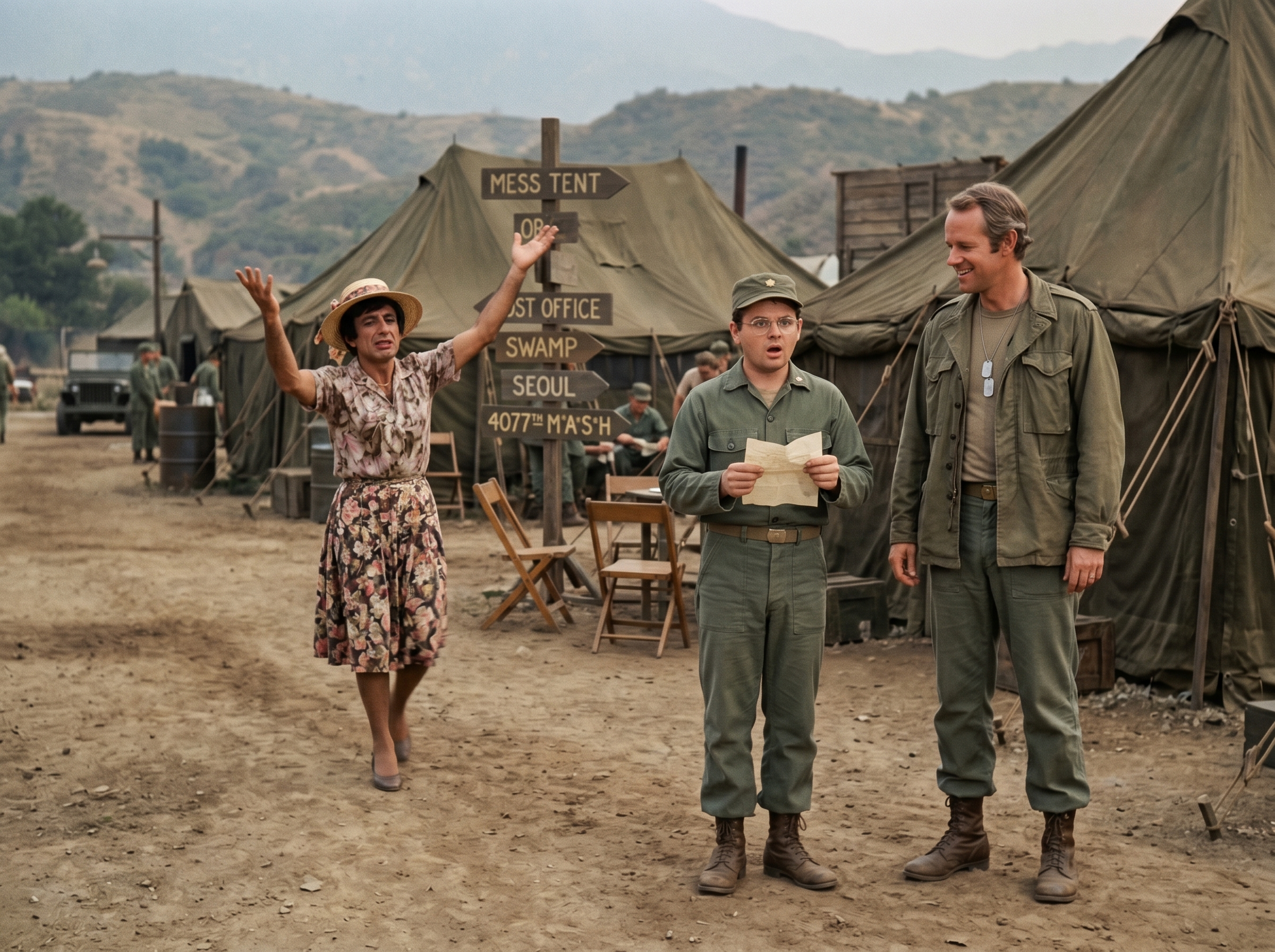
There were afternoons at the 4077th when the war seemed to hold its breath.
The choppers were quiet, the O.R. had been scrubbed down with harsh lye, and the heavy Korean heat settled over the dusty dirt camp like a wet wool blanket.
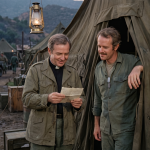
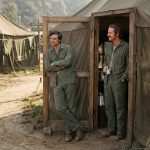
Captain B.J. Hunnicutt stood near the wooden camp signpost, enjoying the rare and fragile commodity of silence.
He was dressed in his usual casual field wear, his green jacket open, his dog tags resting comfortably against his olive drab t-shirt.
B.J. stood slightly apart from the main walkway, his arms relaxed at his sides, an easy, gentle smile playing on his lips as he watched the camp stir back to life.
Then came the sound of combat boots shuffling quickly against the dry dirt.
Corporal Radar O’Reilly practically vibrated with nervous energy as he hurried into the clearing near the folding chairs.
He was clutching a piece of yellow teletype paper in his hands, his wide eyes magnified behind his round glasses.
His body language was a familiar mix of polite military protocol and utter, innocent bewilderment.
“Captain Hunnicutt, sir,” Radar stammered, stopping a few feet away. “I just pulled this off the wire. It’s… well, I don’t know what it is, but it’s confusing.”
Before B.J. could ask what fresh bureaucratic disaster had arrived from I Corps, the sluggish silence of the camp was completely shattered.
“Why?!” a voice wailed from the direction of the canvas tents. “Why must the heavens punish a man with such impeccable fashion sense?!”
Corporal Maxwell Klinger marched down the dirt path, making a sudden, fiercely theatrical entrance.
He was a vision in a floral print day dress, complete with a woven straw hat adorned with a delicate pink flower.
Klinger threw his arms wide open to the muted sky, his hands outstretched in a grand gesture of deeply wounded dignity.
His face was twisted into a mask of dramatic, expressive agony, playing to the back row of an audience only he could see.
B.J.’s gentle smile widened into a look of dry amusement.
He didn’t move to intervene, simply standing by the signpost, his quiet irony shining through as he settled in for the afternoon’s matinee performance.
“What’s the verdict, Radar?” B.J. asked quietly, nodding toward the paper in the young clerk’s hands.
Radar looked down at the message, swallowing hard. “It’s from the Psychiatric Evaluation Board in Seoul, sir. They reviewed Klinger’s file.”
Klinger halted right in front of them, his arms still raised in theatrical despair, his chest heaving beneath his flowered bodice.
“Tell me, Radar! Read the death warrant!” Klinger cried out. “Let Captain Hunnicutt hear how the United States Army destroys the dreams of a delicate girl from Toledo!”
Radar’s voice squeaked slightly as he read the official stamp.
“‘After thorough review of Corporal Maxwell Q. Klinger’s personnel file… the board finds him to be a soldier of exceptional morale-boosting ingenuity…’”
Radar paused, looking terrified that Klinger might actually explode.
“‘…and denies his Section 8 request, citing him as a model of psychological resilience and military dedication.’”
“Resilience?!” Klinger shrieked, the word echoing sharply off the faded canvas of the mess tent.
His arms finally dropped, smacking against his floral skirt with a tragic, defeated thud.
“I wear chiffon in a combat zone! I ate a jeep! I’ve been pregnant three times this year!” Klinger practically spat the words out. “What does a guy have to do to get a little disrespect around here?”
Radar took a small, instinctual step back, clutching the radio message to his chest as if the thin paper could act as a shield.
“They said your… your dedication to camp theater shows a highly adaptable military mind, Klinger,” Radar explained, his voice entirely earnest. “They’re putting a commendation in your permanent record.”
The absolute horror on Klinger’s face was a masterpiece of tragic comedy.
He looked as though he had just been told his beloved Tony Packo’s was out of hot dog sauce until the end of the war.
B.J. finally let out a soft, rich chuckle, the sound cutting through the dusty beige air of the compound.
He uncrossed his arms and stepped a little closer, looking Klinger up and down with an appraising, medical eye.
“You have to admit, Max,” B.J. said, his voice laced with gentle, grounded warmth. “It is a very adaptable outfit. The floral pattern really brings out the despair in your eyes.”
Klinger let out a heavy sigh, the grand theatrical bravado suddenly melting away in the afternoon heat.
What was left behind wasn’t a crazy person, but just a deeply tired soldier standing in the middle of a foreign country in a dress.
He reached up and adjusted his straw hat, his broad shoulders slumping under the weight of the endless war.
“It took me three weeks to get this hat right, Captain,” Klinger said, his voice dropping to a mournful grumble. “Three weeks of trading powdered eggs with the locals. And for what? A commendation. My mother will be so ashamed.”
Radar looked at Klinger, his innocent confusion softening into genuine, wide-eyed sympathy.
“I think you look real nice, Klinger,” Radar offered quietly. “The flower on the brim matches your… your rouge.”
“Thanks, kid,” Klinger muttered, though the fight had clearly gone out of him for the day.
B.J. shoved his hands deeply into his pockets, his gaze softening as he looked at the two men in front of him.
He knew the humor of the 4077th was just a thin, fragile blanket over a very deep, very cold reality.
Klinger’s dresses weren’t just a gag to get out of the army; they were a lifeline for everyone who watched him parade around.
It was a way to fight back against the absolute madness of their situation by being even madder.
“You know what the problem really is, Max?” B.J. offered quietly, leaning against the wooden post pointing toward Seoul.
Klinger looked up, his dark eyes tired but attentive. “The United States Army?”
“Well, yes, but specifically, you’re just too good at your job,” B.J. explained, offering a warm, steadying smile. “You put on the dresses, you scream to the heavens, you try to convince the world you’re crazy.”
B.J. paused, letting the truth of the camp settle over them.
“But when the choppers land? You’re the first one on the pad. You carry litters, you give blood, you keep this place running while wearing pumps.”
Radar nodded enthusiastically, a proud smile breaking across his young face.
“Yeah! Remember last week when we had all those casualties? You worked twenty hours straight, Klinger. You didn’t even complain when your high heels got stuck in the mud.”
Klinger smoothed down his skirt, a faint, undeniable blush visible beneath his dark five o’clock shadow.
“Well,” Klinger said softly. “A girl’s gotta do what a girl’s gotta do when the boys need her.”
“That’s exactly it,” B.J. said gently, his dry humor giving way to pure affection. “The army might be blind, deaf, and exceptionally stupid. But even they can see that a guy who works as hard as you do can’t possibly be crazy.”
Klinger looked down at the dusty dirt path.
The wounded dignity was entirely gone now, replaced by the quiet, shared fatigue that connected every single person living in the compound.
“It’s a curse, Captain,” Klinger said softly, shaking his head. “A terrible, honorable curse.”
“It is,” B.J. agreed softly. “But for what it’s worth, I think the outfit is a triumph. The earrings really pull the whole delusion together.”
Klinger finally managed a small, genuine smile, his eyes crinkling.
“They’re clip-ons,” he whispered conspiratorially. “My lobes are sensitive to cheap metal.”
Radar finally lowered the teletype paper, his shoulders relaxing now that the storm had passed.
“Should I… should I file this in your official record, Klinger?”
“File it, burn it, send it to General MacArthur to use as a coaster,” Klinger waved a dismissive, heavily accessorized hand. “I don’t care anymore. I’m going to the mess tent.”
He turned on his heel, his skirt swishing in the dry, dusty breeze, and began to walk away.
The stride was slower now, less of a theatrical stomp and more of a tired, familiar shuffle back toward his tent.
B.J. and Radar stood by the signpost, watching him go.
The muted sky stretched endlessly above them, indifferent to the small, absurd, deeply human dramas playing out in the dirt below.
“He really is a good soldier, isn’t he, Captain?” Radar asked softly, his voice full of the deep loyalty he felt for his found family.
“The best, Radar,” B.J. replied, reaching out to clap a warm, steady hand onto the young corporal’s shoulder. “Come on. Let’s go buy the prettiest girl in camp a cup of mud.”
They turned and walked together down the dirt path, just three tired men finding a little bit of home in each other while they waited for the war to end.
The bravest thing you could do at the 4077th wasn’t just saving lives; it was keeping each other smiling until the choppers came back.