A Letter to Mill Valley
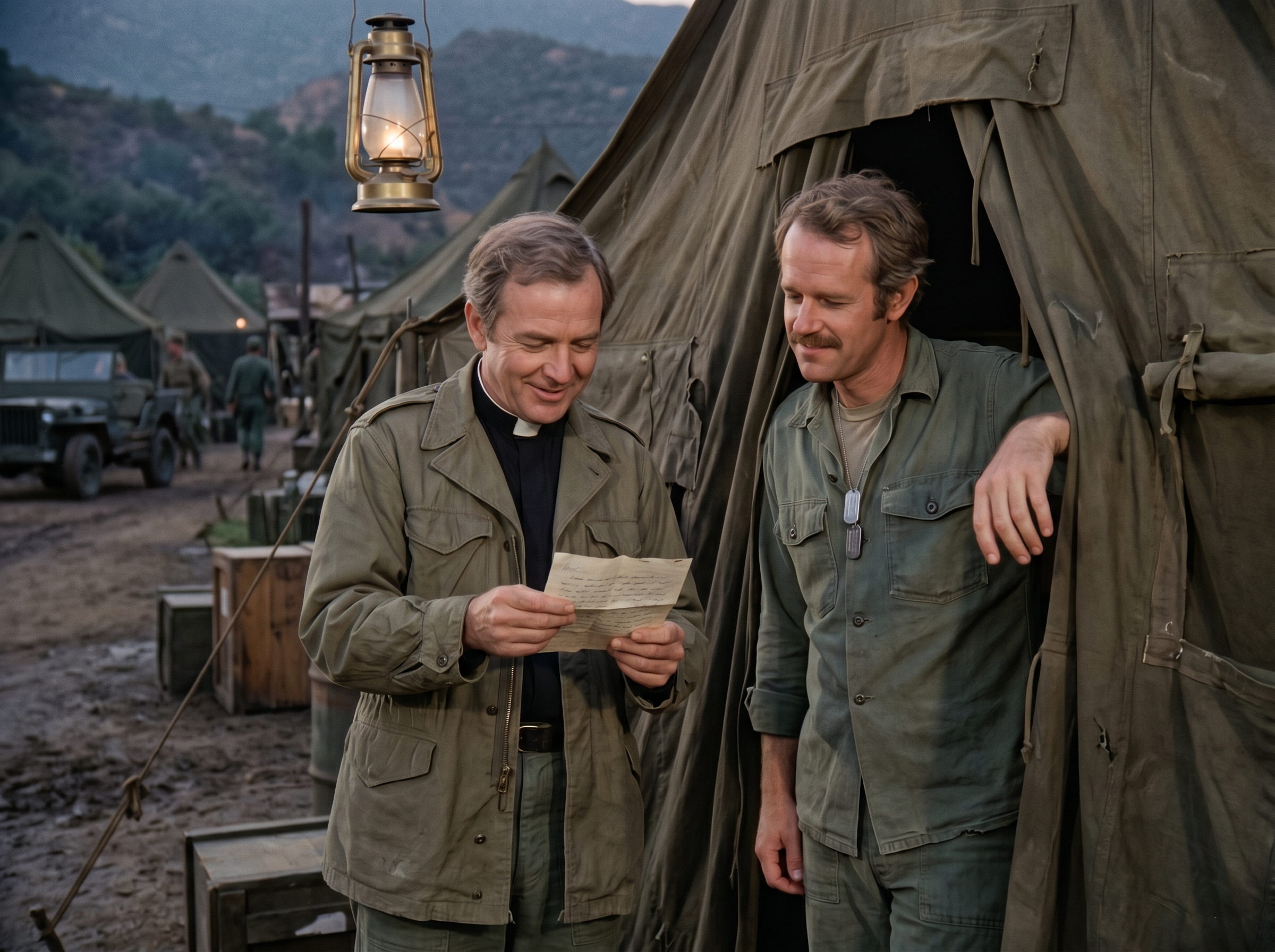
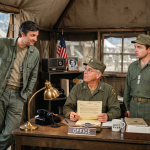
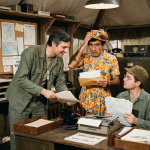
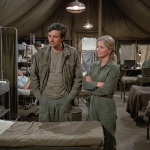
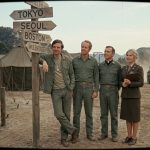
Sometimes, a single piece of paper can hold enough light to outshine any lantern in the camp. That evening, just outside the Swamp, that light belonged to Captain B.J. Hunnicutt.
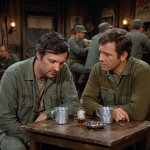
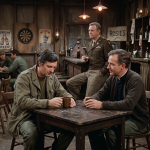
A long twilight was just settling over the 4077th, that quiet, fragile hour when the operating room was finally dark, the mess tent was relatively quiet, and the only traffic on the compound’s bumpy dirt road was a stray jeep and a few tired souls heading to their bunks. For once, there was no loudspeaker blaring, just the low-level hum of a surgical team winding down.
B.J. was leaning against the canvas flap of the Swamp, his shoulders still slumped with fatigue from a long shift. But he wasn’t thinking about surgery. He was looking down with an almost goofy smile, the kind of expression that usually means he’s about to start a prank—or just finished reading a letter from home.
It was definitely the latter. In his hands, he held the thin, worn pages of an V-mail letter from Mill Valley. B.J. had read it three times in the last hour, yet he stared at it as if the ink were still wet. Each word from Peg was a lifeline, pulling him, if only for a few moments, out of Korea and back into the soft, comforting world of his wife, his baby daughter Erin, and a life that felt impossibly far away.
Across the compound, Father Mulcahy, in his standard-issue olive jacket over his collar, spotted B.J. standing there. He walked over slowly, his stride reflecting the same weariness, but his face softening with a gentle smile as he took in the look on the captain’s face.
“Good news from California, I hope, Captain?” Mulcahy asked, his voice low and comforting, matching the quiet of the evening.
B.J. didn’t even look up at first, his eyes still locked on the cursive. He finally lifted his head, that smile breaking through fully now, genuine and warm.
“The best kind, Father. A regular epic from Mill Valley.” He ran a hand through his hair, which, like his mustache, always seemed to be in various stages of neglect. He glanced at the lantern hanging over them, then back down. “I was just reading… well, the part about Erin.”
Mulcahy instinctively moved closer, the warmth radiating from him. “How is the little one?”
“Perfect,” B.J. said, and his voice cracked just slightly. “Peg says she’s trying to talk. Not words yet, just… sounds. ‘Goo-ga,’ mostly, but also something that Peg is *convinced* is ‘Daddy.'”
He paused, the smile faltering just an inch. The image of his tiny daughter in their living room, trying to make the same sound, hit him with a physical force that nearly knocked the air out of him. It was the best news in the world, and yet, it was the cruelest reminder of everything he was missing.
He didn’t realize his hands were trembling slightly as he folded the paper. The emotion was suddenly overwhelming, a tide he couldn’t hold back. He looked from the letter to Mulcahy, and the chaplain saw the look in his eyes—a raw, powerful mix of absolute joy and a devastating, deep-seated homesickness that no amount of wisecracks could cover up. B.J. tried to say something else, to share another funny detail, but the words stuck in his throat. In that twilight silence, the weight of the war and the ocean separating him from everything he loved suddenly felt heavier than any patient he’d carried that week.
“May I…?” Mulcahy gestured gently to the paper.
B.J. hesitated for only a fraction of a second, then held out the delicate, worn V-mail. It was a sign of absolute trust; out here, letters were more precious than food, a private world.
Mulcahy took the thin paper reverently, adjusting his glasses. He angled it slightly toward the lantern, the warm light washing over his face and catching the soft expression of concern and tenderness in his eyes.
He began to read, not silently, but softly, his calm, measured voice wrapping around the words like a benediction. He read Peg’s cheerful recounting of trying to feed Erin peas (“it was a valiant effort, B.J.”), her descriptions of the changing color of the leaves, the funny story of the neighbor’s cat.
And then he reached the passage about the ‘Daddy’ sound. Mulcahy paused, his thumb gently resting on the name ‘Erin.’ When he started reading again, his voice was thick. He read the part about how much Peg misses him, the simple, heart-wrenching closing that B.J. had read a dozen times: “We are all fine, but the only thing that will make us truly whole is having you back. I love you, Peg.”
When Mulcahy finished, he didn’t hand the letter back immediately. He stood there, holding it with the same respect he would hold a Bible or a rosary. The silence around them deepened, no longer tense, but shared and safe. B.J. was looking at him, a single, quiet tear having escaped, mirroring the emotion on the priest’s face. Mulcahy wasn’t just a reader; he was a witness.
“She writes with a beautiful heart, B.J.,” Mulcahy said, his voice a low, soothing murmur that seemed to settle over the compound. “She’s built a wonderful world for you both.”
B.J. let out a long, shaky breath, wiping his eyes. “That’s the part that keeps me going, Father. That world.” He looked at the letter, and then at Mulcahy. “The thought of walking in that door… It’s the only thing that makes all this, all the surgery, the fatigue, the mud… worth it.”
“A light in the darkness,” Mulcahy said, and he meant it, his own face soft with a deep, personal resonance. “Something to always keep in front of you.” He finally handed the folded V-mail back, brushing B.J.’s fingers. “Remember that, Captain. The distance is long, yes. But that love? That doesn’t know what distance is.”
B.J. carefully tucked the precious letter into the chest pocket of his fatigues, patting it. “Thank you, Father.”
“Anytime, my son,” Mulcahy said, his fatherly smile returns, warm and steady.
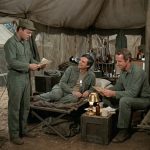
Just then, Hawkeye Pierce, B.J.’s tentmate and partner-in-cynicism, burst through the Swamp door behind B.J., startling them both. He took one look at B.J.’s face and the letter being tucked away.
“Ah, the beloved courier of Mill Valley has struck again,” Hawkeye declared, dropping an arm onto B.J.’s shoulder, a gesture that was half-mocking, half-solid support. “Tell me, did she mention the condition of my pet, Spot? I’m sure the fish is missing me terribly.”
The moment, the tension, immediately shifted. B.J. gave a small, genuine chuckle, the sadness receding slightly. “He’s fine, Hawkeye. In fact, Peg says he asked about you. Though I suspect he only wants to know when you’re going to clean his tank.”
“The nerve! After everything I did for that fish!” Hawkeye replied, with exaggerated drama. He glanced from B.J. to Mulcahy, and his usual cynical veneer softened, just a little. “Seriously, B.J., standard procedure: a full report in five minutes, and I better hear there’s pictures of this kid of yours that are *not* the same ones I’ve been forced to look at for six months.”
Father Mulcahy laughed, a quiet, gentle sound. The brief moment of vulnerability was over, but it hadn’t disappeared; it was just folded away, like the letter, safe and protected. The standard-issue bickering and friendship, the humor and resilience of the 4077th, were washing back over them, but the core of that shared, tender humanity remained.
Mulcahy nodded to them both. “If you’ll excuse me, I should see about that extra blanket Colonel Potter requested. Good night, gentlemen.”
“Good night, Father,” they both said. B.J. watched him walk away for a moment, the chaplain’s steady presence a small comfort in the chaos.
Hawkeye guided B.J. back toward the tent. “Come on, Captain California. I’ve got some pineapple juice. If you’re very, very good, and I mean *very* good, I might share a sip while you tell me about the cat.”
B.J. laughed, a warm, genuine sound this time. He felt the weight of the letter in his pocket, a quiet anchor. The war, the mud, and theoperating room were still waiting. But in that twilight moment, with a letter from Peg and his found-family beside him, B.J. knew he had enough light to find his way home.
Out here, the longest letters and the quietest friends make the distance home a little shorter.