The Weight of a Word
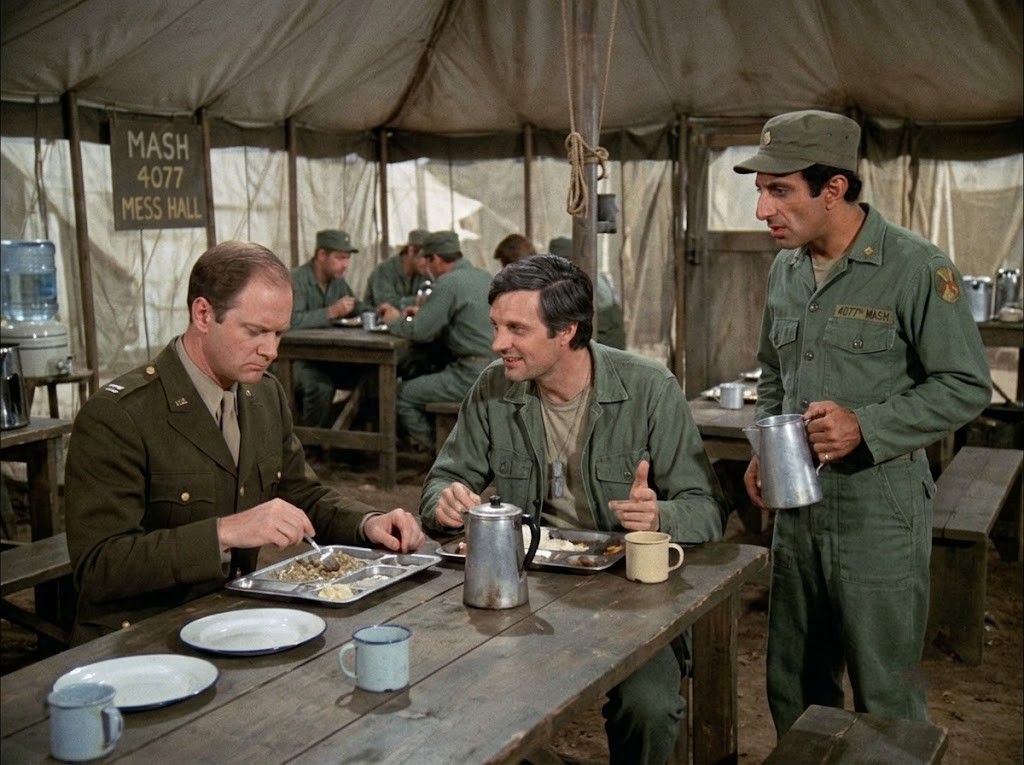
The office in the 4077th had a particular smell—a blend of stale cigarette smoke, damp paper, and the frantic, static energy of people trying to hold themselves together.
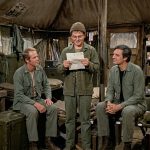
Radar stood at his desk, his fingers hovering over the keys of the typewriter like a pianist hesitating before a final chord. He wasn’t typing; he was holding a single, crinkled sheet of paper as if it were a fragile bird that might fly away if he squeezed too hard.
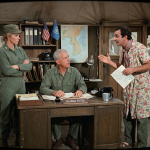
Colonel Potter leaned against the edge of the desk, his hands resting on his hips, his gaze fixed on the document with the weary patience of a man who had seen too many official notices in his time.
Standing beside him, Major Margaret Houlihan had her arms crossed tightly, her expression caught somewhere between military steel and genuine concern. The silence in the room was heavy, the kind that only happens when the war outside briefly forgets to scream, leaving everyone to deal with the quiet wreckage of their own thoughts.
Radar looked up, his brow furrowed, his eyes wide and searching. “It’s not just a memo, Colonel,” he whispered, his voice cracking just enough to let the vulnerability show through. “If this goes through, it changes everything for the guys in the compound. It’s not fair, sir. It’s just not fair.”
Colonel Potter sighed, a long, rattling sound that seemed to pull the history of his service out of his chest. He reached out, his hand hovering over the paper, his jaw tightening.
“Let me see that again, Corporal,” Potter said, his voice unusually low. He took the paper, his eyes scanning the lines once, then twice, his face hardening as the gravity of the words finally sank in.
Margaret leaned in, her eyes darting across the page. As she read, her posture shifted, the rigid lines of her shoulders dropping just a fraction. She let out a soft, sharp intake of breath, a sound of pure, unadulterated frustration.
“They can’t mean it,” she said, her voice unusually shaky. “They simply cannot be this blind to what’s happening on the ground.”
Radar turned, his eyes searching the room for an answer that wasn’t there. “What are we going to do? If I hit that carriage return, I’m making it official. I’m sending this down the line, and there’s no taking it back.”
The room went deathly quiet. The map of Korea on the wall seemed to loom larger, a sprawling tapestry of lines and names that dictated their lives.
Potter turned to look at the door, then back at his two subordinates. His eyes were tired, filled with the deep, aching exhaustion of a man who had spent his life trying to protect his own.
“If we send it,” Potter muttered, his voice barely audible, “we break their spirit. If we don’t… we’re insubordinate. And I’ve worked too hard to keep this camp standing just to watch it burn down from the inside out.”
He looked at the typewriter. He looked at Radar. He looked at Margaret.
“Well,” Potter whispered, the tension in the room reaching a breaking point that made the very air feel thin. “The question is, do we follow the letter of the law, or do we do what’s right and pray we don’t get court-martialed for it?”
Radar’s hand trembled as he pulled the paper back from the Colonel. The fluorescent lights hummed overhead, a sound that suddenly felt far too loud in the stillness of the office.
“I can’t do it,” Radar said, his voice gaining a sudden, strange clarity. He didn’t look at the Colonel; he looked at the typewriter as if it were a dangerous weapon. “I’m not typing this, sir. My fingers… they’ve just stopped working.”
Margaret uncrossed her arms, her hands falling to her sides. She looked at Radar, and for a moment, the Major was gone, replaced by a woman who understood exactly what it felt like to be trapped by the cold, unfeeling machinery of the army.
“It’s a glitch in the system, Corporal,” she said quietly, her voice softening into a tone rarely heard outside the privacy of her own quarters. “Sometimes, the best way to handle a mistake from above is to simply lose the paperwork in the shuffle.”
Colonel Potter looked between them, a ghost of a smile playing beneath his mustache. He reached out and tapped the top of the typewriter with a deliberate, rhythmic thud.
“Lost in the mail,” Potter grunted, his eyes twinkling with the kind of mischievous rebellion that had kept the 4077th sane for years. “It’s a shame, really. Everything in this war gets lost sooner or later. Supplies, mail, common sense. Why should a piece of paper be any different?”
Radar felt the tension in his chest begin to thaw. He pulled the sheet of paper from the carriage. He didn’t crumple it—he folded it carefully, tucking it into a drawer that hadn’t been opened in months.
“I’ll tell them it never reached my desk,” Radar said, his small frame seeming to stand a little taller. “I’ll tell them the supply truck hit a pothole and everything went into a ditch.”
“Make sure it’s a big pothole, son,” Potter said, turning to walk toward the door. He paused, placing a hand on Radar’s shoulder. It was a firm, grounding touch, the kind a father gives when the world seems to be spinning off its axis. “And keep your nose clean. We’ve got enough trouble without searching for more.”
Margaret lingered for a second, catching Radar’s eye. She offered a small, sincere nod—a silent acknowledgement that they were all in this together, two worlds apart but held together by the same invisible threads of loyalty.
As she followed the Colonel out, the office felt different. The air was still thick, and the war was still happening just over the next ridge, but the suffocating weight of that one piece of paper had been lifted.
Radar sat back in his chair, listening to the muffled sounds of the camp outside—the distant laughter of the mess tent, the crunch of gravel under boots, the low, steady hum of the generators.
He looked at the blank paper currently sitting in the typewriter. He reached out, pushed a fresh page into place, and began to type a different letter—a simple, honest report about the needs of the camp, written from the heart instead of the rulebook.
It wasn’t a hero’s act, and it wouldn’t make the history books. But it was kind. It was human. And in the middle of a conflict that demanded they be soldiers, it was exactly the kind of quiet defiance that kept their souls intact.
He smiled, a genuine, lopsided grin that echoed the spirit of every person who had ever walked through those tent flaps. They were tired, they were far from home, and they were surrounded by chaos, but as long as they had each other to share the burden, they would be just fine.
The 4077th lived to fight another day, one small act of friendship at a time.
Sometimes, the quietest victories are the ones that save our humanity.