The Weight of the Mask
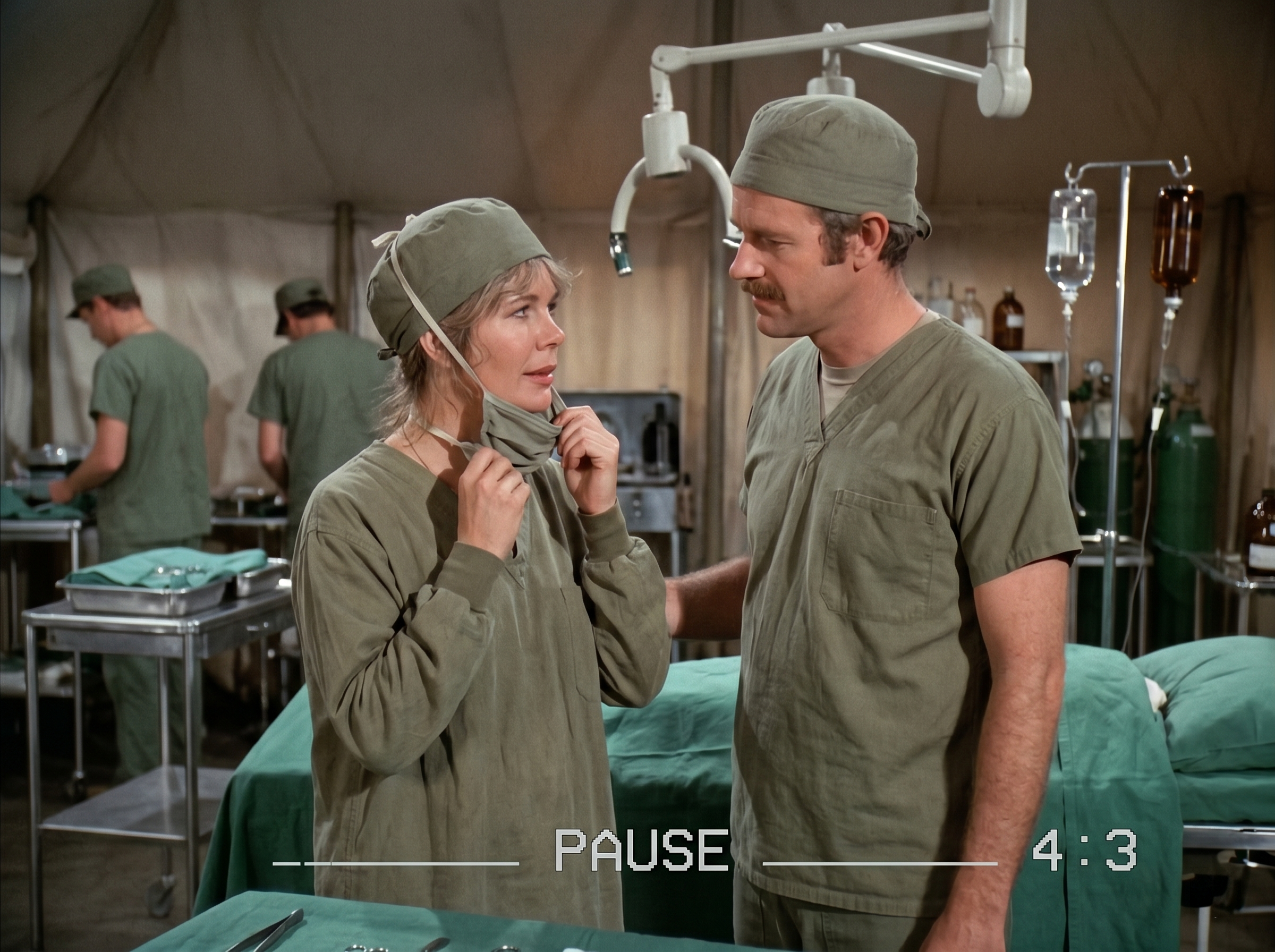
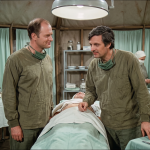
The rhythmic, punishing thump of the choppers had finally faded into the Korean hills, leaving behind a silence that felt heavier than the noise. Inside the O.R., the harsh glare of the surgical lamps cast long, exhausted shadows against the canvas walls. It had been eighteen hours. Eighteen hours of standing on aching arches, fighting back the tide of a war that never seemed to run out of broken boys.
At the center of the room, the frenetic energy of the shift had finally bled out, replaced by the slow, robotic movements of clean-up. Orderlies quietly gathered blood-stained linens and dropped dull metal retractors into soapy basins with soft, hollow clinks. The smell of iodine, sweat, and damp earth hung thick in the unmoving air of the tent.
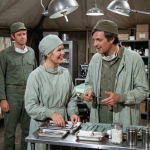
Major Margaret Houlihan stood frozen beside the operating table, her posture rigid even as her muscles screamed in protest. Her green surgical gown felt like it weighed a hundred pounds, soaked through with the heat of the cramped room and the sheer exertion of the day. She had been a machine all night, barking orders, anticipating the surgeons’ needs before they even spoke, holding the line against the chaos.
But the chaos was over for now. The last patient—a blonde kid from somewhere in the Midwest who looked far too much like the boys she used to see carrying schoolbooks—was stable and breathing evenly in post-op.
Margaret raised a trembling hand to her face. Her fingers, usually so precise and commanding, fumbled clumsily with the damp strings of her surgical mask. The rough cotton had chafed the bridge of her nose for nearly twenty hours, but taking it off felt like a monumental task.
Beside her, a quiet presence shifted. Captain B.J. Hunnicutt stood just inches away, his own green scrubs wrinkled and clinging to his tired frame. He didn’t rush to the scrub sink. He didn’t crack a joke about the mess tent food or make a sarcastic remark about the Army’s endless supply of misery.
He just stood there, watching her with a profound, steady concern.
Margaret finally caught the knot at the back of her cap, loosening it. As she pulled the mask down beneath her chin, she closed her eyes for a fraction of a second. A shaky breath escaped her lips. The iron facade of the Regular Army head nurse was slipping, the exhaustion finally finding the cracks in her armor.
B.J. saw the sudden vulnerability in her eyes—the raw, human ache of a woman who cared far more deeply than her brass rank allowed her to show. The silence stretched between them, thick with the unsaid weight of the lives that had just slipped through their fingers, and the miraculous few they had managed to hold onto.
Margaret’s chest hitched, just once. She gripped the edge of the metal Mayo stand, her knuckles turning white, fighting a sudden, overwhelming wave of emotion that threatened to pull her under.
“Margaret,” B.J. murmured softly, his voice a low, gravelly anchor in the quiet room.
She didn’t look at him right away. She couldn’t. If she met his eyes, she knew the dam might break, and Major Houlihan did not break in the O.R. She kept her gaze fixed on the stainless steel tray in front of her, taking another deep, stabilizing breath of the stale, antiseptic air.
“I’m fine, Captain,” she whispered, though the slight waver in her voice betrayed her. She pulled the mask completely away from her face, the elastic snapping softly against her collarbone.
B.J. didn’t press her. He knew better than to push the walls of the 4077th’s most guarded officer. Instead, he simply moved half a step closer, leaving only a breath of space between their shoulders. It was a silent offering of solidarity, a physical reminder that she wasn’t holding the weight of this wretched war all by herself.
“That last one was a near thing,” B.J. said quietly, his eyes focused gently on her face. “You bought him the time he needed, Margaret. If you hadn’t clamped that bleeder when you did, Hawkeye and I would have been performing a very different kind of procedure.”
Margaret slowly turned her head, finally meeting his gaze. The soft, diffused light from the overhead lamps caught the damp strands of hair escaping her surgical cap. Her face was pale, drawn tight with fatigue, but as she looked into B.J.’s kind, steady eyes, the tension in her jaw began to soften.
There was no mocking in his expression, no hidden punchline waiting to be delivered. There was only a deep, abiding respect and the shared understanding of what they had just survived together. In B.J.’s calm, mustached face, she saw the same exhaustion that was currently vibrating in her own bones.
“He was just so young, B.J.,” she breathed out, using his first name in a rare moment of unguarded honesty. The formality of ranks and military protocol meant nothing when your boots were covered in the same mud. “They just keep coming in younger.”
“I know,” B.J. sighed, his shoulders dropping a fraction. He reached up and rubbed the back of his neck, the picture of a man carrying a world of homesickness and sorrow, yet refusing to be crushed by it. “But that one gets to go home. He gets to grow older. And that is entirely on you and your nurses.”
A small, weary, but genuinely moved expression crossed Margaret’s face. The harsh lines of her usual discipline melted away into a quiet, profound tenderness. This was the Margaret that rarely saw the light of day—the fiercely protective, deeply compassionate healer who hid behind the rulebook because caring this much in a place like this was dangerous.
“We did good work today,” she said softly, her voice barely carrying over the hum of the camp’s distant generators. It wasn’t a boast. It was a lifeline. A desperate reminder of why they subjected themselves to this endless nightmare.
“We did,” B.J. agreed, a small, warm smile finally touching the corners of his mouth. “The 4077th miracle machine, still running on fumes and bad coffee.”
Margaret let out a short, breathy chuckle that sounded more like a sigh of relief. The heavy, suffocating feeling in her chest began to dissipate, replaced by the comforting warmth of found family. She wasn’t just a major managing a unit; she was part of a team. A strange, mismatched, frustrating, and incredibly dedicated team.
She looked around the dimming O.R., watching the background figures quietly finishing their tasks. The green canvas walls suddenly felt less like a prison and more like a sanctuary. They had fought death here today, side by side, and for a few precious hours, they had won.
“Go get some sleep, B.J.,” Margaret said, her tone returning to something resembling her usual authority, though the sharp edge was completely gone. “Before the war decides to wake us up again.”
“Right behind you, Major,” he replied softly. He gave her a small, respectful nod, his eyes lingering for a second longer to make sure she was truly steady.
Margaret offered him a tired, genuine smile in return. She let the discarded surgical mask fall from her fingers onto the tray. The shift was over. The armor was off. Tomorrow, they would have to put it all back on again, brace themselves against the horrors of the front line, and pretend the blood didn’t bother them.
But for tonight, in the quiet, dim aftermath of the operating room, it was enough to just be human.
In the end, the greatest medicine they had to offer wasn’t found in a bottle, but in the quiet moments of grace they gave to each other.