The Sequins in the Supply Tent
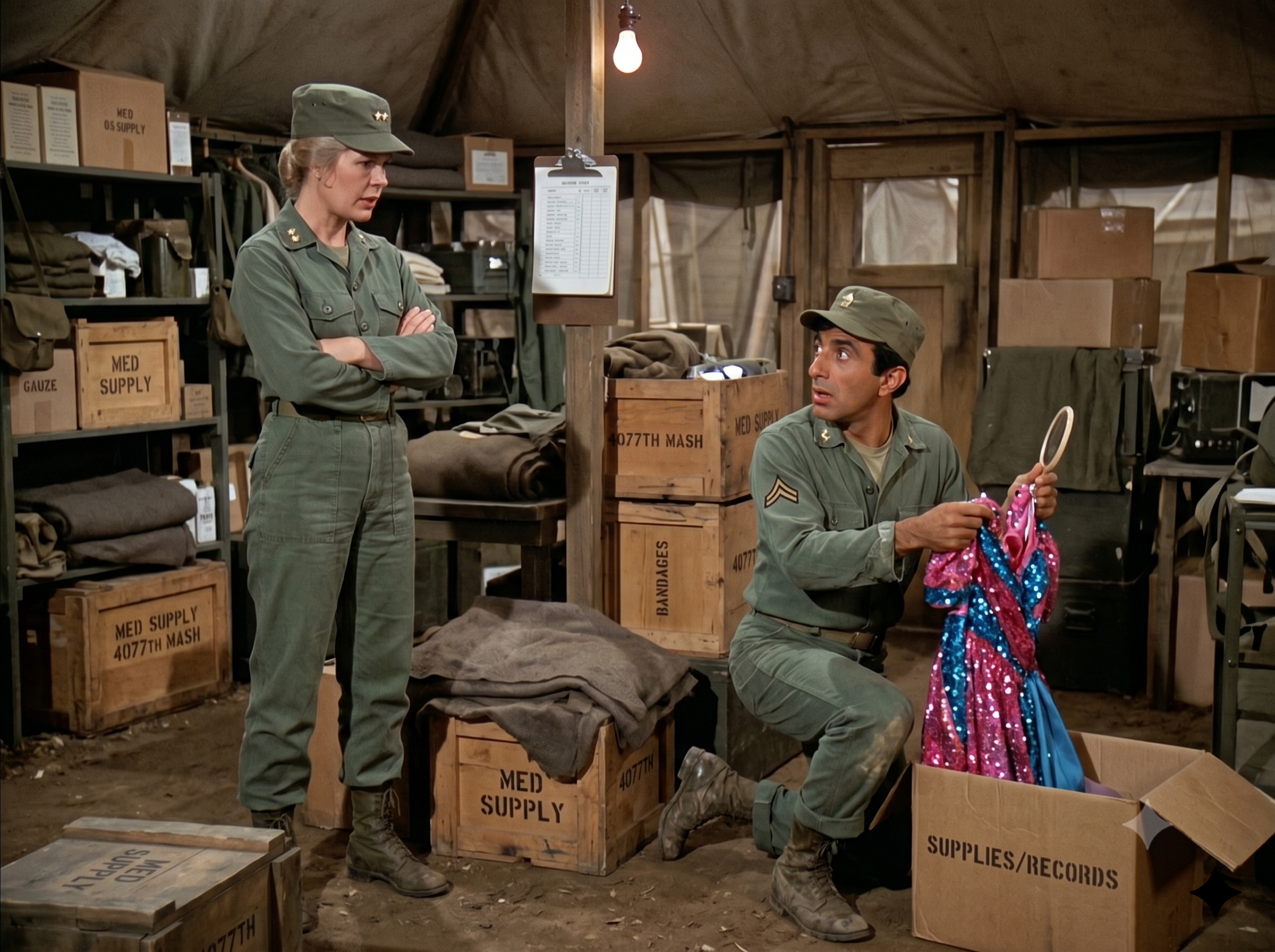
In a world painted entirely in punishing shades of olive drab, khaki, and mud, a splash of neon pink sequins was practically a tactical offense.
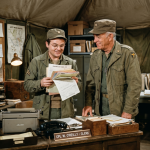
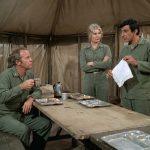
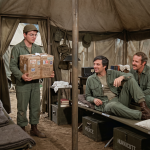
The 4077th supply tent was usually the quietest place in camp. It was a practical, dusty sanctuary built of heavy canvas and rough-hewn timber. The air inside always smelled faintly of stale coffee, mildewed canvas bags, and the sharp, sterile tang of iodine.
It was a place where order was supposed to reign supreme. Wooden crates were stacked with military precision, heavily stenciled with the bold black letters: MED SUPPLY 4077TH MASH. Neatly folded wool blankets sat on the shelves, waiting to offer meager comfort against the biting Korean chill.
Major Margaret Houlihan liked the supply tent. It made sense. It had an inventory list securely clipped to a wooden post, and numbers that were supposed to add up.
Right now, however, the numbers were not adding up, and her patience had entirely run out.
She stood in the center of the dirt floor, her posture rigidly upright. Her arms were folded tightly across her chest, a physical barricade against the sheer absurdity of her current situation. Her fatigues were impeccably neat, despite the fact that she had just come off an agonizing eighteen-hour shift in the O.R.
She had come searching for a misplaced box of sterile gauze. She desperately needed fresh supplies for Post-Op.
Instead, she had found Corporal Maxwell Klinger.
He was kneeling in the dirt, caught dead to rights. One hand was plunged deep into a cardboard box clearly marked “SUPPLIES/RECORDS”.
He wasn’t holding bandages. He wasn’t holding surgical tape.
He was holding a wildly theatrical, painfully bright pink and blue sequined evening gown. In his other hand, he gripped a small, delicate white hand mirror, as if he had been caught right in the middle of checking his complexion.
For three long seconds, the only sound in the tent was the faint, dry rattle of the wind against the canvas walls and the low buzz of the single, naked bulb hanging from the ceiling.
Klinger froze completely. His dark eyes went wide with sudden, unmistakable panic. He looked like a deer caught in the headlights of an oncoming jeep.
Yet, even in his terror, Klinger managed to project a strange, wounded dignity. He didn’t drop the dress. He held it up slightly, as if to defend its obvious aesthetic value.
Margaret’s lips pressed into a thin, white line. Her eyes, usually bright with fierce authority, were dark with a dangerous, simmering exhaustion.
She took a slow, deliberate breath. The kind of breath that usually preceded a dressing-down loud enough to be heard all the way in Seoul.
“Corporal,” Margaret said, her voice dropping to a low, terrifying whisper. “Please tell me that I am hallucinating from a lack of sleep. Please tell me that is not a Las Vegas floor show stuffed inside my medical supply box.”
Klinger swallowed hard, his Adam’s apple bobbing nervously. He gripped the hand mirror a little tighter.
“Major, it’s not what it looks like,” Klinger squeaked, his voice cracking slightly before he tried to drop it an octave to sound more reasonable. “This is highly classified, experimental psychological warfare equipment.”
Margaret took one step forward. The clipboard on the wooden post rattled slightly from the heavy thud of her combat boot.
The tension in the dim, dusty tent pulled tight as a drum wire. She was a career army nurse holding the line against chaos, and he was a desperate clerk holding a fistful of cheap glitter.
“Psychological warfare?” Margaret repeated. Her voice was dangerously calm.
She uncrossed her arms and let them drop to her sides, her hands balling into tight fists. The warm, practical camp light cast sharp shadows across her face, highlighting the deep lines of fatigue around her eyes.
“You listen to me, Corporal,” she said, taking another step closer. “There are boys bleeding in my Post-Op ward right now. I came in here looking for gauze. I came in here looking for anything that can help put them back together.”
She pointed a rigid finger at the shimmering garment in his hands.
“And instead, I find you digging through vital supply boxes, taking up space that should be meant for life-saving medical equipment, with… with a cheap, ridiculous costume!”
Klinger flinched, but he didn’t retreat. A flash of genuine hurt crossed his face. The theatrical panic faded, replaced by something much more vulnerable and defensive.
“It’s not cheap, Major,” Klinger said softly, his voice losing its usual frantic edge. “It’s imported. And it’s not a costume.”
Margaret stopped. The quiet sincerity in his tone caught her off guard. It wasn’t his usual loud, desperate plea for a Section 8 discharge.
“Then what is it, Klinger?” she asked, the anger in her voice wavering, replaced by an overwhelming, bone-deep weariness.
Klinger looked down at the dress. The cheap sequins caught the dim light of the bare bulb overhead, scattering tiny flecks of pink and blue across the dusty wooden crates and the drab canvas walls.
“It’s color, Major,” he said quietly. He ran a thumb over the shimmering fabric. “Just… color.”
Margaret stared at him, not entirely understanding.
Klinger sighed, lowering the hand mirror and letting the dress rest on his knee. He looked up at her, and for a moment, he wasn’t a scheming corporal trying to fake his way out of the army. He was just a young man from Toledo, thousands of miles from everything he loved.
“Look around us, Major,” Klinger said, gesturing vaguely around the supply tent. “Look at the boxes. Look at the blankets. Look at our clothes. Everything is green. Or it’s brown. Or it’s grey. The mud is brown. The tents are green. The sky is grey.”
He gripped the pink and blue fabric a little tighter.
“And when we’re in O.R., the only color we see is red. Just… so much red.”
Margaret felt a sudden, sharp lump form in her throat. She swallowed hard, trying to push it down.
“I ordered this three months ago,” Klinger continued, his eyes locked on the sequins. “I traded four bottles of good scotch and a favor from a supply sergeant in Tokyo to get it here. I didn’t even order it to wear it for the Colonel. I just…”
He trailed off, looking suddenly embarrassed. He carefully began to fold the dress, hiding the bright colors away.
“I just wanted to remember what it looked like when things sparkled,” he whispered. “I wanted to remember what Friday nights at the Mudhen’s club back home looked like. People laughing. Music playing. Girls wearing dresses that caught the light when they danced.”
He placed the folded dress gently back into the cardboard box.
“I just wanted to look at something beautiful for five minutes. Just to remember that it still exists somewhere.”
The silence returned to the tent, heavy and profound. The hum of the naked lightbulb seemed louder now.
Margaret stood frozen. The righteous, military anger that had fueled her just moments ago evaporated completely.
She looked at Klinger, kneeling in the dirt in his faded olive drab uniform. She looked at the drab wooden crates stacked around them. Then, she looked down at her own hands, scrubbed raw and red from endless hours in surgery.
She understood. God, she understood it more than she would ever admit aloud.
She thought of the tiny, expensive bottle of French perfume she kept buried at the bottom of her footlocker. She never wore it. She just opened it sometimes, late at night, and smelled it to remind herself that she was still a woman, and not just a rank and a uniform.
We are all just trying to survive this place, she thought. We are all just holding onto whatever pieces of ourselves we can carry.
Margaret slowly uncurled her fists. She let out a long, shuddering sigh, the tension finally leaving her shoulders.
She walked over to the wooden shelf nearest to Klinger and picked up a heavy stack of folded wool blankets.
“The gauze is usually kept on the top shelf, Corporal,” Margaret said. Her voice was no longer sharp. It was soft, tired, and remarkably gentle.
Klinger looked up, surprised. “Yes, Major. I think there’s a fresh box behind the surplus slings.”
Margaret nodded. She didn’t look at the cardboard box marked “SUPPLIES/RECORDS”. She didn’t look at the sequins poking out from under the flap.
“Make sure that box is securely taped shut, Klinger,” she said smoothly, keeping her eyes fixed on the inventory clipboard. “The dust in here is terrible. It ruins delicate fabrics.”
Klinger’s eyes widened. A slow, deeply grateful smile spread across his face.
“Yes, Major,” he said softly. “I’ll tape it up tight. Nobody will even know it’s there.”
Margaret grabbed the box of gauze she needed and tucked it under her arm. She turned to leave the tent, pausing for just a moment at the canvas flap.
She looked back over her shoulder. Klinger was gently placing the hand mirror back into the box, his movements reverent and careful.
“And Klinger?” she added quietly.
He looked up. “Yes, Major?”
A small, wry smile tugged at the corner of Margaret’s mouth.
“Blue is definitely your color. It brings out your eyes.”
Klinger beamed, his theatrical dignity completely restored. “Thank you, Major. I’ve always thought so too.”
Margaret pushed through the canvas flap and stepped back out into the grinding, olive-drab reality of the 4077th, carrying her bandages back to the war.
Behind her, the supply tent remained quiet, a dusty sanctuary holding onto one small, glittering secret.
In a war that constantly tried to erase them, humanity was often found in the things they quietly pretended not to see.