A Little Bit of Home in a Whole Lot of Mud
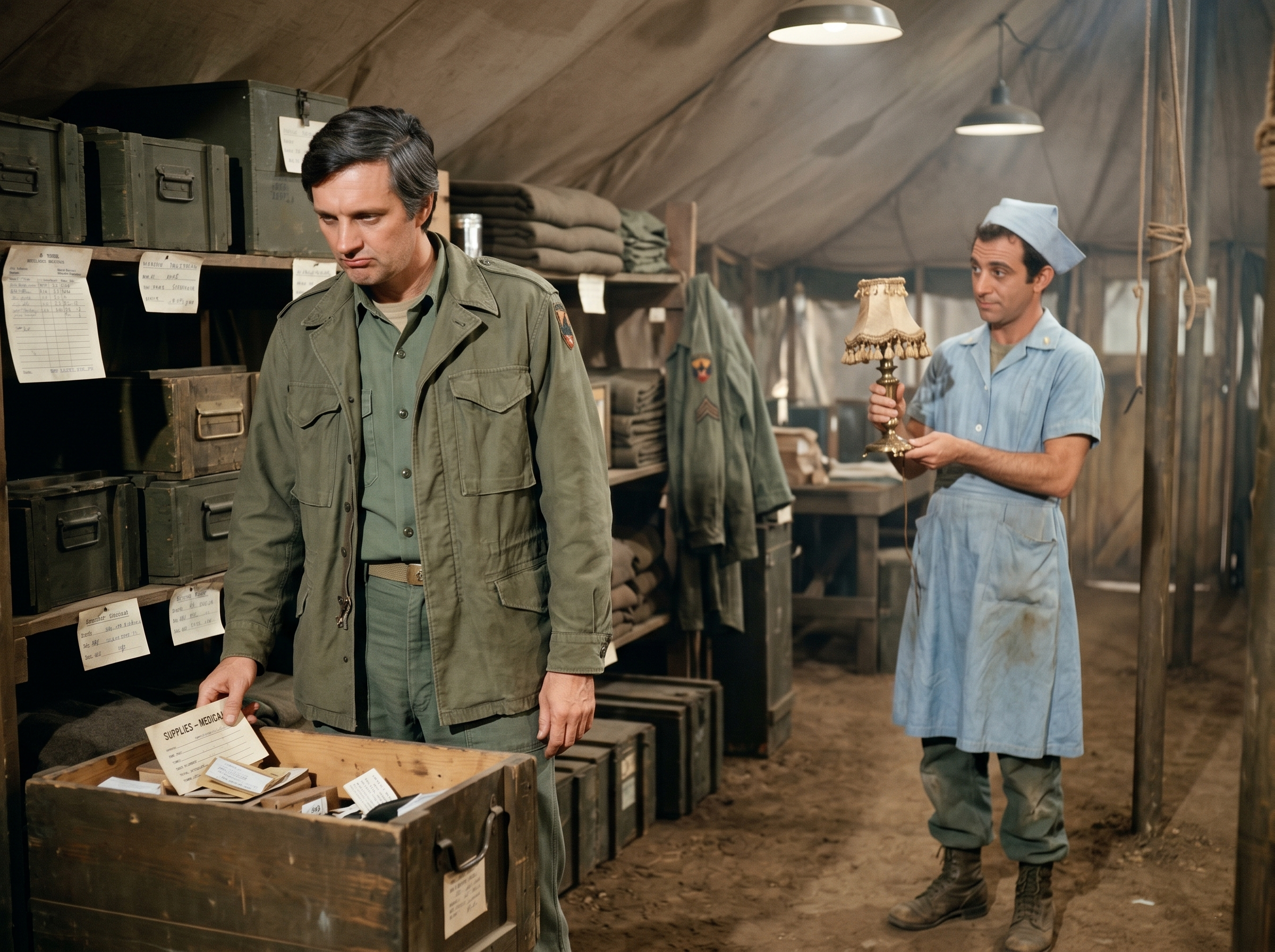
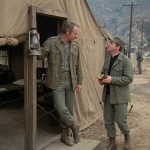
The mud of Korea has a way of seeping into your boots, your socks, and eventually, right into your soul. Hawkeye Pierce stood in the supply tent, his shoulders slumped under the weight of a week that felt more like a decade, sifting through a crate of medical supplies that were mostly empty promises and broken glass.
It was late, the kind of late where the only sounds were the distant, rhythmic thrum of a helicopter miles away and the soft shuffling of feet on the dirt floor. He pulled out a requisition form, reading it with eyes that were tired enough to see double, when the tent flap rustled.
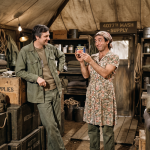
In walked Klinger. He wasn’t wearing his usual outlandish getup for a Section 8 discharge, but rather the standard blue duty apron he wore for mess hall detail, looking entirely too serious for a man holding a delicate, fringed table lamp as if it were a holy relic.
He stopped directly behind Hawkeye, his expression a mixture of profound pride and intense anxiety. Hawkeye didn’t turn around immediately, just stared at the wooden crate, his lips quirking into that familiar, weary smirk.
“Klinger,” Hawkeye sighed, not bothering to look up. “If that’s a new piece of hardware you’re planning to trade for a ride back to Toledo, I suggest you take it to the Colonel. He’s in a mood, and I’m currently in a state of advanced decomposition.”
“It’s not for the Colonel, Captain,” Klinger whispered, his voice hushed and reverent. “It’s for the office. For morale. Look at it.”
Hawkeye finally turned, bracing himself for some bizarre, gold-plated monstrosity. Instead, he saw a dusty, modest table lamp with a lace-trimmed shade that looked like it belonged in a boarding house in 1912. It was completely, utterly out of place in the grim, damp surroundings of a tent filled with gauze and bandages.
The absurdity of it—the sheer, stubborn domesticity of a fringed lamp in the middle of a war zone—hit Hawkeye with the force of a physical blow. He felt the laughter building in his chest, a desperate, shaking thing that threatened to spill out and never stop, caught between the suffocating exhaustion of the operating room and the ridiculous, beautiful humanity of the man standing in front of him.
He leaned against the wooden shelf, his hand trembling slightly as he realized exactly what that silly, glowing object represented, and the silence in the tent suddenly became too heavy to bear.
Hawkeye looked from the lamp to Klinger’s earnest, expectant face, and the laughter died away, replaced by a sudden, stinging lump in his throat. He understood perfectly. It wasn’t just a lamp. It was a refusal to let the mud win. It was a tangible piece of a world that didn’t smell like ether and burnt diesel, a piece of a world where you could sit in a chair and read a book instead of stitching up boys who had barely started their lives.
“Where on earth did you find it?” Hawkeye asked, his voice dropping to a low, quiet register.
Klinger shifted his weight, looking bashful. “Found it buried in a shipment of ‘miscellaneous kitchenware’ that got misrouted through Seoul. Thought it looked… homey. I figured if we put it on the desk in the office, maybe it’d make the paperwork feel less like a death sentence.”
Hawkeye took the lamp gently from Klinger’s hands, feeling the cool brass stem. The cord was frayed, but it was solid. It was real.
“Klinger,” Hawkeye said softly, looking him in the eye. “You’re a lunatic. You’re a tactical genius of the absurd, and you’re a lunatic.”
Klinger beamed, a genuine, wide-toothed grin that reached his eyes. “I’ll take that as a compliment, Captain.”
They stood there for a moment in the dim light of the hanging overhead bulbs, the lamp in Hawkeye’s hands serving as a bridge between the life they lived and the lives they were fighting to get back to. Hawkeye walked over to a makeshift table near the tent’s entrance, cleared a space among the clipboards and casualty reports, and set the lamp down.
He didn’t plug it in—there wasn’t an outlet nearby, and they both knew the power grid was as temperamental as a mule—but the presence of it changed the room. The harsh, clinical sterility of the medical supplies suddenly felt a little less permanent, a little less all-encompassing.
“We’ll tell the Colonel it’s a high-intensity, low-voltage diagnostic tool for examining… uh… very small wounds,” Hawkeye suggested, his dry humor returning, softened by a genuine affection.
Klinger chuckled, the sound echoing off the canvas walls. “I’ll tell him it’s a prototype for a new type of signal light. Very top secret. Highly classified.”
“Good. Keep it that way.”
They stood together for a quiet minute, the war still raging outside, the responsibility of the next shift looming like a storm cloud, but the tent felt smaller, safer. It was a temporary truce with reality, bought and paid for by a piece of brass and a lace shade.
They didn’t solve the world’s problems, and they didn’t bring anyone home any faster, but for a few minutes, in the dim, dusty light of a tent in Korea, they weren’t just soldiers waiting for the next trauma. They were two men who had shared a moment of grace, holding onto a small, flickering light against the encroaching dark.
As they walked out of the tent, leaving the lamp behind like a silent sentry, the night air felt a little less cold. They’d do it all again tomorrow—the surgeries, the waiting, the heart-breakingly thin margins between life and death—but they’d do it with the memory of that lamp, a silly, stubborn piece of home that reminded them why they were staying, and why they mattered.
In the heart of the 4077th, even the smallest light is enough to keep the darkness at bay.