The Supply Tent’s Most Flamboyant Secret
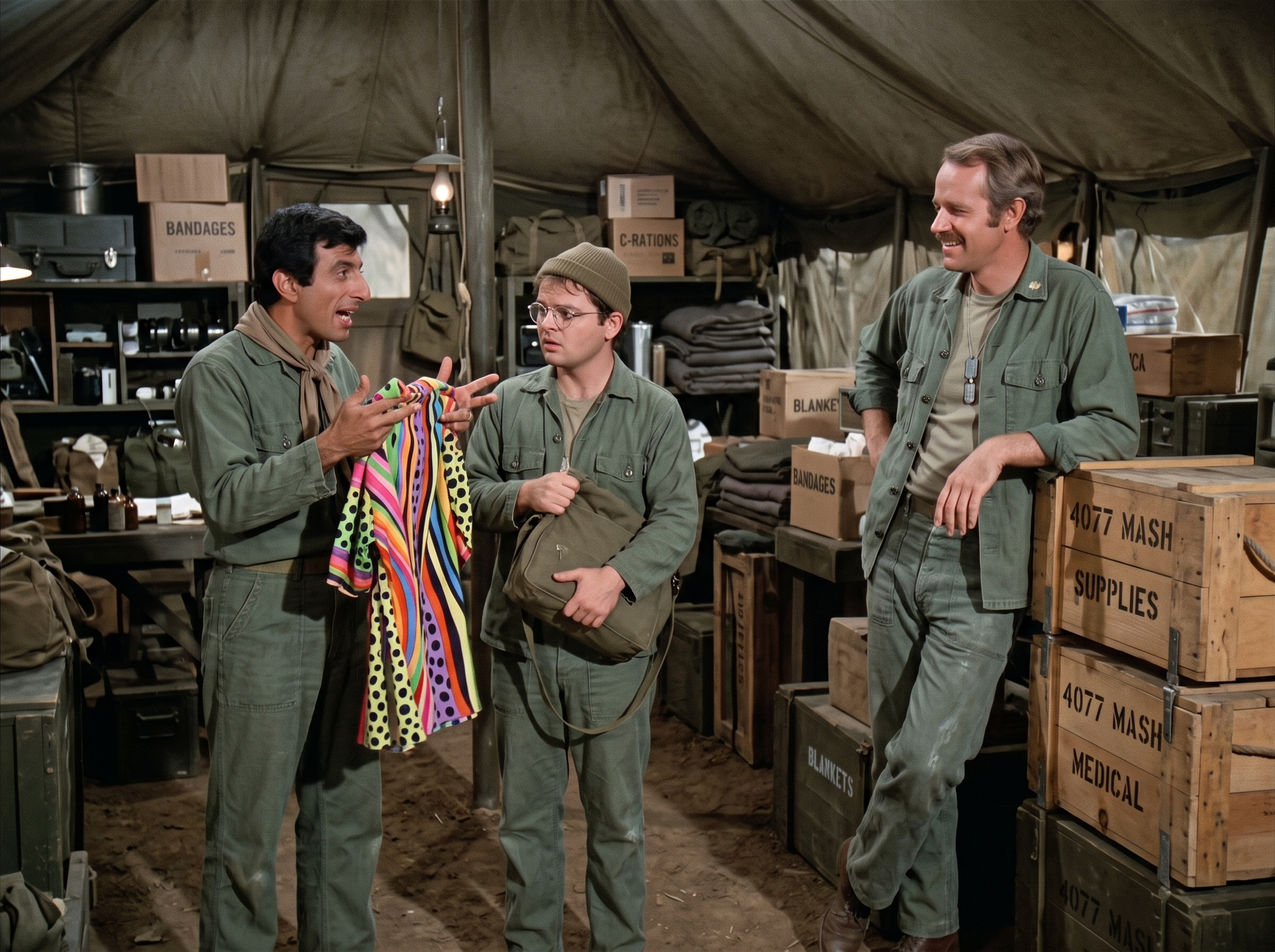
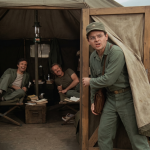
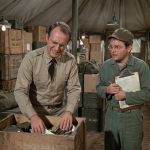
The hanging bulb’s yellow glow is dim in the crowded supply tent. Crates labeled “BANDAGES” and “MEDICAL SUPPLIES” stack to the canvas ceiling. The smell of dust, canvas, and old paper hangs heavy. Another long shift is done, leaving everyone tired, dirty, and a little desperate.
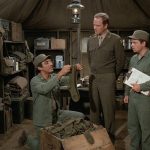
Maxwell Klinger, a man known for theatrical statements, holds center stage. His face is a mask of dramatic confusion and exasperated plea. In his hands, he grips a garment made of impossibly bright, paisley silk. Vibrant swirls of pink, purple, lime green, and yellow polka-dots seem to vibrate against the olive-drab world. “Radar,” he entreats, his voice a strained whisper, “I ordered the standard summer dress fabric! This was in the crate!“
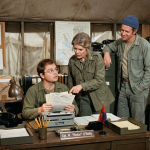
Radar O’Reilly stands at the center, looking every bit the small-town Iowa farm boy overwhelmed. He grips his canvas mailbag as a shield against the fabric’s psychedelic assault. His glasses are perched nervously on his nose; his knit cap pulled low. “I… I know, Klinger. I checked the inventory slip. It said ‘Fabric, Assorted, Summer weight.‘ I just… I didn’t open it. I didn’t know!” His voice is small, full of honest worry. The logic of supply and demand never accounted for color this loud.
B.J. Hunnicutt leans casually against a heavy wooden crate on the right. A slow, dry smile spreads across his face as he watches the panic. He shifts his posture, relaxing into the quiet absurdity of the moment. His dog tags catch the light. He is watching two worlds collide: Klinger’s resilient spirit and Radar’s desperate innocence. The fabric itself feels like a colorful scream in a world painted exclusively in green. Then, a noise sounds outside. The quick, unmistakable whoosh-whoosh of a helicopter engine.
“Incoming, Radar.” B.J.’s gentle observation hangs in the quiet tent, but the engine sound fades. It wasn’t for them. Not this time. But the reality of the war always sits just outside the canvas.
Klinger drops the flamboyant shirt onto a stack of blankets with a sigh. The dramatic flourish is gone. Just a tired soldier looking at a useless, beautiful object. He rubs his temples, his resilient spirit momentarily frayed. Radar steps closer, relaxing his grip on the mailbag. “I can… I can send a wire, Klinger. Ask for a trade. It might take months, but maybe—”
“Months? We don’t have months, kid.” B.J. finally speaks, standing upright. He picks up the psychedelic fabric. The brightness feels heavy in his hand. A useless artifact of a forgotten, peacetime sensibility. “Look at this thing,” he says, a tender note creeping into his voice. “This color… it’s not for hiding.“
B.J. drapesa a corner over a “C-RATIONS” box. “Maybe that’s exactly what we need,” he says thoughtfully. “Something that refuses to blend in.” He catches Klinger’s eye, and a shared realization sparks. Klinger picks up a matching spool of equally bright thread. “Not blending in… is my entire campaign strategy.“
A quiet tenderness settles into the small supply tent. The humor of the fabric’s flamboyance shifts. It isn’t just an object of ridicule now. It becomes a symbol of simple, resilient defiance. The 4077th is a place where you wear your fatigue like a uniform, but you never let it crush your color. Radar adjusts his glasses, watching the transformation. “It would make a statement.“
“Yes,” B.J. smiles, looking at his two friends. “A statement that says, ‘Even here, we still remember what color looks like.’” Klinger grabs the fabric back, his eyes flashing with newfound theatrical purpose. “This is not a dress fabric, Radar. This is a cry for peace!” B.J.’s slow smile widens as Radar gives a genuine, relieved giggle.
The fatigue of the day lifts slightly. The small, human bond—care, friendship, shared resilience—is restored. In the dust and shadow of the Supply Area, three men found a moment of defiant joy in a mistake. They stand together, amidst the bandages and rations, defined not by the war that traps them, but by the humanity they refuse to surrender.
Because sometimes, you need a little color to survive the green.