The Quiet Inventory of the Heart
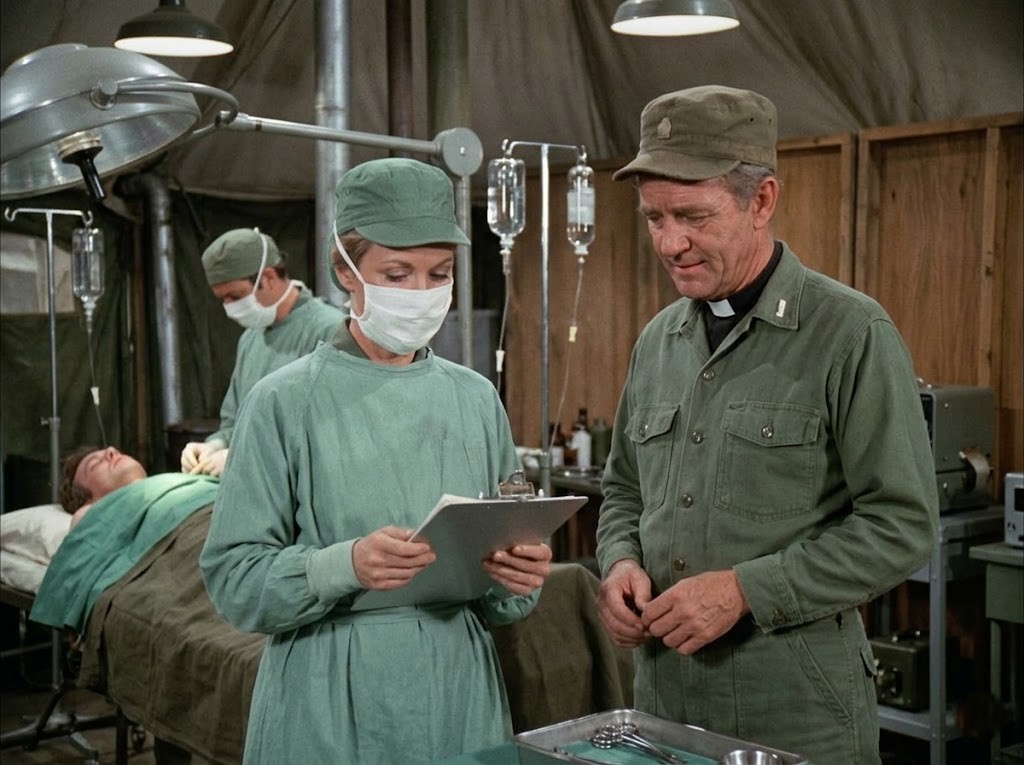
The O.R. tent always smelled of the same three things: copper, antiseptic, and the damp canvas of a Korean autumn trying to squeeze its way through the seams.
Outside, the generators rattled a steady, bone-deep rhythm that everyone stopped hearing after their first three weeks at the 4077th. Inside, the world shrunk down to the sharp radius of the overhead surgical lamps, casting a pale glow over the olive-drab gowns and the tired souls wearing them.
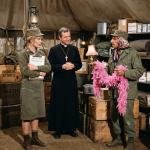
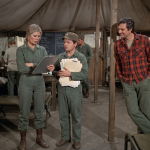
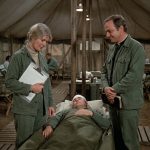
Major Margaret Houlihan held the clipboard as if it were a shield against the exhaustion pressing down on her shoulders. Her eyes, framed by the stark white of her surgical mask, scanned the columns of numbers, checking the inventory of sutures, plasma bottles, and sterile instruments.
Behind her, another surgeon worked quietly over a patient, the rhythmic, metallic *clink* of forceps providing a steady background counterpoint to her thoughts. It had been an eighteen-hour shift, the kind that left your feet numb and your mind playing tricks on you, making the small tent feel like an island drifting out into the dark.
Father John Mulcahy stood beside her, his utility cap tilted back just enough to show the silver cross pinned to his collar. He wasn’t checking the medical supplies, but he was taking an inventory of his own, looking down at the surgical tray with that gentle, slightly wrinkled brow that had comforted a thousand frightened boys.
“Everything accounted for, Major?” the priest asked softly, his voice a quiet sanctuary amidst the low hum of the O.R.
Margaret didn’t look up from the pages, her pen hovering like a needle about to drop on a record. “We’re short on the four-ought silk, Father, and the supply truck from Seoul is delayed again because of the mud down by the checkpoint.”
She sighed, a sharp, ragged sound that caught in her throat before she could stop it. For a woman who prided herself on military precision, the unpredictable chaos of the war was a constant, grinding friction, yet she kept her posture perfectly straight, refusing to bend.
“We will manage,” Mulcahy said, offering a small, reassuring nod, his hands clasped loosely in front of him. “We always seem to find a way, even when the ledger says we shouldn’t.”
Margaret finally lowered the clipboard, looking at the gentle priest with a mixture of professional stoicism and deep, bone-weary vulnerability. “It’s not just the silk, Father,” she whispered, her voice dropping so low the surgeon behind them couldn’t hear.
“The boy on the third table this morning… the one from Ohio who kept asking for his sister… I went to check his chart just now, and…” She stopped, her fingers tightening against the metal edge of the clipboard until her knuckles turned as white as her mask.
Mulcahy looked at her, his eyes filling with that deep, intuitive understanding that required no explanation. He didn’t offer a platitude or a standard theological phrase; he simply stepped a fraction closer, letting his presence carry the weight of the silence.
“He passed away twenty minutes ago, didn’t he?” Margaret asked, the certainty in her own voice breaking just a little at the edges.
“He did,” Mulcahy replied softly, looking down at the tray of instruments between them. “But I was with him, Margaret. He wasn’t alone, and he wasn’t afraid. He thought he was sitting on the front porch back home.”
Margaret looked back down at the clipboard, her eyes blinking rapidly against the harsh light of the O.R. lamp. She hated showing weakness, especially in the uniform she wore like armor, but in front of Mulcahy, the armor always felt a little too heavy to maintain.
“I just… I hate when the math doesn’t add up, Father,” she said, her voice trembling slightly before she forced it back into line. “We do everything right. We count the sponges, we sterilize the blades, we follow the protocol to the letter. And the ledger still takes what it wants.”
Just then, the flap of the O.R. tent rustled, and Captain Hawkeye Pierce walked by, his gown splattered, carrying a fresh basin of water. He paused for a second, sensing the heavy air between the Head Nurse and the chaplain, his usual sharp wit softening into something gentler.
“Hey, if you two are plotting a mutiny, count me in,” Hawkeye said, his voice tired but laced with that familiar, comforting warmth. “But only if it involves better coffee and a permanent ban on Monday mornings.”
Margaret let out a tiny, involuntary laugh through her mask—a sound that was half-sob and half-relief—before giving Hawkeye a mock-stern look. “Go wash up, Captain. You’re tracking mud into my clean operating room.”
“Right away, Major,” Hawkeye said with a lazy, affectionate salute, moving along and leaving them with a little more breathing room than they had a moment before.
Mulcahy smiled faintly, watching Hawkeye walk away before turning back to Margaret. “You see, Major, the protocol keeps them alive on the table, but it’s the humanity that keeps us alive while we do it.”
He reached out, his hand pausing for a brief second before gently tapping the top of her clipboard. “Don’t worry so much about the ledger tonight. You’ve done your part, and the angels will look after the rest.”
Margaret looked at the priest, the tension slowly draining from her shoulders as she took a deep, steadying breath. She unclipped the pen, sliding it into her pocket, and allowed herself a small, genuine nod of gratitude.
“Thank you, Father,” she said quietly, her voice steady once more, the professional facade returning but warmed by the shared moment of grace. “Let’s finish up here. There are still boys in the triage tent who need us.”
Mulcahy smiled, his eyes wrinkling at the corners as he walked beside her toward the exit, the rattle of the generators outside sounding a little less like a chore and a little more like the steady heartbeat of a family keeping each other alive.
Behind the swinging doors of the 4077th, it was never just about saving lives—it was about holding onto each other long enough to remember why those lives mattered.