The Unraveling of the Daily War
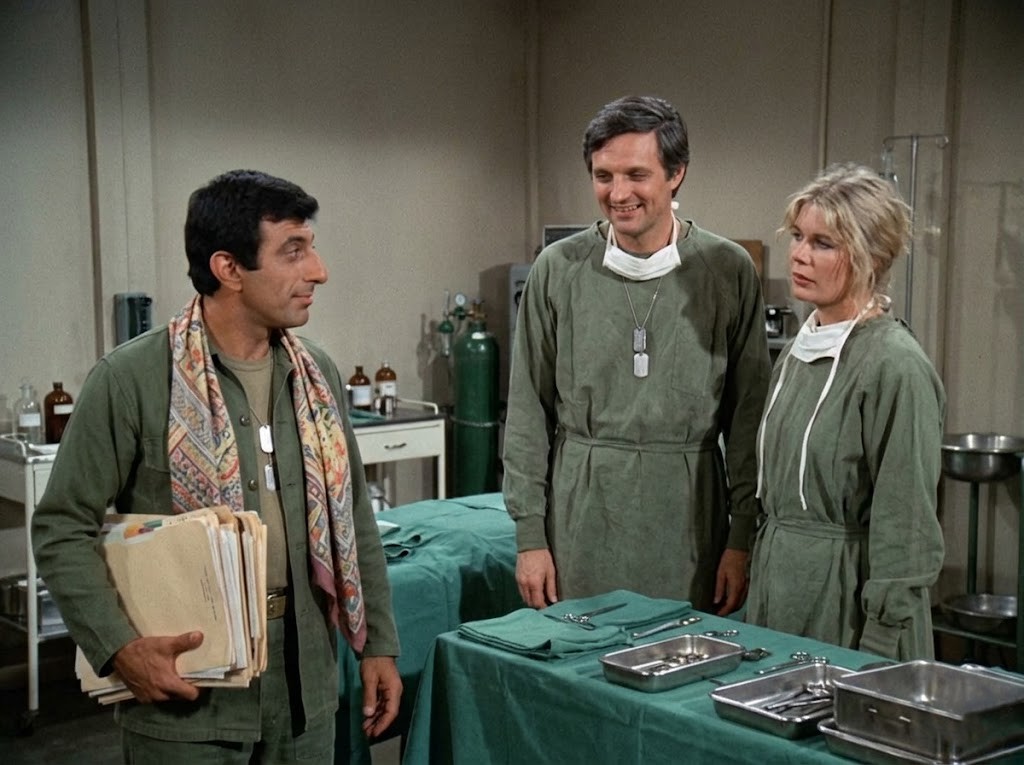
The smell of surgery always lingers. A ghost that follows you out of the operating room, clinging to the fabric of your soul. It’s a mix of antiseptic, dried blood, and the metallic tang of exhausted fear. We all had our ways of trying to wash it off.
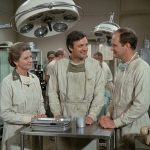
I was in Pre-Op, just leaning against one of the vacant green operating tables. The green drapes were still clean, mocking the mess I’d just left inside. Surgery had been four hours. Long, silent, technical. I had my scrub gown on, the mask pulled down around my neck. The dog tags hanging loose. My weary smile felt brittle, as if it might shatter and fall to the floor with the instruments we’d used.
Next to me, Margaret was a pillar of controlled fury. She’d tied her own mask at the back, just resting for a split second, her spine ramrod straight. Her gaze was not for me. No, it was directed with laser precision at the man who had just walked through the swinging doors.
Klinger was a shock of color in a world of muted olives and greens. He wasn’t in a dress that day, just his regulation fatigue shirt, though even that was customized. He wore a scarf. A silk paisley monstrosity, colorful as a parrot, draped around his neck over his dog tags. In his arms, he clutched a stack of files that looked like they were trying to crush him. Tan, thick, official military folders. Dozens of them. They were wobbling in his grip, the stack nearly chin-high.
His expression was priceless. It was defensive, explanatory, and slightly defiant all at once. He caught Margaret’s gaze and instantly knew his timing was… unfortunate. He looked from her to me, his big nose twitching like a bloodhound scenting trouble. He opened his mouth, trying to find a reason, an excuse, a *justification* for invading the sanctum of recovery.
The tension in the quiet room was palpable. Margaret stood perfectly still, her focus making the air vibrate. I just kept my weary, knowing smile. Klinger took a cautious step forward, the colorful parrot-scarf shifting, and the file stack lurched. The folders shifted, the precarious structure beginning to lean at a terrifying angle.
Klinger froze, but the file on the very top, a folder labeled in bold black marker ‘SUPPLY REQUISITION – MEDICAL GAUZE (QUARTERLY),’ slipped. It slid, agonizingly slow at first, down the side of the stack. A ripple effect went through the whole tower. He opened his mouth to gasp, but it was too late. The dreaded form that controlled our supply of gauze was already slipping past his colorful silk scarf, falling toward the floor.
The gauzy, official paper hit the floor with a sound that felt as loud as a mortar round in the silent room. A single sheet of paper, but it held the power to disrupt the delicate ecosystem of our little surgical circus.
Margaret was faster than any of us. She didn’t yell. She didn’t lecture. She didn’t even acknowledge the paper on the floor. Her body moved with trained efficiency, driven by her focus and determination to protect the space of recovery. She stepped in front of Klinger, her gaze intense, blocking him. Then, with a practiced motion, she pointed toward the door he had just come in. Her meaning was clear: Leave. Now. Your paper wars can wait; we are still fighting the *real* war.
Klinger’s defensive wall cracked. He looked at Margaret, his big eyes reflecting genuine, slightly wounded surprise, not at her anger, but at her urgency. For a moment, his colorful scarf, the stack of files—it all seemed incredibly silly against the weight of the moment. Then, with a sigh of defeat, he turned.
But he didn’t just walk away. The stack of folders in his arms was now irrevocably compromised. As he started to retreat, another file slid loose, then another. It was a domino effect of bureaucracy in a fatigue shirt. Folders titled ‘PAYROLL ADJUSTMENT,’ ‘MOTOR POOL ROUTINE,’ and ‘PERSONNEL LEAVE REQUESTS’ spilled, one by one, trailing like confetti. It was a visual comedy of errors, yet profoundly pathetic in that specific, M*A*S*H kind of way.
He kept walking, the colorful parrot-scarf a beacon as he fled, the paper trail leading out. He didn’t stop to explain or apologize. He just left, a man defeated by his own files.
The swinging doors hissed shut. Silence returned. I stood there, leaning against the green table. The metal trays of instruments sat precisely as I had seen them minutes ago. The green oxygen tank hummed a lonely note. The bottles on the supply cart were silent witnesses.
The floor, however, was now a small white and tan snowfield. A paper version of our war.
Margaret turned away from the door, her back to me. She was looking at the instrument trays. I saw her shoulders, so straight and powerful, slightly drop. Just an inch. Not a sigh, just an acknowledgment of the weight she carried.
“He does have an eye for color, you have to admit,” I said, a quiet wit to mask the sudden, sharp ache in my chest. It wasn’t just humor. It was a small olive branch, a tiny, human tether.
Margaret didn’t laugh. She didn’t even smile. She just sighed, a long, tired breath that finally escaped. She looked from the empty spot where Klinger had been to the papers on the floor. She knelt down. Not to collect them, but just to pick up that first, critical one. The gauzy requisition paper.
She looked at it, a world of complicated thoughts visible on her face. Her controlled professional self and the person underneath, the one who worried and planned and fought, meeting for a single second on a piece of official military paper.
She crumpled it, just slightly, then smoothed it again. “General Clayton’s gauzy paperwork can wait,” she said, her voice quiet but firm. She didn’t sound angry anymore. She sounded… exhausted. Human.
A few more seconds passed. I knew my shift wasn’t over. I knew the O.R. wasn’t done with me. And I knew this quiet moment was just a pit stop.
I watched Margaret stand up, the small piece of gauze form in her hand. She placed it neatly on the supply cart, not throwing it back onto the pile of paperwork, but handling it with strange, quiet dignity. Like she was acknowledging its importance, not because of the paperwork, but because of what it *meant* to her nurses and their work.
I walked over to her. I didn’t touch her, but I stood there, our shoulders nearly touching. We looked at the few other files still on the floor. We could hear the sounds of the camp outside—the distant groan of a jeep, the soft chatter of voices. Life going on.
“I wonder what he was doing with payroll paperwork in Pre-Op,” I muttered, shaking my head.
Margaret did the unthinkable. She actually smiled. A genuine, quick, small grin that lit up her face, a brief flicker of tenderness hiding underneath that iron focus. The ghost of surgery didn’t vanish, but it felt, just for that moment, less powerful. The papers on the floor were just papers, and we were just two people, sharing a small, warm human breath between the battles.
—
Some days, the paperwork feels like the real enemy, but at least we’re all in this absurdity together.