The Morning Report, and Other Quiet Miracles
The mud of Korea has a way of clinging to everything, even the spirits of the people trying to hold this place together.
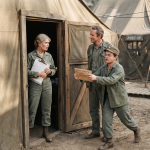
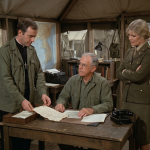
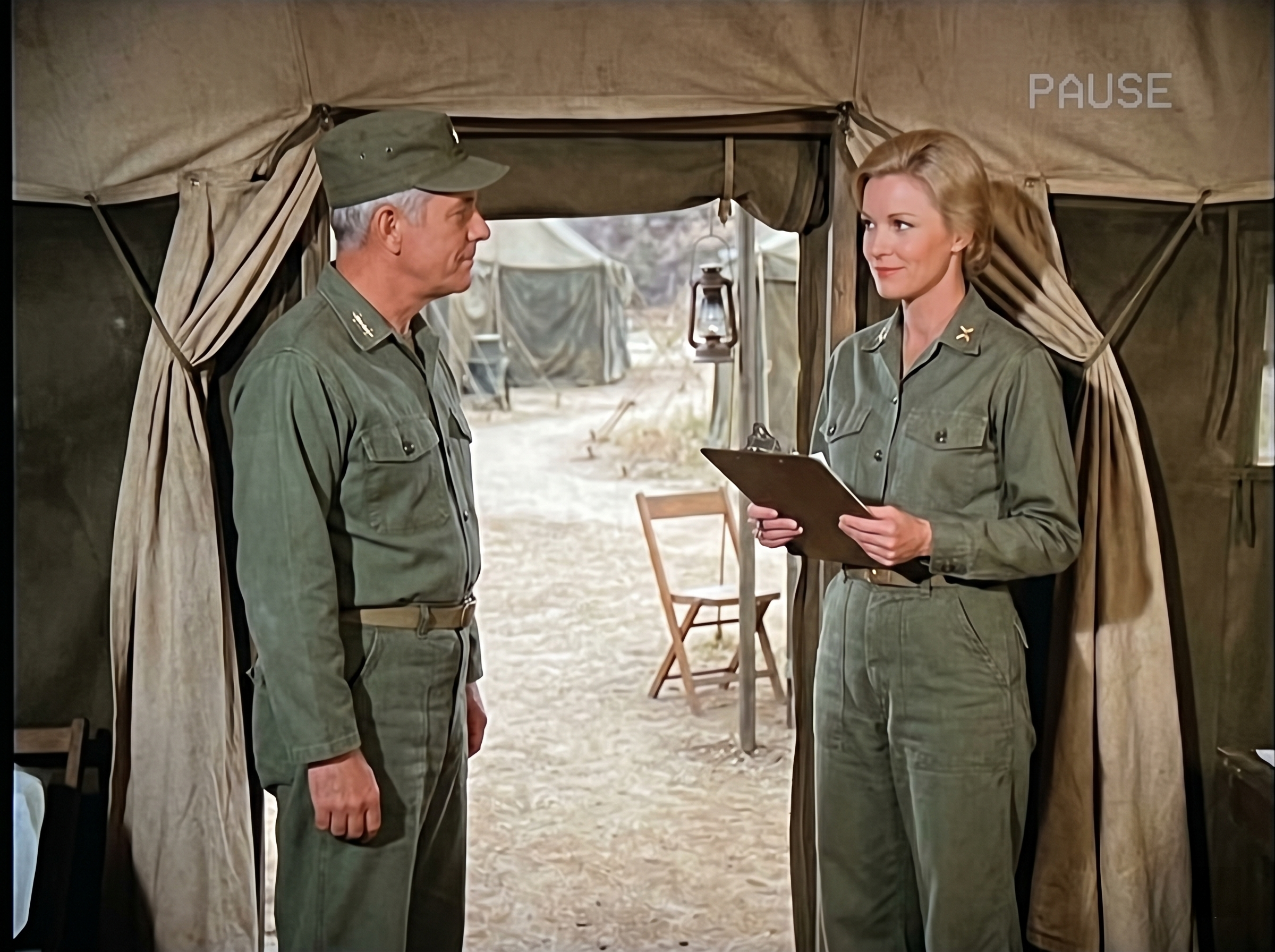
Colonel Potter stood in the threshold of his tent, his uniform pressed with the kind of meticulous care that usually heralded a long day of paperwork and headaches. He looked out at the camp, his gaze lingering for a moment on the familiar, lopsided skyline of the 4077th.
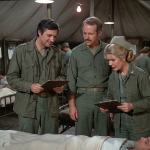
Margaret Houlihan stood before him, the morning sun catching the gold bars on her collar. She held her clipboard like a shield, her posture as rigid as the military code she’d spent her life defending. But her eyes were softer than usual, lacking that sharp, defensive edge he’d come to expect after a night of heavy incoming.
“Major,” the Colonel said, his voice a low gravel, “tell me we’re not looking at another casualty list that stretches to Seoul.”
Margaret looked down at the paper, then back at him. She hesitated, a rare break in her professional armor.
“It’s not the list, sir,” she said, her voice dropping just enough to invite him into her confidence. “It’s about the supply request I put in three weeks ago. I think we finally have a breakthrough, but you aren’t going to like how it arrived.”
Potter leaned forward, his curiosity piqued by the slight, uncharacteristic twitch at the corner of her mouth. “What is it, Houlihan? Did they send us crates of powdered eggs again? Because I swear, I’ll feed them directly to the camp mascot.”
“Worse,” she murmured, “or perhaps better. It’s sitting in the back of a supply truck, and they’re refusing to unload it until you sign for it personally, under oath, that it’s ‘essential medical equipment.'”
The Colonel blinked, his brow furrowing as he braced himself. He took a step toward her, his face a mix of suspicion and the weary resignation of a man who had seen everything.
“What is it, Margaret?” he demanded, his voice rising with a flicker of genuine alarm. “What on earth could they possibly have sent us that requires a solemn oath?”
Margaret let out a short, sharp huff of a laugh—the kind that escaped only when she was completely exasperated.
“They sent a crate of vintage medical textbooks, Colonel. And,” she paused for effect, “a full crate of what appears to be authentic, pre-war German porcelain coffee service pieces.”
Potter stared at her for a long, silent moment. The hum of the camp—the distant shouting of Klinger somewhere near the motor pool and the rhythmic thumping of the generators—seemed to fade away.
“Porcelain?” he repeated, his voice barely a whisper.
“Genuine, sir,” she confirmed, looking down at her clipboard as if checking the manifest for the fifth time. “Apparently, someone in the supply chain had a sense of humor, or perhaps they just needed to clear out a basement in Tokyo.”
The tension that had defined the morning, the heavy, metallic taste of fatigue that usually hung over the 4077th, suddenly cracked.
Colonel Potter looked at the clipboard, then back at Margaret. Slowly, the corners of his mouth began to tug upward, forming that familiar, crooked smile that had steered them through countless storms.
“You know,” he muttered, shaking his head, “in the middle of a war, we’ve just been gifted a way to drink coffee like we’re at a society wedding in Des Moines. It’s ridiculous. It’s absolutely, completely absurd.”
“Yes, sir,” Margaret agreed, a genuine, warm smile finally breaking through her professional veneer. “Shall I tell them it’s essential for morale?”
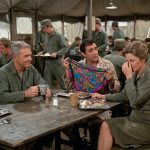
“Essential?” Potter chuckled, the sound deep and resonant in the quiet morning air. “Margaret, it’s the most important thing we’ve received since the invention of the penicillin crate. Get it moved to the mess tent. And tell Pierce and B.J. that if they chip a single saucer, they’re on KP for a month.”
Margaret nodded, stepping aside to let him pass, her own shoulders relaxing as she turned toward the supply truck.
She walked away with a lighter step, the clipboard no longer a shield, but a sign of a task completed. The Colonel watched her go, the morning chill finally beginning to retreat as the sun fully crested the ridge.
It wasn’t a victory in the war, not in the way the politicians back home talked about it. It was just a quiet, fragile, and utterly human moment.
It was the realization that even here, in the middle of nowhere, surrounded by the chaos of a conflict that made little sense, they were still human. They could still appreciate the fine edge of a saucer or the comfort of a book that had nothing to do with shrapnel.
He stood there for another minute, breathing in the smell of pine and damp earth, feeling the weight of the war lighten, just for an hour, just for a cup of coffee.
Tomorrow, the choppers would return. Tomorrow, the lists would grow long again. But for today, there was porcelain, and there was the quiet grace of a team that had learned how to hold onto each other, one cup at a time.
In the heart of the 4077th, even the smallest joy was a victory worth holding onto.