The Treasures of the 4077th: A Moment in the Supply Tent
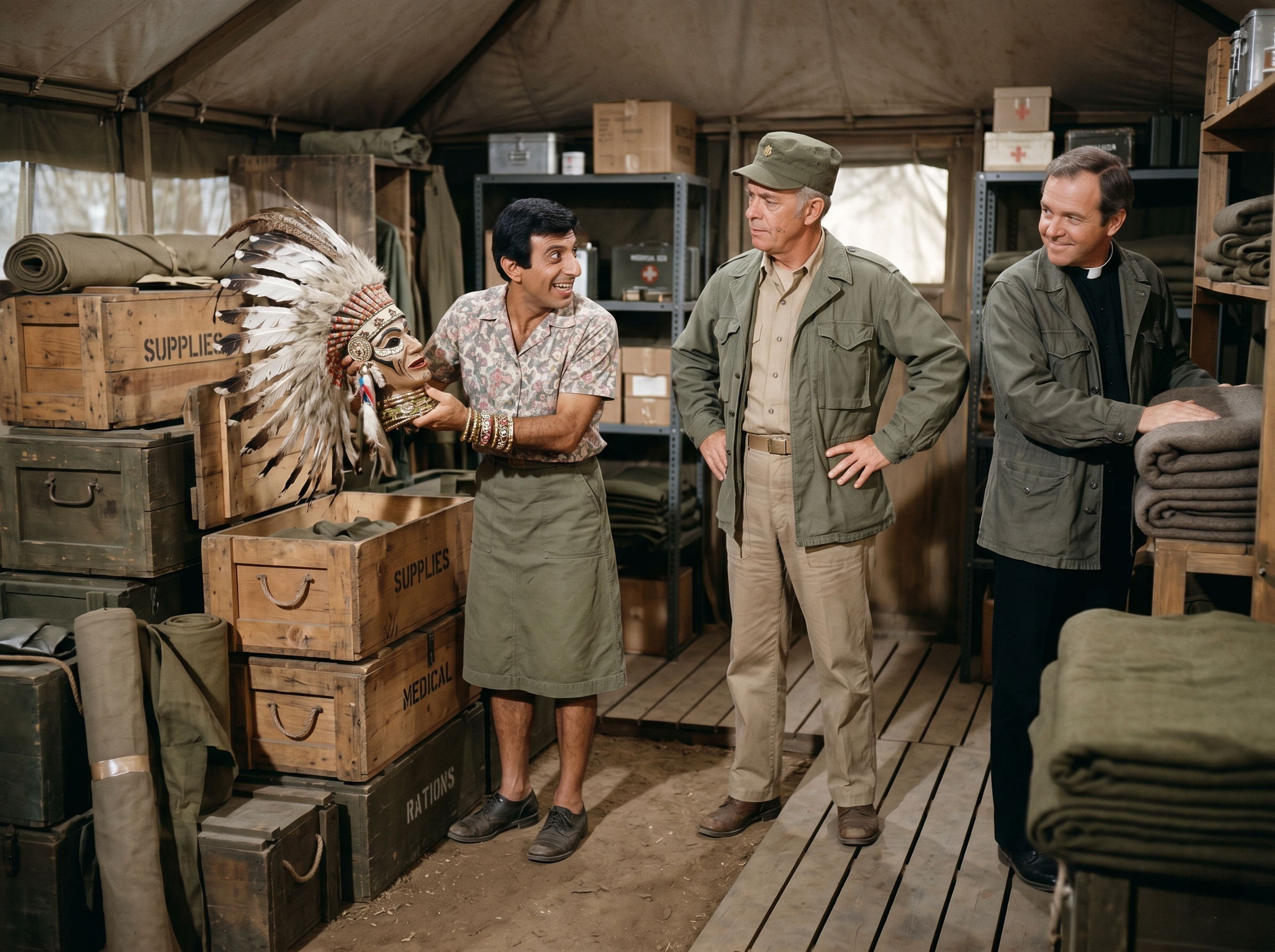
The air in the 4077th supply tent always smelled of damp canvas, stale coffee, and the unique, dusty scent of things that had been waiting a very long time to be useful. It was a place where order fought a losing battle against the entropy of war.
Klinger was currently winning that battle, mostly by turning it into a theatrical production.
He stood in the center of the aisle, his floral-print blouse tucked neatly into his regulation olive-drab skirt, his arms adorned with enough jangling bracelets to announce his arrival three tents away. He held up a magnificent, feathered Native American-style headdress, turning it slowly so it caught the dim light filtering through the tent flaps.
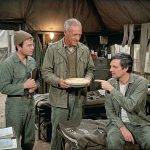
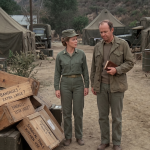
Colonel Potter, leaning against a shelf of medical supplies, watched with a bemused, fatherly squint, his hands resting on his hips as if he were trying to keep his own patience from floating away. Beside him, Father Mulcahy observed the display with quiet, gentle curiosity, his hands clasped behind his back as he looked at the vibrant feathers that seemed entirely alien to this landscape of muted greens and browns.
“Tell me, Corporal,” the Colonel sighed, though his voice lacked any real bite. “Is this a new regulation piece of headgear for the infantry, or is the 4077th officially preparing for a tribal council?”
Klinger beamed, his eyes bright with the thrill of the ridiculous. “Colonel, it’s about morale! In this place, if you’re going to be bored to tears, you should at least have the option to be bored while looking like a majestic chieftain. It keeps the guys guessing.”
Suddenly, Klinger’s expression shifted. He tilted the headdress toward the light again, and a small, almost imperceptible tremor touched his hand. He wasn’t looking at the Colonel anymore; he was looking at the intricate beading on the headband, his playful facade faltering just for a split second.
“It’s not just a prop, sir,” Klinger murmured, his voice losing its usual performative edge. “I found this hidden at the bottom of a crate of bandages. Someone had carefully wrapped it in silk, buried deep, like they were protecting a piece of their soul. It doesn’t belong in a supply crate, and it certainly doesn’t belong in Korea.”
The tent went quiet, the usual hum of distant helicopters and camp chatter fading into the background. The Colonel and the Father exchanged a look—a look that acknowledged, without needing to say it, that they all knew the weight of things people left behind.
Klinger gripped the headdress tighter, his knuckles whitening, and looked up at them with a sudden, raw desperation. “If I put this back, it’s just trash in a box. But if I keep it out… if I let it be what it was meant to be… does that make me a thief, or a witness?”
Colonel Potter stepped forward, his boots crunching softly on the wooden floorboards. He didn’t take the headdress, but he reached out and adjusted a stray, frayed feather near the crown, his movements slow and reverent.
“It makes you a man who understands that some things are too important to be forgotten, son,” the Colonel said softly. The dry, military exterior was gone, replaced by the weary, profound empathy of a man who had spent his life watching the world lose and regain its treasures.
Father Mulcahy moved closer, peering at the craftsmanship. “It is a beautiful thing,” he added, his voice steadying the sudden tension in the room. “It represents a heritage, a home, and a dignity that this war has tried very hard to bury. Perhaps, in its own way, holding onto it is a small act of defiance against the chaos outside.”
Klinger’s breath hitched. He had braced himself for a lecture, for the inevitable command to pack it away and return to the status quo. Instead, he found the two people he respected most in the world offering him a quiet, unspoken permission to care about something that technically didn’t exist in their inventory.
“I just…” Klinger started, then shook his head, a faint, lopsided smile returning to his face. He adjusted his bracelets, the familiar jangle filling the silence. “I just thought it deserved a better view than a cardboard box. Besides, if we’re going to survive this place, we need more color. Everything around here is the color of mud.”
The Father smiled, patting Klinger’s shoulder with a touch that felt like a benediction. “You have a remarkable way of finding the humanity in the debris, Corporal. It is a gift.”
The Colonel cleared his throat, pushing his cap back slightly as he surveyed the rows of crates—the supplies, the medical gear, the rations. “Well, don’t let it distract you from the inventory. But keep it out for a bit. It’s a nice change of scenery.”
As the two men turned to walk toward the exit, their conversation drifting back to the mundane details of camp maintenance, Klinger stayed in the aisle for a moment longer. He looked at the headdress, then placed it carefully atop a stack of wooden crates, not as an item for sorting, but as a centerpiece for the room.
The light shifted, catching the feathers and casting long, dancing shadows against the canvas walls. For one quiet afternoon, the supply tent wasn’t just a place of war logistics; it was a sanctuary for something beautiful, something kept safe by a man who knew exactly what it felt like to be out of place.
Klinger took a deep breath, adjusted his skirt, and turned back to his work, his step a little lighter, his heart a little fuller. Outside, the war continued its relentless march, but inside the tent, the 4077th had carved out one more small, defiant piece of home.
In a place where everything was temporary, we learned that the most important things to save were the pieces of ourselves we dared to keep.