The Best Medicine in the 4077th
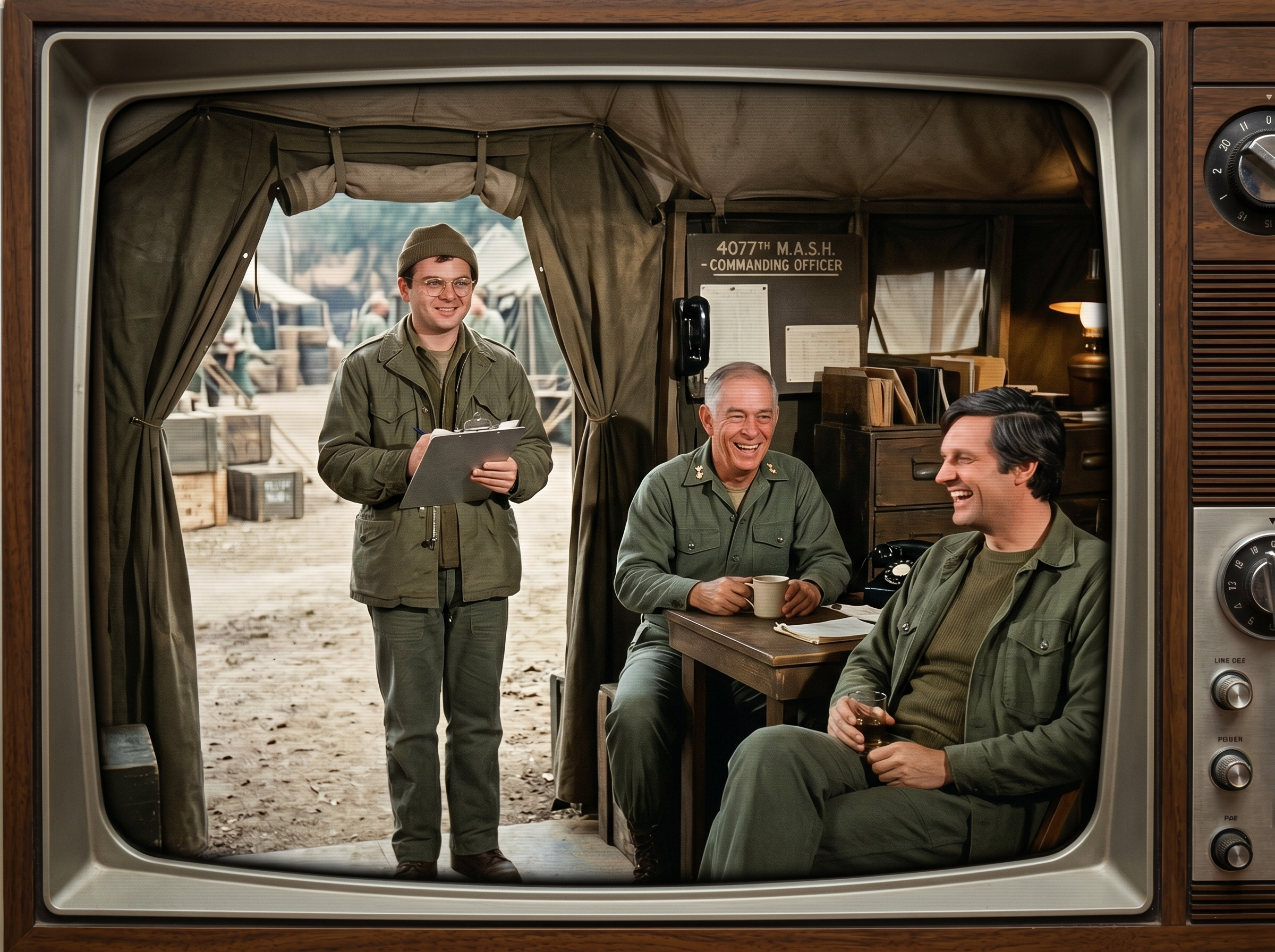
There were rare, golden afternoons at the 4077th when the war seemed to simply forget they were there.
It was a temporary, unspoken truce called by sheer exhaustion. These were the quiet hours where the chopping blades of the medevac helicopters stayed silent, and the heavy Korean dust settled lazily over the motor pool.
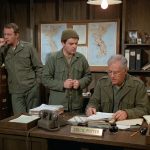
Inside the commanding officer’s tent, the canvas walls glowed with a comforting, familiar light. It was a soft, atmospheric balance—the warm, golden glow of a desk lamp mixing with the hazy, bright daylight filtering in through the mesh screens.
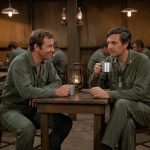
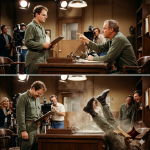
Captain B.J. Hunnicutt was slouched comfortably in a weathered canvas chair, completely at ease. He wore his standard, faded green fatigue shirt. Like everything at the 4077th, his clothes were practical, deeply worn, and thoroughly lived-in. He held a tin mug of the mess tent’s notoriously terrible coffee, completely ignoring the taste.
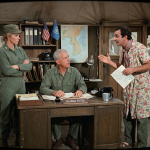
Across the wooden desk, Colonel Sherman T. Potter leaned slightly forward in his chair.
For the moment, the heavy, weary lines of command that usually weighed down the older man’s features had vanished. The burden of signing casualty reports and fighting with army brass was gone. In its place was a look of dryly amused, deeply gentle pride.
They were caught right in the middle of a shared laugh. B.J. had just delivered the punchline to a long, winding story about a disastrous, rain-soaked camping trip he had once taken back in California, long before he even knew what a mobile army surgical hospital was.
B.J. wore a wide, effortlessly warm smile, his eyes crinkling with the natural friendliness that made him the anchor of the Swamp. Potter was chuckling, a low, rumbling sound of genuine delight.
It was a perfect, private moment of family-style warmth. A brief shield against the madness outside.
Then, the heavy canvas tent flap was pulled back.
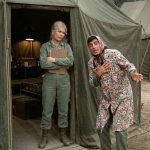
The doorway suddenly framed a sharp slice of the outside world. Behind the opening, a dusty dirt path baked in the afternoon sun, leading past a haphazard stack of olive-drab medical supply crates.
Stepping half-into that framed space was Corporal Walter “Radar” O’Reilly.
Radar froze in the doorway, a battered wooden clipboard clutched securely against his chest. He didn’t interrupt the laughter right away. He just stood there, caught between the harsh reality of the camp compound outside and the warm, fatherly sanctuary of Potter’s office inside.
As he listened to the two doctors laugh, a look of pure, innocent pride washed over Radar’s young face. A shy, quiet smile played at the corners of his mouth.
He looked like a boy who had just won the county spelling bee, but was waiting politely for the adults to finish talking before he showed off his blue ribbon.
Potter and B.J. slowly noticed him standing there. The laughter in the room dialed down, shifting into an atmosphere of fond curiosity. They knew that look on the clerk’s face.
Radar had a secret. And whatever was written on the papers clipped to his chest, he clearly believed it was going to make this rare, peaceful afternoon even better.
Potter leaned back slightly, his eyes twinkling. “Well, don’t just stand there letting the flies organize a union, son. Come on in.”
Radar took a breath, his shy smile widening. “Colonel,” he said, his voice carrying a slight tremble of suppressed excitement. “You know that impossible phone call to I Corps you asked me to make yesterday?”
Radar stepped fully into the room, letting the heavy canvas flap fall shut behind him. The dusty view of the crates vanished, leaving them enclosed in the warm, quiet tent.
B.J. shifted in his seat, his wide smile remaining. “Radar,” he teased gently, “whenever you start a sentence with ‘that impossible phone call,’ I start wondering if I need to pack my bags for Leavenworth.”
Radar blushed, instinctively reaching up to adjust his round, wire-rimmed glasses. His oversized, faded fatigue shirt draped modestly over his slight frame, a far cry from any crisp military parade uniform.
“No, Captain Hunnicutt. Strictly legitimate, sir. Or, at least, mostly legitimate.”
Radar walked over to the desk and set his clipboard down with a deliberate, theatrical little tap.
“Sir,” Radar began, standing at attention but entirely too excited to stay perfectly still. “I Corps said they absolutely could not spare the new shipments of surgical silk and penicillin. They said General Barker had them earmarked for a general hospital all the way in Tokyo.”
Potter sighed, his amused smile fading just a fraction. He rubbed his chin. “I figured as much. We’re at the end of the supply line out here, son. We just have to make do with the thread we’ve got.”
“But,” Radar interrupted quickly, raising one index finger. “I happened to know that the supply sergeant at I Corps is desperately trying to impress a certain nurse in the typing pool. And I also happened to know that Sparky, down at the Seoul switchboard, had a surplus of genuine French perfume that accidentally fell off a transport truck last month.”
B.J. chuckled softly, taking a sip of his terrible coffee. “Here we go.”
Radar beamed, unable to hide his pride. “So, I traded Sparky three extra fan belts from the motor pool for the perfume. Then I traded the perfume to the supply sergeant at I Corps.”
Radar pointed to the top form on his clipboard. “The surgical silk and three crates of penicillin will be on the morning chopper, sir.”
Potter stared at the young corporal. The gentle, dry pride returned to the older man’s eyes, striking much deeper this time. It was the exact look of a weary father realizing his son had just outsmarted the entire neighborhood.
“I’ll be damned,” Potter said softly. “Good work, son. Damn fine work.”
Radar looked down, his scuffed boots shuffling lightly against the wooden floorboards. He was glowing. “That’s not all, sir.”
He reached into the deep, baggy pocket of his trousers. He pulled out a small, round tin and slid it gently across the worn wood of the desk.
Potter picked it up. He stared at the faded paper label. It was his absolute favorite pipe tobacco. A rare, sweet-smelling blend from back in Missouri that he hadn’t been able to find in over six months.
Before Potter could even form a word of thanks, Radar turned his attention to the captain sitting in the chair.
He reached into his other pocket and pulled out a small, slightly crumpled envelope. The handwriting on the front was neat, elegant, and unmistakably feminine.
“The mail jeep broke down about two miles down the road,” Radar said, his voice dropping into a quiet, tender register. “I took a ride out there with Zale to help tow it back. I saw this sitting right on top of the canvas bag.”
Radar held the envelope out. “I know you were having a really rough week in the OR, Captain. I thought maybe you shouldn’t have to wait until mail call tomorrow.”
B.J. reached out and took the letter. He stared at the handwriting for a long moment.
His wide, joking smile slowly melted away. In its place came a soft, profound stillness. All the layered fatigue of a thousand surgeries seemed to wash out of B.J.’s shoulders, replaced by an overwhelming, homesick gratitude.
“It’s from Peg,” B.J. whispered. He looked up at Radar, his eyes shining with a quiet, unspeakable emotion. “Thanks, Radar. Thank you.”
The tent grew beautifully quiet.
The terrible war was still waiting out there, just beyond the canvas walls and the stacked crates. The mud, the cold, the blood, and the endless fatigue would all inevitably return with the sound of the next siren. They all knew it.
But in this single, perfectly framed moment, they were safe. They were looked after.
Potter leaned back in his chair, tapping the tin of tobacco affectionately against his palm. He looked at B.J., who was already carefully tearing open his letter from home. Then, the Colonel looked at Radar.
The young corporal was standing tall, his chest puffed out just a fraction, radiating that innocent, beautiful pride. He was a farm boy from Iowa who had somehow become the guardian angel of an entire surgical hospital.
“You know, O’Reilly,” Potter said softly, his voice thick with a sudden, overwhelming affection. “Sometimes I think you’re the only thing keeping this whole outfit from floating right off the earth.”
Radar smiled, ducking his head bashfully as the afternoon light washed over his shoulders.
“Just doing my job, sir,” Radar whispered.
In a place surrounded by brokenness, it was the quiet, unspoken devotion of friends that put them back together.