The Weight of an Unwritten Note
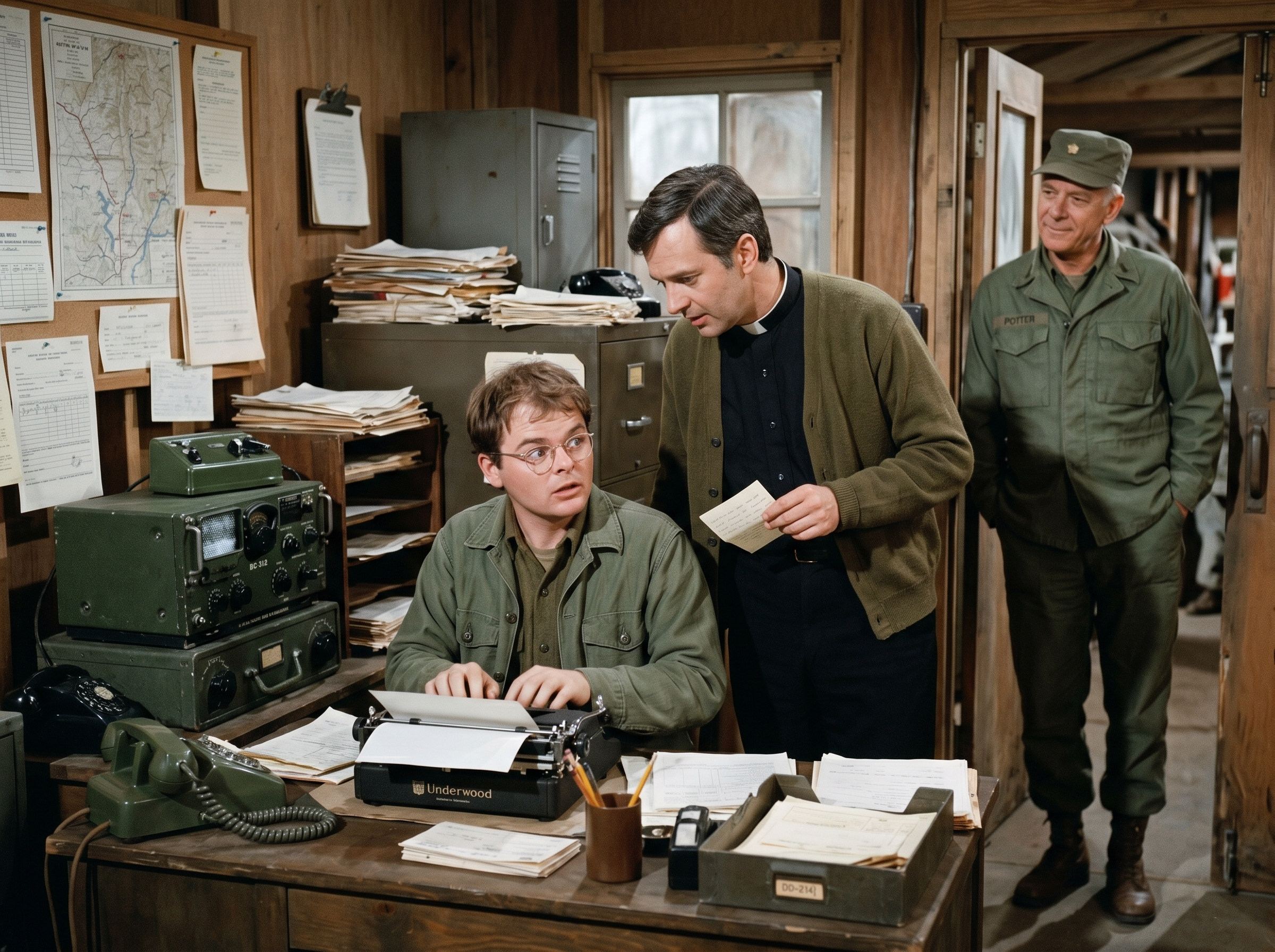
In the 4077th, the quiet moments were often the loudest. The sounds of surgery had faded hours ago, replaced by the low hum of the generator and the occasional, restless cough from the post-op ward. But the office of the Commanding Officer was a different kind of quiet.
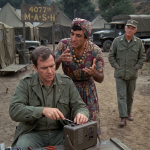
Radar O’Reilly sat huddled over his Underwood, his fingers a blur across the keys. The rapid *clack-clack-clack* was the heartbeat of the camp, an auditory reassurance that some semblance of order remained, even here. He didn’t just type reports; he translated the chaos of war into carbon copies, making sure the right forms reached the right generals at the right time.
His brow was furrowed, his glasses slipping slightly down his nose as his attention remained fixed on the white page. He was deep in the bureaucracy, navigating the acronyms and supply numbers that dictated their daily existence. “Report 34-B, sub-section twelve, requesting replacement surgical gowns…” he muttered to himself, the words a familiar, comforting mantra.
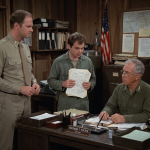
The office door creaked open, admitting Father Mulcahy, a silent figure in his black clerical shirt and an olive-drab cardigan. He didn’t say a word, just closed the door softly behind him and walked over to Radar’s desk. The weight of the camp was etched into the lines around his eyes, a fatigue that extended beyond physical exhaustion.
He reached into his pocket and placed a small, folded piece of paper on the edge of the typewriter. Radar paused, his fingers hovering over the keys. He looked up, his expression a mix of surprise and uncertainty. The Father, usually so calm and resolute, appeared hesitant, his gaze fixed on the paper.
In the doorway, Colonel Potter stood silently, his hands clasped behind his back, observing the scene. He hadn’t said a word, but his posture spoke volumes – a mix of patience, concern, and the fatherly authority that grounded the entire camp. His gaze was fixed on Mulcahy, a flicker of understanding in his eyes.
Radar swallowed hard, a lump forming in his throat. This wasn’t just another requisition form, he could feel it. The way the Father was looking at the note, the silence that hung in the air, the silent observation of the Colonel… something was different. “Father?” he whispered, his voice trembling slightly. “What’s this?”
Mulcahy didn’t answer immediately. He picked up the folded note and looked at it as if it were a heavy stone, his gaze conveying a profound sadness. In that small, cluttered office, surrounded by the mundane paperwork of war, a moment of deep, unspoken truth was unfolding, and Radar felt himself teetering on the edge of it.
Mulcahy took a deep breath, his knuckles white as he held the small, folded note. “It’s… from the front,” he finally said, his voice barely a whisper. “From a young soldier. He didn’t make it, Radar.” The words hung in the air, heavier than any report on surgical supplies. The clatter of the typewriter was completely absent now, the silence in the office deepening.
Radar felt the color drain from his face. “A letter… to his family?”
Mulcahy shook his head. “He didn’t have time to write one. But when they brought him in… he was clutching this.” He held the paper out to Radar, his fingers trembling. “He asked for it to be sent. Just one message.”
Radar tentatively took the note, his fingers brushing against Mulcahy’s. It was just a small scrap of paper, stained with dirt and the wear of a soldier’s pocket. He could make out a single line of messy handwriting, scrawled in a desperate hand: *Tell her I didn’t forget.*
A tear trickled down Radar’s cheek, smudging the lenses of his glasses. The weight of those simple, unwritten words crashed over him. This wasn’t a requisition form for bandages or morphine. It was a dying wish, a whispered promise carried across a battleground, entrusted to a weary priest and a farm boy from Iowa who typed the camp into existence.
Colonel Potter finally spoke, his voice gruff but layered with a deep compassion. “The soldier, he didn’t have any names on him, Father. Just this.”
Mulcahy looked down, his shoulders slumping. “No identification. No family name. Just this one, fleeting message, and the memory of his final words.” He looked at Radar, his eyes searching for answers. “How can we send it, Radar? Who do we tell?”
Radar stared at the single, heartbreaking sentence. He saw his own hand, holding his teddy bear, and imagined a mother, a sister, a sweetheart somewhere back home, a world away from this barren outpost, forever wondering. He saw the face of every young soldier who had passed through their operating room, the faces that haunted his dreams.
For a long moment, the only sound in the room was the low hum of the generator. Then, with a slow, deliberate movement, Radar placed the crumpled note down on his desk, right next to the requisition form he had been typing. He wiped his eyes and took off his glasses, cleaning them on the hem of his tunic. When he put them back on, his expression was solemn, resolved.
He picked up a pen and, beneath the soldier’s messy scrawl, he carefully began to write, not in official bureaucratic code, but in his own, small, precise handwriting. He wrote the words that wouldn’t fit on any form, words that wouldn’t be filed in Washington, but words that would, in some small way, fulfill a last request.
“We don’t know who she is, Father,” Radar said, his voice firming. “But we know who *he* was. He was one of ours.” He finished writing and slid the paper into an envelope. He addressed it not to a specific person, but to a collective memory. On the front, in bold, certain strokes, he wrote: *To The One Who Waits.*
Potter’s face softened into a smile, a rare, warm expression in that office. He stepped into the room and placed a hand on Radar’s shoulder. “That will do, son,” he said, his voice thick with emotion. “That will do.” He looked from Radar to Mulcahy, a silent understanding passing between them. They couldn’t fix everything, but in this small, quiet act of remembrance, they were affirming the humanity that war so often sought to destroy.
In that small, cluttered office, surrounded by the paperwork that defined their lives, three tired men found a moment of shared, bittersweet grace, and the memory of one unwritten note.
Sometimes the most important words were the ones you couldn’t put in a carbon copy.