A Prayer and a Prayer
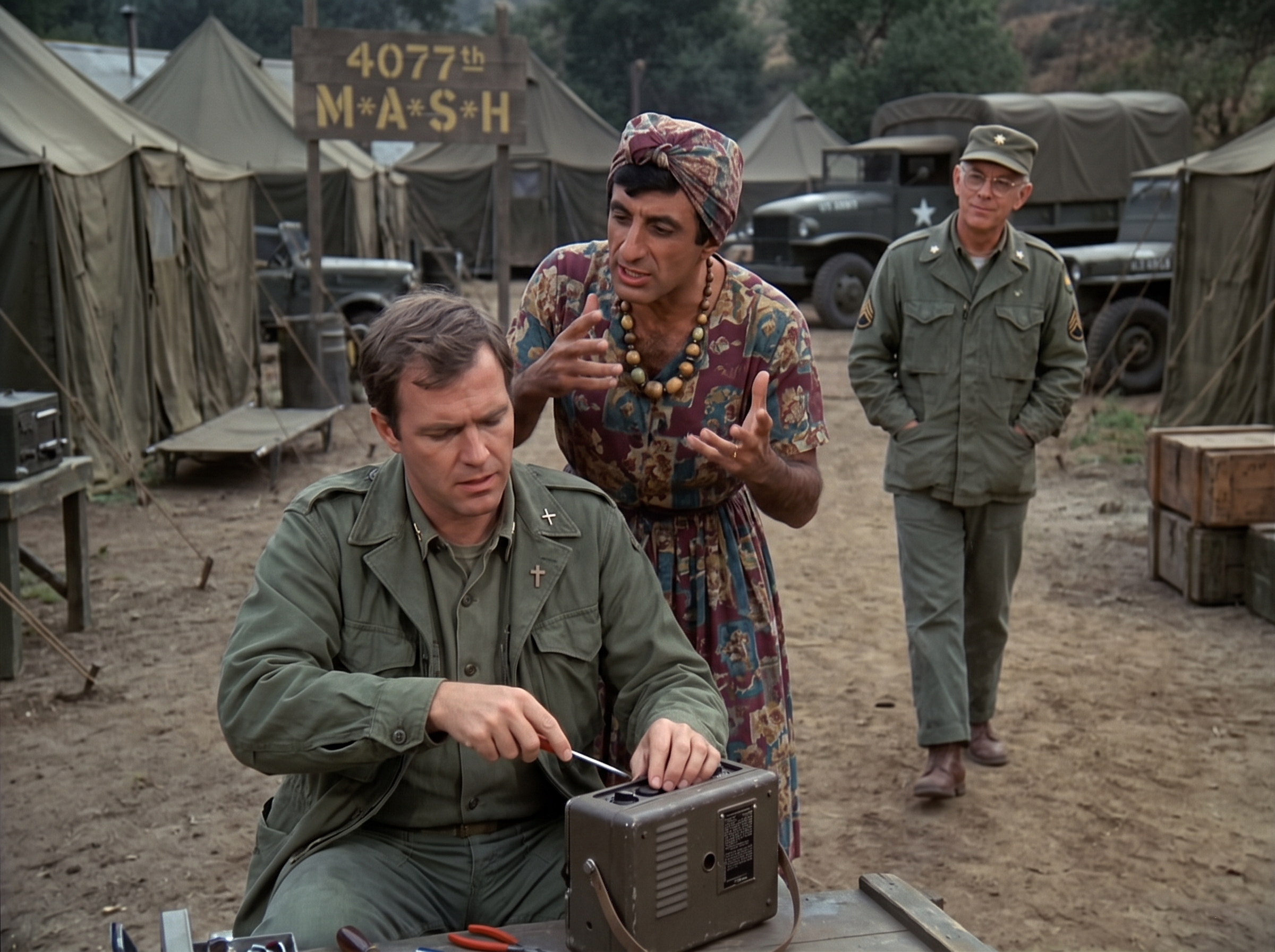
It was another quiet afternoon at the 4077th, the kind that felt more like a held breath than actual peace. Dust settled thick on the tents, making everything look hazy and still. In the middle of it all, a small battle was being fought, not on a battlefield, but over a tiny wooden box.
Father Mulcahy, with the cross glinting gently on his collar, was intensely focused, his usual serenity replaced by a look of stubborn determination. He was focused on a small, olive-drab radio that lay open on a rickety field table, a thin screwdriver clutched carefully in his hand. He hadn’t seen the face of a single soldier today, just the intricate copper wire and fragile vacuum tubes that were the source of everyone’s connection to the world outside this dusty bubble.
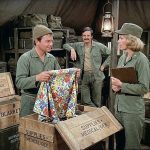
Next to him, a whirlwind of patterned silk and passionate gesticulation named Maxwell Klinger was doing his best to provide what he clearly thought was essential assistance. His floral dress was bright and incongruous against the muddy ground and green canvas. He was gesturing dramatically with both hands, his eyes wide, insisting that the good Father was being too gentle.
“Look, Father, these army widgets are built for brutes, not priests! You gotta jiggle the doodad on the right *while* holding the gizmo on the left, and maybe a gentle prayer wouldn’t hurt, but *trust me*, it needs some muscle! I know radios! From Toledo!”
Mulcahy didn’t even look up. He just hummed a soft, distracting tune and delicately turned a tiny screw. He knew Klinger knew radios about as well as he knew rocket science. But Klinger needed this distraction as much as anyone, so he let the enthusiastic advice pour over him.
In the background, coming up the path between the tents, Colonel Potter watched them. Hands tucked into the back pockets of his fatigue pants, his cap tilted back, his face held a wry, affectionate smile. He looked like a father watching his two kids try to fix a bicycle, knowing they’d probably end up with more grease on themselves than on the chain. He didn’t intercede, just enjoyed the moment of harmless distraction.
Finally, with one last, tiny turn, Mulcahy sat back. He held his breath.
A soft click.
A low hum.
And then, nothing but static. A relentless, piercing, empty hiss that seemed to mock their efforts. Mulcahy’s face fell. He slumped over the radio, his shoulders sinking, his expression changing from stubborn hope to a deep, heartbreaking exhaustion that had nothing to do with electronics. The radio was silent, and the silence was heavier than the war.
For a full, heavy minute, the only sound was the hiss of the empty air waves and the distant hum of a generator.
Klinger, usually never at a loss for words, just looked down at Mulcahy. He saw the way the priest’s hands, still holding the tiny screwdriver, had begun to tremble. He saw the defeat in a man who rarely let it show. He saw the toll that *caring* for everyone else took.
Slowly, Klinger reached out a hand and placed it gently on Mulcahy’s shoulder. He didn’t gesture. He didn’t make a dramatic speech.
“It’s okay, Father. We can… we can try again tomorrow. Maybe it just needs to rest. Like us.”
Mulcahy nodded slowly, his eyes still fixed on the silent radio. He was probably thinking of all the people waiting for news. All the broken things.
From behind them, Colonel Potter quietly joined. He hadn’t said a word. He stood by the table, looking down at the little box. He saw the wires and tubes, but he also saw the effort of two very different men trying to make a connection. Trying to fix something broken when everything else felt so fragile.
Potter didn’t offer to take over. He didn’t make a dry remark. He just rested a hand, for one moment, on the cold metal. His presence was enough.
Mulcahy looked up then. He saw his commanding officer, a man weary but still steady. He looked at Klinger, in his colorful dress, an absurdist symbol of survival. He realized they were all just trying.
A faint smile returned to his tired face. It wasn’t a smile of success, but of shared burden.
“I suppose you’re right, Corporal. It just needs rest.”
He gently unclipped his small spectacles and wiped them on his sleeve.
In that quiet corner of the 4077th, framed by the muddy ground and the weathered tents, two men shared a moment of defeat. But they also shared the kind of deep, unspoken compassion that built a family where one was never meant to exist. They hadn’t fixed the radio, but they had somehow mended a small crack in the day. The silent air was empty of news, but the heart of that moment was full.
They didn’t hear a word, but they got the message.