The Unspoken Rhythm of the O.R.
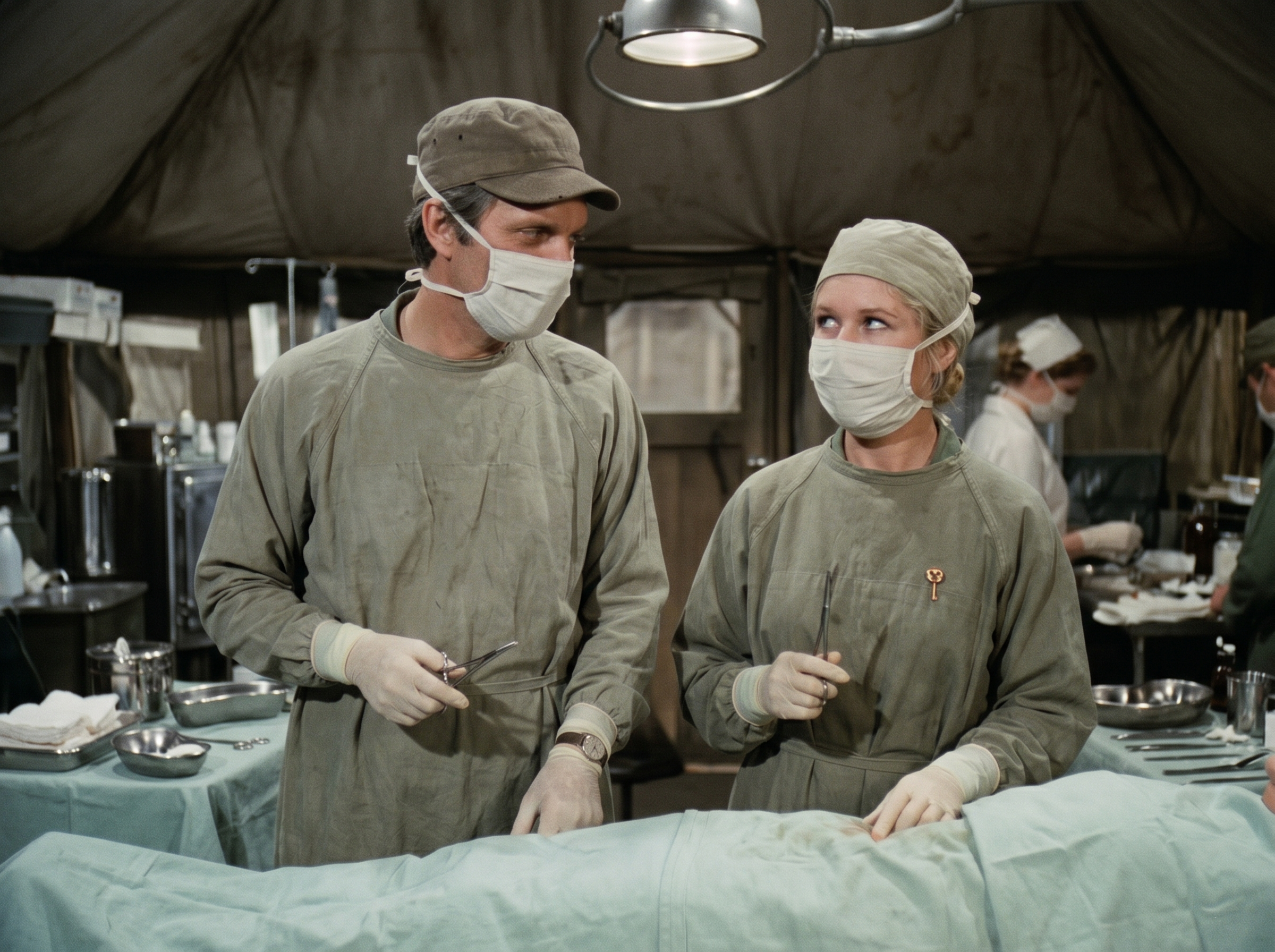
The worst part of meatball surgery wasn’t the blood, the noise, or the relentless heat of the overhead lamps. It was the silence that crept into the tent when the jokes finally ran out.
It was hour fourteen of a marathon session at the 4077th. The wounded had been rolling in since dawn, a steady, heartbreaking parade of olive drab and red.
The O.R. smelled exactly as it always did. A harsh, suffocating mixture of iodine, ether, strong coffee, and the metallic tang of fear.
At the center table, Captain Benjamin Franklin Pierce was running on fumes.
Hawkeye had exhausted his repertoire of bad puns somewhere around hour eight. He had gone through his Groucho Marx impressions, his memories of crab cakes in Maine, and a highly detailed, entirely fictional account of his romantic escapades in Chicago.
Now, there was nothing left but the bone-deep ache in his legs and the cramping in his fingers.
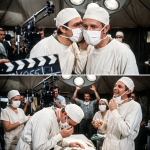
Across the surgical table stood Major Margaret Houlihan.
She was a pillar of starched green canvas and unrelenting efficiency. While the doctors wilted under the sweltering heat of the canvas roof, Margaret seemed to draw strength from the sheer necessity of her job.
She anticipated every move, having a clamp or a sponge ready a fraction of a second before it was asked for.
She wore a small, curious gold key pinned to the chest of her scrub top. It was a tiny, quiet rebellion against the strict uniformity of the army, a secret little detail that always caught the bright glare of the surgical lights.
Hawkeye held a hemostat in his right hand, his wrist adorned with a simple watch that felt like it weighed ten pounds.
He was looking down at the young corporal on the table, trying to find a persistent bleeder in a field of mess.
And then, quite suddenly, the engine just stopped.
Hawkeye froze.
It wasn’t a dramatic collapse. It was simply the absolute evaporation of his willpower. His shoulders slumped beneath his gown.
He stared at the steel instrument in his hand as if he had never seen it before, as if he had completely forgotten what it was supposed to do.
The rhythmic hissing of the ventilator and the dull hum of the camp generator seemed to fade away, replaced by a loud, ringing emptiness in his ears.
He was done. The war had finally asked for more than he had in his pockets.
Slowly, heavily, Hawkeye lifted his head.
Margaret was already looking at him.
She held a pair of forceps, her hands steady, her posture perfect. She didn’t bark an order. She didn’t quote a manual.
She simply looked up, her blue eyes wide and watchful above the white cotton mask, locking onto his.
The silence stretched between them, thick and heavy, hanging precariously over the operating table.
For three long seconds, the world outside the 4077th ceased to exist.
There was no sound of distant artillery, no choppers beating the sky into submission. There was only the exhausted surgeon and his head nurse, caught in a silent standoff over a wounded kid from Iowa.
Hawkeye felt a desperate urge to drop the clamp. He wanted to peel off his latex gloves, walk out of the double doors of the O.R., and keep walking south until his boots hit the ocean.
He felt entirely transparent under Margaret’s gaze. He knew she could see the frayed edges of his nerves, the sheer, unadulterated panic of a man who couldn’t sew one more stitch.
Margaret didn’t move. She didn’t call out to B.J. at the next table. She didn’t call for Colonel Potter.
She knew this look. She had seen it on the faces of frightened privates, and she had seen it on the faces of seasoned surgeons. But seeing it on Hawkeye Pierce—the man who usually hid his despair behind an impenetrable wall of wisecracks—was different.
It was terrifying. But Margaret Houlihan was not a woman who backed down from terror.
She shifted her weight slightly. The small gold key on her chest caught the light.
Instead of raising her voice, she lowered it. She didn’t use the sharp, commanding tone of a Major addressing a subordinate officer.
“I’m waiting, Doctor,” she said.
Her voice was soft, muffled by the mask, but it carried the steady, unyielding strength of an anchor dropping into stormy seas.
She reached out across the small expanse of the surgical field. Very gently, she tapped her forceps against the hemostat in his hand.
*Clink.* The tiny metallic sound broke the spell. It was a lifeline thrown into the dark.
Hawkeye blinked. The blurry edges of the tent came rushing back into sharp focus. The smell of the ether hit his nose again. The hum of the generator returned.
He looked at Margaret. Really looked at her.
He saw the dark circles of exhaustion bruised beneath her eyes. He saw the faint sheen of sweat on her forehead that she couldn’t wipe away.
He realized, in a flash of quiet clarity, that she was just as tired, just as heartbroken, and just as scared as he was. But she was holding the line. And she was holding it for him.
Hawkeye took a slow, deep breath, inhaling the stale air of the O.R. as if it were a fresh breeze off Crabapple Cove.
He looked down at the tiny gold pin on her scrubs.
“Margaret,” he croaked, his voice raspy and dry behind his mask. “Tell me that little key unlocks a secret vault of gin you’ve got buried under your tent.”
The corners of Margaret’s eyes crinkled. The tension in the air dissolved instantly. She was smiling behind the cotton mask.
“Focus on the bleeder, Pierce,” she replied, her tone returning to its familiar, brisk cadence, though it lacked its usual bite. “And for your information, it unlocks my diary. Which you will never, ever get your hands on.”
“A boy can dream,” Hawkeye muttered.
His fingers tightened around the hemostat. The tremor was gone. The overwhelming weight of the war hadn’t vanished, but it had been distributed. They were carrying it together again.
“Sponge,” Hawkeye said, leaning back over the patient.
“Sponge,” Margaret echoed, slapping it firmly into his waiting palm.
The rhythm returned. The beautiful, tragic, exhausting ballet of meatball surgery resumed its desperate pace.
They worked for another hour in comfortable, rhythmic silence. The animosity and the bickering that usually defined their relationship outside the tent had no place here.
In this room, over this table, they were a seamless unit. They communicated in half-words, nods, and the precise passing of steel instruments.
When the final stitch was cut and the patient was stabilized, Hawkeye stepped back from the table.
He peeled off his gloves with a wet snap, tossing them into the bucket. He ran a weary hand over his scrub cap, feeling the damp hair plastered to his forehead.
Margaret was already organizing the tray, her movements still crisp, still perfectly in control.
Hawkeye stood there for a moment, watching her. He wanted to say thank you. He wanted to acknowledge the moment when she had reached out and pulled him back from the edge.
But words in the 4077th were clumsy tools for delicate feelings.
“Nice work, Major,” Hawkeye said quietly, pulling his mask down around his neck.
Margaret paused her organizing. She looked up at him, the crinkles returning to the corners of her eyes.
“Get some sleep, Captain,” she replied softly. “We’ve got another bus coming in three hours.”
Hawkeye nodded, turning to push his way out through the double doors and into the cool Korean night.
He was exhausted to the marrow of his bones, but as he walked toward the Swamp, he realized he wasn’t carrying the entire war by himself. Not really.
As long as the lights were on in the O.R., as long as that quiet, unspoken rhythm kept playing, they were going to be alright.
In a place where the world felt entirely broken, they somehow always found a way to stitch each other back together.