A Splash of Color in a Canvas World
Dust, canvas, and the relentless shade of olive drab.
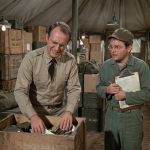
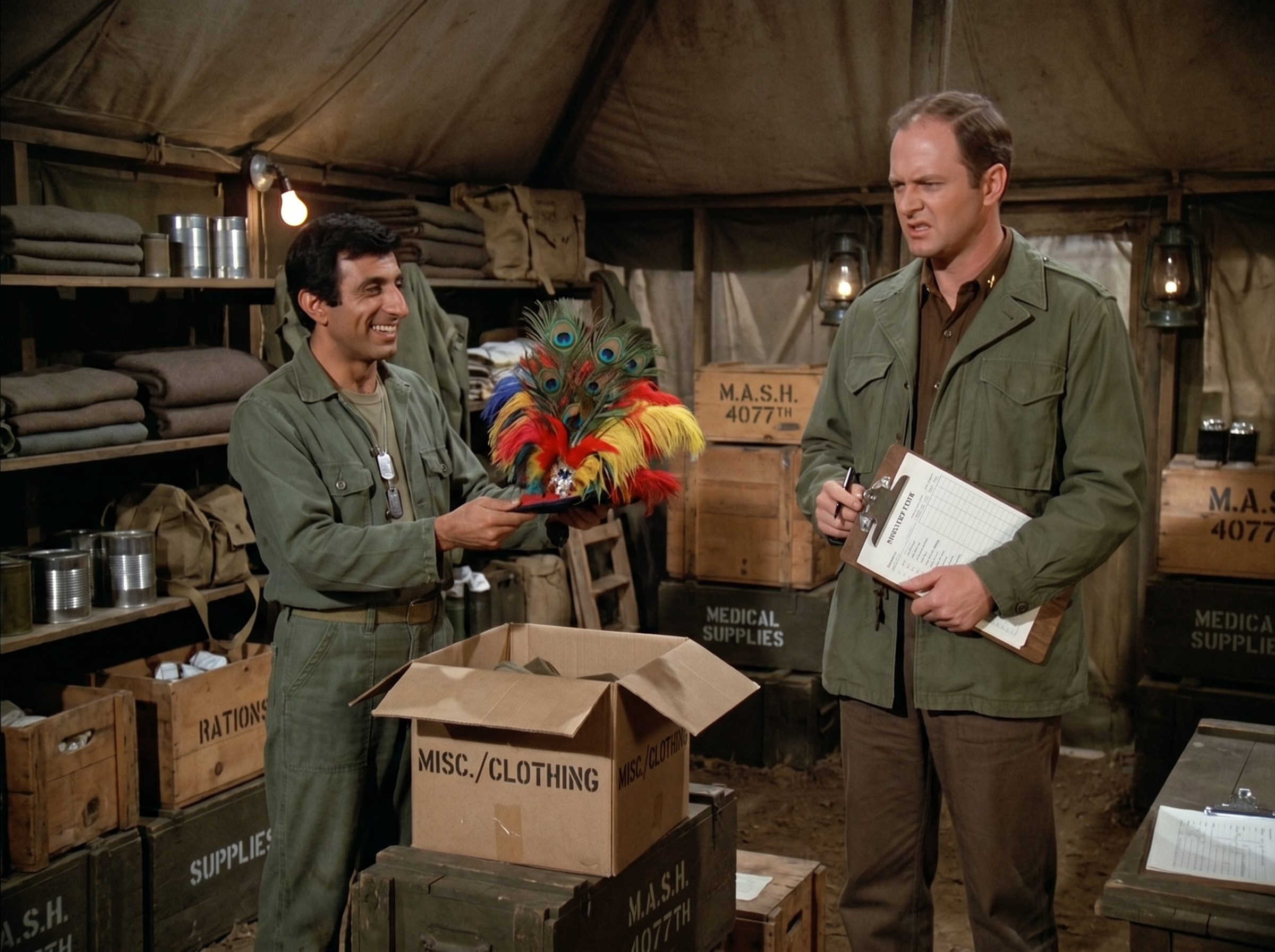
The 4077th Supply Tent was never a place of miracles. It was a place of endless, mind-numbing counting, smelling faintly of mothballs, stale earth, and engine oil. The warm, practical light from the overhead bulbs cast soft shadows over endless wooden crates, canvas bags, and neatly folded blankets.
In the center of this modest clutter, Major Charles Emerson Winchester III stood as rigid as a flagpole.
He clutched a battered wooden clipboard to his chest as if it were a shield protecting him from the sheer indignity of his current assignment. His posture was impeccably upright. His uniform, though worn, was as neat as military laundry would allow.
“Blankets, wool, regulation. Seventy-four,” Charles intoned.
His voice dripped with the kind of aristocratic boredom that only a Boston blueblood could truly perfect. His face was twisted into a permanent expression of restrained irritation and dry superiority.
Across the tent, Corporal Maxwell Klinger was entirely ignoring the blankets.
Klinger had his arms buried deep inside a large cardboard box that had just arrived on the morning supply truck. It was supposed to contain surplus winter gear. Clearly, somebody in quartermaster command had made a glorious mistake.
“Ah ha! Mama mia, would you look at this!” Klinger crowed, his voice shattering the dusty silence.
Charles did not look up from his clipboard. “Corporal, unless that box contains seventy-five wool blankets or a one-way ticket to Massachusetts, I am entirely uninterested in your primate grunts of discovery.”
“Major, prepare to have your very eyes dazzled,” Klinger announced.
With a theatrical flourish, Klinger pulled his prize from the depths of the cardboard.
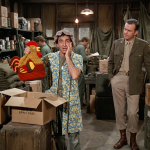
It was a hat. But calling it a simple hat felt entirely insufficient. It was a sweeping, violently bright, ridiculously oversized piece of millinery. It was topped with a massive plume of dyed feathers that seemed to defy every known law of good taste and gravity.
Klinger held it aloft with the reverence of an archaeologist discovering a lost crown. His face was alight with comic pride and a sly, desperate hope.
“Is she not a vision, Major?” Klinger whispered, practically vibrating with enthusiastic energy.
Charles finally lowered his clipboard. He stared at the feathery monstrosity across from him. His upper lip curled in profound distaste.
“It is a crime against aesthetics, Klinger,” Charles said coldly. “It looks as though a flamboyant ostrich met a violent end upon a velvet parlor cushion.”
“It’s high fashion! Straight from a theatrical supply company in Chicago,” Klinger protested, clutching the hat closer to his chest. “This is my golden ticket, Major. One look at me in this beauty, and Colonel Potter will have me on a Section Eight flight to San Francisco before dinner.”
Charles leveled a withering, uncompromising gaze at the corporal.
“It is non-regulation trash,” Charles stated, stepping forward. “And as the temporary officer in charge of this miserable depot, I am ordering you to throw that carcass into the incinerator immediately.”
Klinger’s face dropped, but his grip on the bright feathers only tightened. “You wouldn’t.”
“Try me,” Charles said softly, his hand reaching out to confiscate the feathered disaster.
Klinger took a quick step back. He shielded the hat behind his back like a mother protecting her child from a predator.
“Major, please! You’re a man of culture,” Klinger pleaded, his voice rising in genuine panic. “You know what a barren wasteland this place is! Look around us!”
He gestured wildly with his free hand at the endless stacks of canvas bags, the heavy wooden crates, and the brown shelving. The soft light of the tent only seemed to highlight the suffocating monotony of the colors.
Tan, brown, and olive drab. Over and over again, until it made a man want to scream.
“We are drowning in a sea of mud and green,” Klinger said. His theatrical tone suddenly dropped into something surprisingly earnest and quiet. “This hat… it’s a splash of life, Major. It’s color.”
Charles stopped. His outstretched hand remained in the air for a moment before slowly lowering to his side.
“It’s a reminder that somewhere out there, people are still going to the theater,” Klinger continued softly. “They’re still dressing up for no good reason. They’re still living.”
Charles looked at Klinger. He really looked at him.
Beneath the hairy chest, the loud voice, and the ridiculous dresses, there was a man who was just as profoundly out of place in this bloody, dusty purgatory as Charles himself was.
Charles Winchester missed the Boston Symphony Orchestra. He missed the smell of leather-bound books, the taste of a truly fine vintage, and the crisp, clean snap of a perfectly tailored suit.
Maxwell Klinger missed the neon lights of Toledo, the smell of hot pastrami, and the sheer, absurd freedom of being whatever loud, colorful thing he wanted to be.
They were vastly different men, separated by class, education, and geography. But in that small, cluttered supply tent, miles from anywhere that mattered, they shared the exact same ache.
“It is not culture, Klinger,” Charles finally said. His voice had lost its sharpest edge, though his posture remained as rigid as ever. “It is a cheap, gaudy imitation of style.”
“Maybe to you,” Klinger said, bringing the hat back around. He looked down at the crushed, vibrant feathers with pure tenderness. “But to me… it’s beautiful.”
The heavy silence of the tent returned. It was punctuated only by the distant, rhythmic thumping of the camp’s main generator.
Charles cleared his throat loudly. He brought his clipboard back up to his chest, gripping it tightly to reestablish his barrier of authority.
“Corporal,” Charles began, his tone returning to its usual clipped cadence. “As you are well aware, my time is incredibly valuable. I cannot be expected to waste it arguing over the disposal of theatrical refuse.”
Klinger looked up, bracing for the final order to toss the hat into the flames.
Charles tapped his pen against the wooden board. He stared blankly at the inventory sheet.
“Furthermore,” Charles continued, “the inventory ledger requires absolute accuracy. If an item is discarded, it requires filling out a mountain of triplicate destruction forms. Forms which I have absolutely no intention of completing.”
Klinger blinked, his brow furrowing in confusion. “Sir?”
“Therefore,” Charles said, refusing to make eye contact as he scribbled violently on the paper. “I am logging this item under the category of ‘Medical Equipment, Psychological, Morale-Boosting: One each.’ It is highly irregular, but given the delicate state of this camp’s collective sanity, I suppose it is a medical necessity.”
Klinger’s eyes widened. A massive, genuine smile broke across his face, radiating pure joy.
“Major… you’re letting me keep it?”
“I am doing no such thing,” Charles corrected sharply, finally looking up with a glare. “I am simply refusing to do the paperwork required to destroy it. What you do with this monstrosity on your own time is entirely your own business.”
Klinger practically hugged the brightly colored feathers.
“Major Winchester, you are a prince among men! A true patron of the arts!” Klinger beamed. “I’ll name my firstborn son Charles! Or maybe Charlotta, if it’s a girl!”
“Do not threaten me, Klinger,” Charles muttered, closing his eyes in pained tolerance.
“I’ll wear it to the mess tent tonight!” Klinger was already imagining the grand entrance. “It needs a little fluffing, maybe a quick steam over the sterilizer to get the creases out, but she’s gonna be a total showstopper.”
Charles sighed deeply, rubbing the bridge of his nose. The dry irritation was back on his face, but this time, it was softer. It was familiar.
“Just… put it away for now, Corporal,” Charles said wearily. “We still have fifty-two crates of surgical gauze to count before the choppers return.”
“Yes, sir! Right away, sir!”
Klinger carefully placed the ridiculous feathered hat back into the cardboard box. He treated it with far more care and reverence than he had ever shown a rifle.
Charles watched him for a brief second.
For a moment, the dull, lifeless brown of the supply tent didn’t feel quite so suffocating. The war was still waiting right outside the canvas doors. The wounded would inevitably arrive, bringing the mud and the blood back into their lives.
But for now, the quiet rebellion of color had been preserved.
Charles tapped his pen against the clipboard one last time, straightening his spine.
“Blankets, wool, regulation. Seventy-four,” he resumed, his voice carrying a quiet, hidden warmth into the dusty air.
Klinger trotted over, grabbing a clipboard of his own. “Blankets, seventy-four. You got it, Major.”
They went back to work. Just a brilliant surgeon from Boston and a desperate dreamer from Toledo, standing shoulder to shoulder in the olive drab, counting the pieces of a war they both just wanted to survive.
In a world painted entirely in shades of mud and green, sometimes survival simply means holding on to the brightest feather you can find.