The Canvas Walls and the Boston Heart
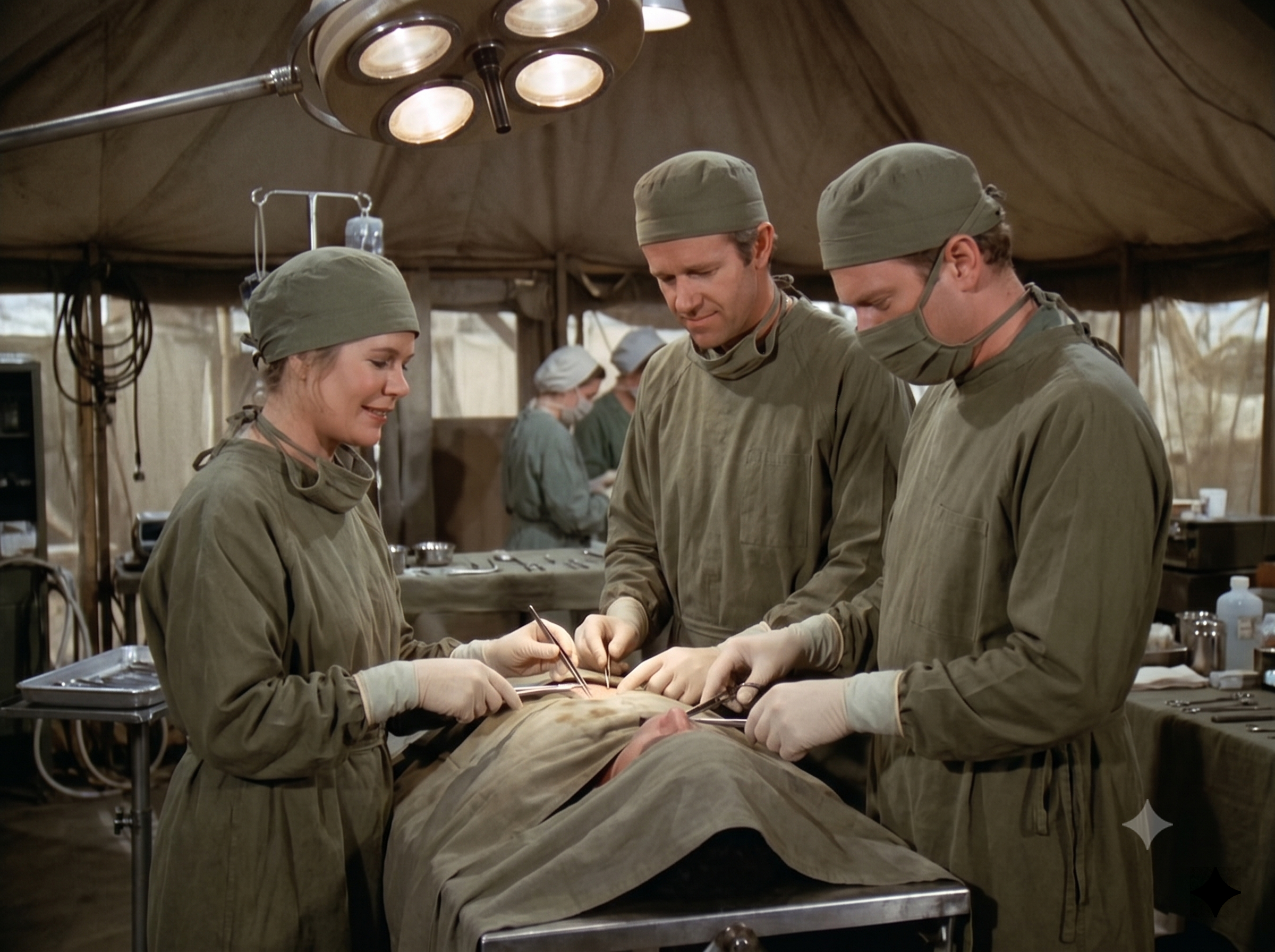
The eighteenth hour of surgery in the 4077th Operating Room always felt like swimming through molasses.
The air inside the canvas tent was heavy, thick with the smell of iodine, sweat, and the unmistakable metallic tang of a long night.
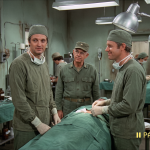
Above the surgical tables, the glare of the overhead lamps was blinding, casting stark shadows against the green scrubs of the exhausted doctors.
Outside, the distant rumble of artillery had faded into the quiet chill of the Korean dawn, leaving only the relentless hum of the generator and the steady hiss of the autoclave.
At table number two, the frantic pace of the night had finally slowed to a quiet, meticulous rhythm.
The life-or-death panic was over; all that remained was the delicate work of putting a broken boy back together.
Major Margaret Houlihan stood on the left, her posture still incredibly upright despite the brutal shift.
Captain B.J. Hunnicutt stood beside her, his shoulders slumped with a bone-deep weariness, though his hands remained flawlessly steady.
And across from them, Major Charles Emerson Winchester III worked with the focused, rigid dignity of a man determined to ignore his surroundings.
On the table lay a young corporal from Ohio, no older than nineteen.
Because of a sudden shortage of ether, the boy was awake, numbed by a local anesthetic, his wide eyes staring up at the harsh lights.
He was trembling, not from pain, but from the raw, lingering terror of the battlefield.
B.J. had pulled his mask down to offer the kid a friendly face, speaking to him in low, steady tones about baseball and hometown diners.
Margaret, too, had lowered her mask, her usual military sternness melting into a look of maternal reassurance as she efficiently anticipated every instrument the surgeons needed.
But the boy couldn’t focus on B.J.’s gentle banter.
His panicked eyes darted across the table and locked onto the looming, masked figure of Major Winchester.
Charles had kept his mask securely tied, his brow furrowed in concentration as his gloved hands moved with aristocratic precision.
To the terrified corporal, Winchester looked massive, clinical, and completely unapproachable.
“Doc,” the boy whispered, his voice cracking violently in the quiet room. “Doc, please.”
He reached out a trembling, blood-stained hand, accidentally brushing against Charles’s sterile gown.
Margaret gasped softly, her hand instinctively moving to pull the boy’s arm back, knowing how fiercely Charles guarded his sterile field and his personal space.
B.J. froze, his eyes darting up to Winchester, bracing for the inevitable arrogant explosion from the Boston blueblood.
“Doc,” the boy sobbed, his chest heaving under the surgical drapes. “Am I missing pieces? Nobody’s telling me the truth. Am I going home whole?”
The entire operating room seemed to hold its breath.
The clinking of instruments at the other tables stopped.
Charles paused, his forceps hovering perfectly still over the incision.
The silence stretched, tight and fragile as a bowstring, waiting for Winchester’s reaction.
For a long, agonizing second, Charles did not move.
He stared down at the boy’s trembling hand resting against his green surgical gown.
B.J. tightened his grip on his own instruments, ready to intervene and soothe the patient before Charles could snap at him for breaking protocol.
Margaret held her breath, her eyes fixed on Charles’s masked face, silently pleading with him to be gentle.
Slowly, deliberately, Charles lowered his forceps.
He did not step back. He did not brush the boy’s hand away.
Instead, he shifted his weight, leaning slightly closer to the terrified corporal, commanding the space not with arrogance, but with absolute authority.
“Corporal,” Charles spoke.
His rich, baritone voice rolled through the quiet O.R., completely stripped of its usual haughty edge.
“I am Major Charles Emerson Winchester the Third. I am a graduate of Harvard Medical College, and I was the premier thoracic surgeon at Massachusetts General Hospital.”
The boy blinked, his panicked breathing stalling as he tried to process the sudden resume.
“And because I am who I am,” Charles continued, his voice dropping into a register of profound, unwavering certainty, “I do not make mistakes. Furthermore, I certainly do not permit any patient of mine to leave this table in anything less than spectacular condition.”
B.J.’s tense shoulders slowly dropped.
A quiet, tired smile broke across B.J.’s face, his eyes crinkling with deep affection as he looked down at the patient.
Charles hadn’t offered a simple platitude.
He had offered the boy the full, impenetrable armor of his own colossal ego, and miraculously, it worked.
“You are whole, young man,” Charles said softly, his masked face tilting downward, his eyes completely focused on the boy. “Your legs are fine. Your arms are fine. You will return to Ohio, and you will walk perfectly well into whatever dreadful, midwestern diner you frequent.”
The boy let out a long, shuddering breath.
His trembling hand slowly fell away from Charles’s gown, resting peacefully on his own chest.
“Thank you, Major,” the boy whispered, the fight finally draining out of him, replaced by the heavy pull of sedatives. “Thank you.”
“Do not thank me,” Charles muttered, turning back to the wound with swift, precise movements. “Just ensure you do not undo my immaculate stitching on the ambulance ride to Seoul.”
Across the table, Margaret leaned in, her hands resting gently on the sterile drapes.
She looked up at Charles, and a wide, incredibly warm smile spread across her face.
It was a look of pure, unadulterated fondness, an acknowledgment of the deeply hidden, golden heart that beat beneath Winchester’s custom-tailored bluster.
She didn’t say a word, she just watched him work, her face glowing with quiet pride in the man she was proud to call a colleague.
B.J. caught Margaret’s eye, and his own gentle smile widened.
He shook his head slightly, a silent, humorous recognition of the soft touch Charles tried so desperately to hide.
They were exhausted, covered in the dirt and sorrow of a war they didn’t want, standing thousands of miles from the lives they missed.
But in that exact second, bathed in the harsh light of the surgical lamps, the canvas tent felt like the safest place on earth.
“Beautiful work, Charles,” B.J. said quietly, his voice raspy with fatigue.
“Naturally, Captain,” Charles replied, his tone defensive but entirely lacking its usual bite.
He kept his head down, refusing to acknowledge the warm, amused looks his two friends were giving him.
“Somebody has to maintain the standards of civilization in this wretched purgatory.”
Margaret just chuckled, a soft, musical sound that broke the final tension in the room.
She handed Charles the suture scissors before he even had to ask.
They fell back into the quiet teamwork of the closing routine, three vastly different people bound together by blood, exhaustion, and an unspoken, unbreakable love for one another.
The war raged on outside, but at table number two, there was only peace.
Some heroes wear armor, but the best ones wear blood-stained canvas and hide their hearts behind a surgical mask.