A Little Dignity in the Dust
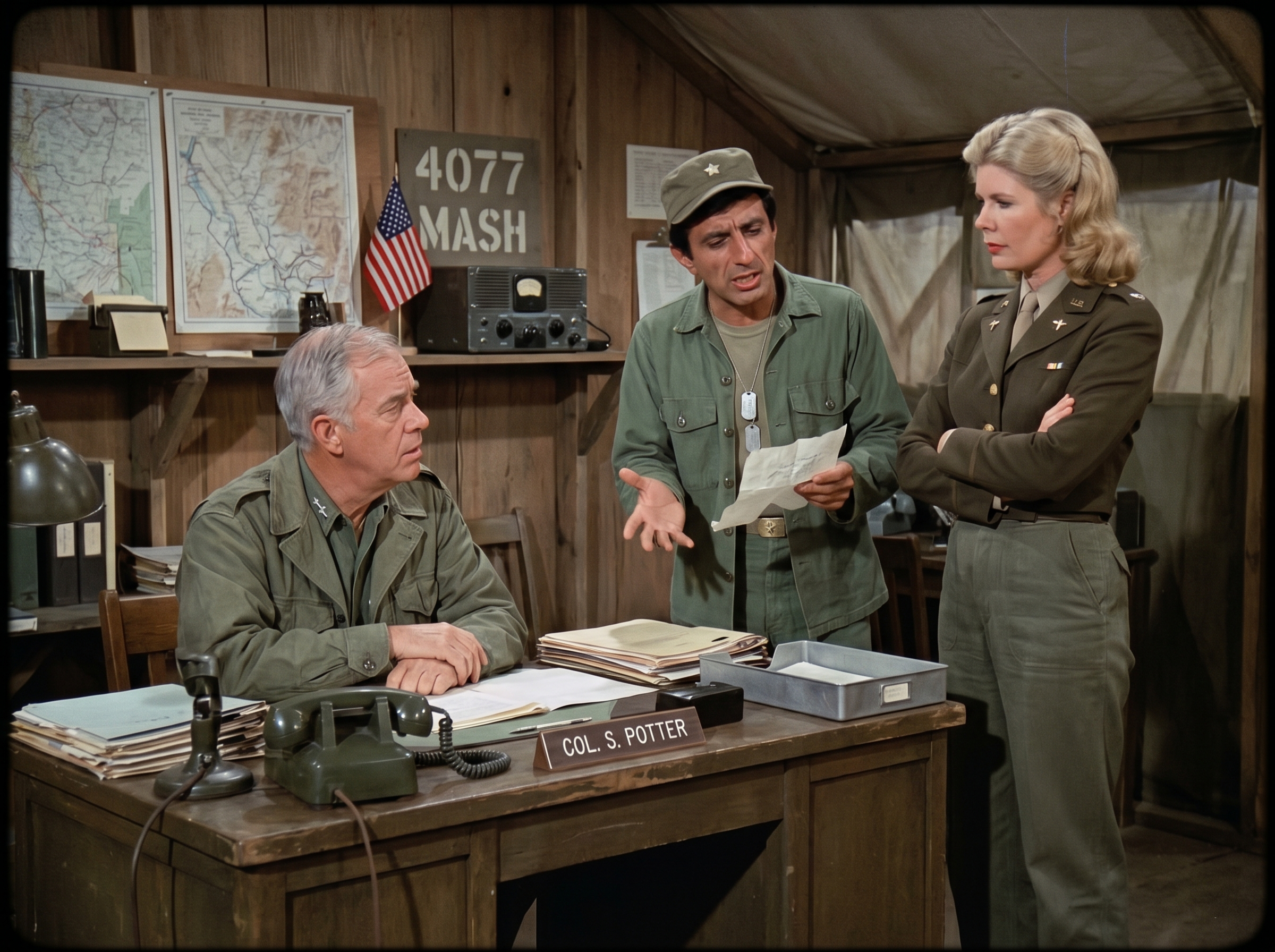
In the 4077th, you could always set your watch by the predictable rhythm of the absurd. It was a stifling Tuesday afternoon, which meant Colonel Sherman T. Potter was already running low on patience and high on paperwork.
The canvas of his office held the Korean heat like a slow oven. The air smelled of stale coffee, dust, and the sharp scent of mimeograph ink.
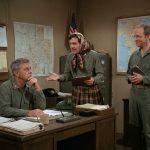
Standing to his right, Major Margaret Houlihan was a pillar of unyielding military posture. Her arms were folded tightly across her neat Class A uniform, her expression a masterclass in skeptical composure. She had been waiting for a signature on a medical requisition for twenty minutes, but the process had been entirely derailed.
Standing squarely before the wooden desk was Corporal Maxwell Klinger.
Yet today, there was no velvet evening gown, no feathered hat, and no fruit basket balanced precariously on his head. Klinger was wearing standard-issue olive drab fatigues. His fatigue cap was perched properly on his head, and his silver dog tags rested visibly against his shirt.
This total lack of haberdashery was, to Colonel Potter, far more suspicious than any chiffon dress.
Klinger held a single, slightly crumpled piece of paper in his hands. He gestured with his free hand, open-palmed and pleading. His posture was completely theatrical, his voice laced with an expressive, deeply wounded dignity.
“I assure you, Colonel, this is a matter of the utmost legal and moral gravity,” Klinger pleaded, looking as though he had just been personally betrayed by the United States government.
Margaret let out a sharp, dismissive sigh. “Corporal, the only gravity in this room is the massive weight of the time you are wasting.”
Potter leaned forward, resting his forearms on his simple military desk, right behind the wooden nameplate that read ‘COL. S. POTTER’. He fixed Klinger with a look of pure, fatherly exasperation.
“Klinger, I have been in this army since the horse cavalry,” Potter rumbled, his voice as dry as the dirt outside the tent. “And I have never, in all my years, seen a military regulation that allows a man to be discharged because his hometown bowling league is suffering a catastrophic drop in morale.”
Klinger stood taller, clutching the paper to his chest like a shield. “It is not just morale, sir! The Toledo Mudhens are facing relegation! My Uncle Amos is the anchor, and his lumbago is acting up. It’s a family crisis of epic proportions!”
The paper was thrust forward again. But as Potter reached out to take it, he noticed Klinger’s hand was trembling just a fraction.
The theatrical mask slipped, just for a split second.
Margaret noticed it too. Her sharp eyes narrowed as she studied the corporal’s surprisingly pale, exhausted face.
Potter took the paper. He put on his reading glasses and looked past the typed legal nonsense at the top. His eyes caught on a small, handwritten note attached to the back of the ridiculous petition.
The room went completely, uncomfortably silent.
Potter slowly lowered the paper, taking off his glasses. He looked up at Klinger, the exasperation draining completely from his face, replaced by a heavy, quiet understanding.
“This attached letter,” Potter said quietly, tapping the edge of the paper gently against his desk. “It’s from your wife.”
Klinger swallowed hard. The wounded dignity remained in his posture, but the loud theatricality melted away into the sweltering afternoon air.
“Yes, sir,” Klinger answered softly. “Laverne.”
Margaret’s posture shifted. Her arms were still folded, but the stiff, skeptical angle of her shoulders softened immensely. The strict professional armor gave way to the quiet, fierce tenderness she usually kept hidden beneath her brass insignia.
“Is it bad news, Corporal?” Margaret asked. Her voice was surprisingly gentle, a stark contrast to her earlier impatience.
Klinger looked down at his combat boots, suddenly looking very small inside his oversized green fatigues.
“She’s taking a job at the spark plug factory, Major,” Klinger said, his voice tight. “The night shift. To help pay the rent on our apartment.”
He looked back up at Potter, his dark eyes pleading. They were stripped of any elaborate Section 8 pretense.
“Colonel, you gotta understand,” Klinger said, his voice cracking slightly. “A Toledo woman on the night shift… she’ll be eating cold hot dogs from a thermos. She’s all alone out there. It’s no life. I need to be there to take care of her.”
He gestured vaguely to the paper on the desk. “The bowling league thing… that was just the cover page. I didn’t know how else to ask.”
Potter sighed heavily. It was the deep, weary sigh of a man who loved his soldiers desperately but hated the iron limitations of his command. He leaned back in his wooden chair, the springs groaning in protest.
“Max,” Potter said, using the boy’s first name. It was a rare occurrence that instantly shifted the emotional weight of the room. “You know I cannot sign this. Hardship discharges do not cover the night shift, not even in Toledo, Ohio.”
Klinger’s shoulders slumped. The rejection landed exactly where he knew it would, but the reality of it still hurt deeply.
“I know, sir,” Klinger whispered. “But a guy has to try. If he doesn’t try, he’s just… stuck here.”
The silence stretched out again, filled only by the distant, grinding hum of an ambulance jeep arriving outside. The reality of the war pressed heavily against the thin walls of the small, wooden office.
They were thousands of miles from home, surrounded by blood, fatigue, and dust, held together by nothing more than bad coffee, dark jokes, and a fierce, unspoken loyalty to one another.
Margaret stepped forward, uncrossing her arms entirely. She rested a hand lightly on the edge of Potter’s desk, looking directly at Klinger.
“Corporal,” she began, her voice steady and deeply warm. “My father was in the service my entire childhood. My mother spent half her life working odd jobs, keeping the house together while he was deployed all over the world.”
Klinger looked up at her, surprised by the personal admission.
“Women are vastly stronger than you think,” Margaret said firmly. “Laverne can handle a spark plug factory. And she is doing it because she loves you, and she wants you to have a home to come back to.”
Klinger offered a weak, crooked, genuinely appreciative smile. “She is pretty tough, Major. I once saw her carry a pinball machine up two flights of stairs.”
Potter chuckled softly, a low, warm rumble in his chest. He reached for his pen, not to sign the impossible discharge, but to pull a fresh sheet of paper from his filing box.
“Tell you what, son,” Potter said, sliding the blank paper across the desk toward Klinger. “You take this. You sit down in the mess tent, and you write her a long letter. You tell her you are proud of her.”
Klinger looked at the blank paper, then up at the Colonel, slightly confused.
“And then,” Potter continued smoothly, picking up the heavy olive-green receiver of his landline field phone. “I am going to have Sparky put a call through to the States.”
Potter looked at the phone, his face the picture of innocent military duty. “I have some highly official logistical inquiries to make regarding supply lines in the Midwest. Might take me about ten minutes to get the connection right.”
Potter leveled a meaningful, dry look at Klinger over the top of his glasses. “If a certain corporal happened to be standing by the radio tent when that line connected… well, I suppose he could conduct that inquiry himself.”
Klinger’s eyes went wide. The brilliant spark of life returned to his face, but this time it was fueled by genuine, overwhelming gratitude. He stood at strict attention, offering a perfect, fiercely dignified salute.
“Colonel Potter, sir,” Klinger said, his voice thick with emotion. “You are an officer, a gentleman, and an honorary Mudhen.”
“Get out of here, Klinger,” Potter grumbled gently, returning the salute with a lazy flick of his wrist. “Before I change my mind and make you wear a floral print dress to the radio tent.”
Klinger snatched the blank paper and practically floated out the door. His wounded dignity was entirely healed by a single, quiet act of grace.
When the door clicked shut, the office was peaceful again. Margaret looked at Potter, a fond, knowing smile playing on her lips.
“Official logistical inquiries in Ohio, Colonel?” she asked softly.
Potter picked up a fresh stack of medical requisition forms, adjusting his reading glasses. He looked up at Margaret, his eyes twinkling with dry, fatherly warmth.
“We are critically low on spark plugs, Major,” Potter said deadpan. “A commanding officer simply has to stay ahead of these things.”
Margaret nodded, crossing her arms again. But this time, it was a comfortable, relaxed posture. “Yes, sir. Very good thinking, sir.”
Potter looked back down at his desk. The war was still waiting right outside the door, but for just one afternoon, the paperwork could wait.
In a place built to patch up broken bodies, sometimes the best medicine was just a quiet moment of grace.