The Weight of an Empty Tray
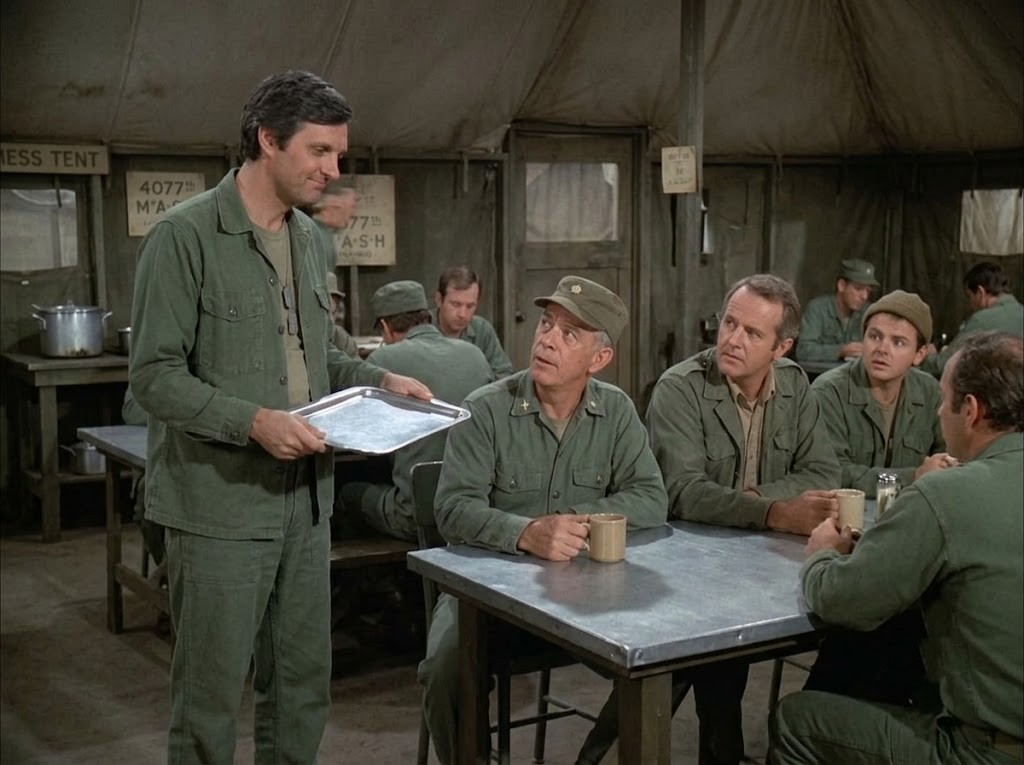
Sometimes, the loudest sound in the entire Korean theater wasn’t the thud of incoming artillery or the roar of the chopper blades. It was the absolute, dead silence that fell over the 4077th mess tent when the last operating session finally broke, and everyone realized they were too exhausted to even complain about the food.
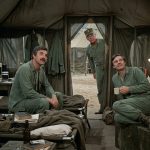
The air inside the olive-drab canvas was thick with the smell of boiled cabbage, damp fatigues, and the unmistakable, lingering tang of antiseptic.
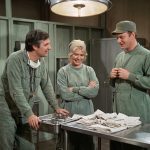
Hawkeye Pierce stood in the middle of the room, looking down at the metal tray in his hands. It was completely empty, save for a few scratches from a thousand hurried meals. His posture was slouched, his hair a rumpled mess, and his eyes carried that familiar, heavy glaze that comes from thirty straight hours of stitching human beings back together.
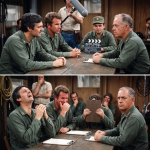
Sitting at the long, metal-topped table beside him were the anchors of his chaotic world.
Colonel Potter sat with his hands wrapped around a standard-issue stoneware mug, his face lined with the deep, fatherly fatigue of a man who carried the weight of every kid in the camp on his shoulders. Next to him, B.J. Hunnicutt stared ahead with a quiet, grounded intensity, his mustache drooping just a bit from the sheer exhaustion of the day.
Radar O’Reilly, wearing his trademark knit cap, looked up with an earnest, wide-eyed concern that always made him seem far too young for this place. Across from them sat Father Mulcahy, his gentle face tracking Hawkeye’s movements with a quiet, patient empathy.
“Alright, Pierce, out with it,” Colonel Potter said, his voice a dry, steady rasp that cut through the low hum of the background chatter. “You’ve been staring at that tray like it’s a map to the promised land. Did Igor finally invent a new way to ruin a potato?”
Hawkeye didn’t crack a smile right away. Instead, he slowly tilted the tray forward, letting the harsh overhead light glint off the bare aluminum surface.
“Worse, Colonel,” Hawkeye said, his voice dropping its usual manic energy, replaced by a soft, sarcastic edge that masked a much deeper ache. “It’s a blank canvas. A monument to nothingness. I went up to the line expecting the usual culinary crime, and instead, I got the ultimate insult: absolute emptiness.”
B.J. leaned back slightly, his eyes narrowing in gentle amusement. “They ran out of the mystery meat, Hawk? I thought that stuff was legally classified as indestructible.”
“They didn’t just run out of the meat, Beej,” Hawkeye replied, his gaze drifting over the table, looking at each of his friends in turn. “They ran out of everything. The stoves are cold. Igor is asleep on a sack of onions, and the back of the truck from Seoul is currently sitting in a ditch twenty miles south with a broken axle.”
A collective groan ripple through the background tables where the rest of the tired staff sat.
Radar blinked, his lower lip twitching slightly. “No dinner at all, Captain? But… the night shift is just coming on. The nurses haven’t eaten since noon.”
Hawkeye took a step closer to the table, his fingers tightening on the edges of the tray. The humor was entirely gone from his face now, replaced by the raw, unvarnished vulnerability that he only showed to the people in this room.
“No dinner, Radar. No soup, no crackers, no stale bread,” Hawkeye said softly, his voice cracking just enough to betray the deep, aching hunger—not just for food, but for comfort—that everyone in the tent was feeling. “Just forty miles of mud, a hundred cold beds, and an empty tray.”
Colonel Potter looked down into his coffee mug, his jaw setting into a hard, grim line. For a long moment, nobody said a word. The reality of their isolation, their fatigue, and the relentless grind of the war seemed to settle heavily onto the tin roof of the mess tent, threatening to break the fragile spirit of the 4077th.
The silence stretched tightly across the table, heavy enough to snap. B.J. looked from Hawkeye’s empty tray to Colonel Potter’s stoic face, sensing the collective drop in morale. In a place like this, a missed meal wasn’t just an inconvenience; it was a crack in the armor they all wore to keep the madness out.
“Well,” Father Mulcahy said, breaking the quiet with his characteristic gentleness. He reached into his pocket and pulled out a small, slightly squashed cellophane wrapper. “I do have half a pack of peppermint lifesavers left over from the Sunday school donations. We could… divide them mathematically?”
A tiny, tired smile tugged at the corner of Colonel Potter’s mouth. He looked up at Hawkeye, the fatherly wisdom returning to his eyes.
“Put the tray down, Pierce. You’re making the room look like an audition for a tragedy,” Potter ordered mildly, though his tone was entirely devoid of military starch. “Sit down before you fall down.”
Hawkeye let out a long, ragged breath and slid onto the bench next to Father Mulcahy. He clattered the empty metal tray onto the table, where it sat like an unwanted centerpiece.
“I’m telling you, Colonel, if I don’t get some form of sustenance soon, I’m going to start eyeing the canvas on the tents,” Hawkeye muttered, resting his chin in his hand. “Though I suspect the tents have a higher nutritional value than Igor’s creamed chipped beef.”
“Don’t threaten the infrastructure, Hawk,” B.J. chuckled softly, nudging Hawkeye’s elbow with his own. “Besides, you’re forgetting something very important.”
Radar’s ears practically perked up beneath his knit cap. “Forgetting what, Captain Hunnicutt?”
B.J. winked at the young clerk. “We have a Radar. And a Radar always has a rainy-day fund.”
Every eye at the table immediately locked onto Radar. The young corporal suddenly looked incredibly self-conscious, shifting on the wooden bench and pulling his collar up a bit.
“Now, wait a minute, sirs,” Radar stammered, his cheeks turning a faint shade of pink. “I don’t have any secret rations. Honest! The last of the canned peaches went to the orphans last Tuesday.”
Colonel Potter leaned forward, fixing Radar with a mock-stern glare that fooled absolutely no one. “Son, I know for a fact that you keep a stash of something in that office of yours. I’ve smelled chocolate near the mimeograph machine.”
Radar swallowed hard, looking around the table at the tired, hopeful faces of his found family. He saw the deep lines of exhaustion around Hawkeye’s eyes, the slump in B.J.’s shoulders, and the quiet resilience of the Colonel.
“Well…” Radar whispered, leaning in as if the North Koreans were listening through the canvas. “I might have a jar of real, homemade grape jelly. My mom sent it from Ottumwa three weeks ago. I was saving it for… well, for a rainy day.”
Hawkeye’s eyes lit up with a spark of life. “Radar, my sweet, innocent, beautiful midwestern child. It is currently pouring metaphorical cats and dogs in this tent. Fetch the jelly.”
“And I,” Father Mulcahy chimed in, a genuine twinkle in his eye, “happen to have a small loaf of altar bread that is slightly past its liturgical prime, but entirely serviceable for toast.”
“I’ll secure some crackers from the nurses’ station,” B.J. said, already sliding out of the booth with a renewed energy. “Margaret keeps a box of saltines hidden behind the penicillin.”
Within ten minutes, the empty metal tray in front of Hawkeye was no longer empty.
It was covered in a mismatched assortment of stale crackers, broken pieces of flatbread, and a half-empty jar of bright purple grape jelly. Radar had even managed to scavenge a couple of slightly bruised apples from the back of the supply tent.
There were no steaks, no fresh vegetables, and certainly no fine dining. But as Hawkeye used a tongue depressor to spread a dollop of Ottumwa grape jelly onto a saltine cracker and handed it to Colonel Potter, the heavy, suffocating atmosphere of the mess tent lifted.
“To the 4077th,” Hawkeye said, raising a cracker in a mock toast, his voice warm and steady. “Where the menu is non-existent, but the company is highly digestible.”
“Amen,” Father Mulcahy murmured softly.
They sat together under the dim lights of the mess tent, sharing a meal made of scraps and kindness. The war was still waiting for them just outside the canvas door, but for an hour, the laughter, the dry wit, and the quiet loyalty of the people around the table were more than enough to keep the cold at bay.
Amidst the mud and the madness of Korea, they always found a way to fill the emptiest days with the warmth of each other.