The Quiet After the Sirens
The sound of the final hemostat dropping into a stainless-steel basin was the loudest noise in the world.
It meant the rush was finally over.
The endless, dusty convoy of ambulances had finally stopped creeping through the compound gates.
The medical evacuation choppers had flown back over the dark mountains, leaving the night sky silent.
For the first time in an impossibly long shift, the Operating Room of the 4077th Mobile Army Surgical Hospital was perfectly, blessedly quiet.
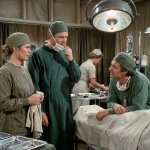
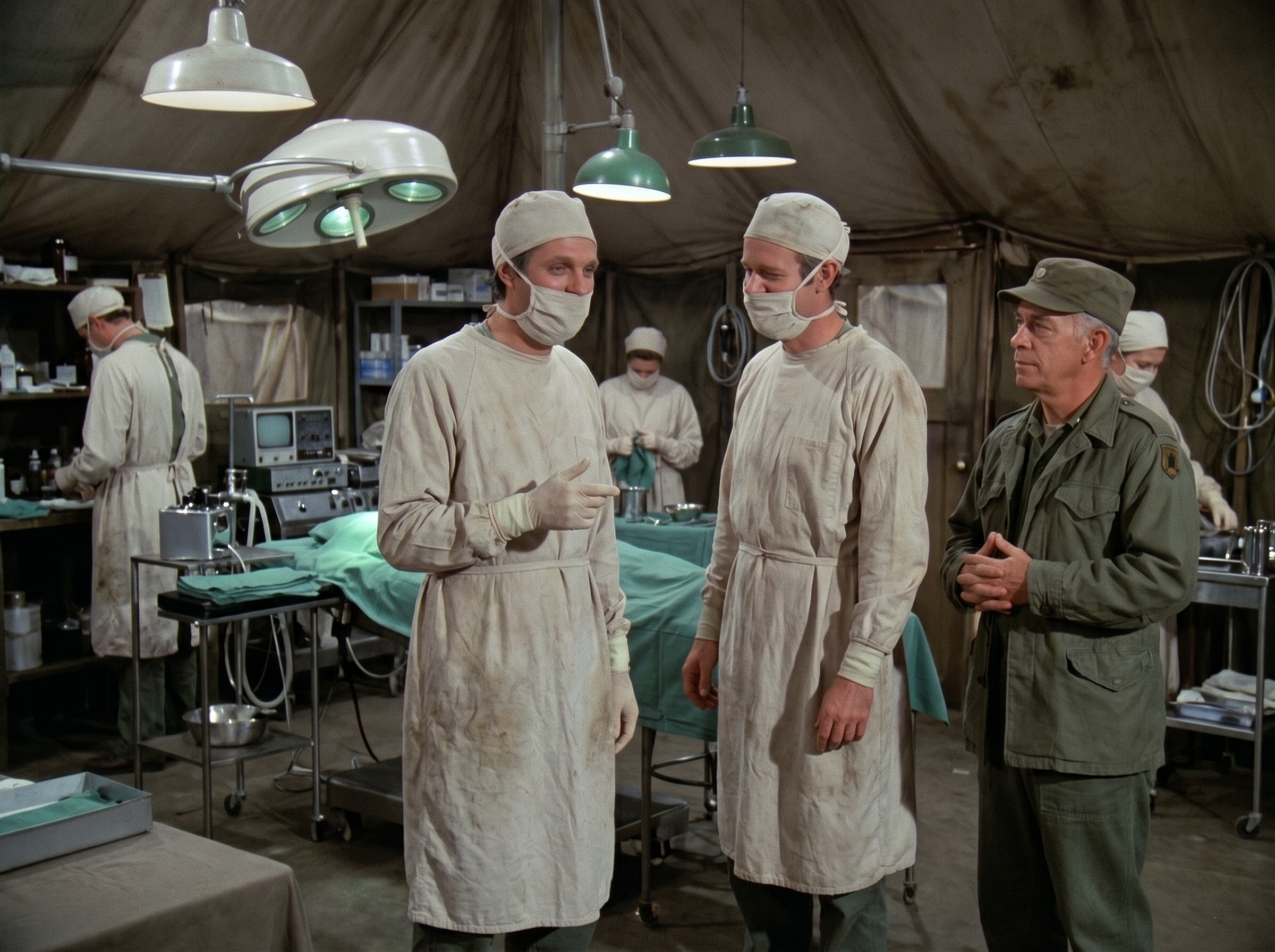
The harsh, bright glare of the overhead surgical lamps still beat down on the center of the room.
They cast soft, pale circles of light against the dull green canvas walls of the tent.
It was a practical, worn, and intensely lived-in space.
The air was heavy, smelling permanently of sharp iodine, old ether, stale sweat, and the phantom aroma of terrible mess-tent coffee.
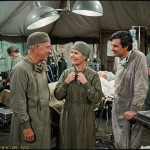
Captain Hawkeye Pierce stood near the center of the room, his shoulders slumped beneath his loose, pale green surgical gown.
He was exhausted to his very marrow, running on nothing but fumes, nervous energy, and his trademark armor of dry humor.
Yet, true to form, he refused to let the heavy silence win the battle for their sanity.
Hawkeye raised a gloved hand, pointing an accusatory finger across the sterile green draping toward his best friend.
“I’m telling you, Beej,” Hawkeye rasped, his voice muffled by the surgical mask but dripping with dry, theatrical indignation.
“The travel brochure for this resort explicitly promised a continental breakfast and a pool boy. I haven’t seen a single warm croissant, and Igor flat-out refuses to fluff my pillows.”
Captain B.J. Hunnicutt stood just a few feet away, leaning tiredly but comfortably against the worn floorboards.
He didn’t say a word to interrupt the routine.
He knew exactly how to play this game.
Beneath his own surgical mask, the corners of B.J.’s eyes crinkled into a quiet, knowing smile.
It was the steady, grounding smile of a man who knew exactly what his friend was doing.
Hawkeye was talking simply to keep the ghosts of the O.R. away from their minds.
He was winding up a ridiculous joke so they wouldn’t have to think about the young kids they had just spent hours putting back together.
A few paces away, standing quietly near the edge of the surgical theater, was Colonel Sherman T. Potter.
Potter wore his standard green fatigue jacket and cap, his hands clasped naturally and tightly in front of him.
He hadn’t been wearing scrubs for this shift, having stepped back to manage the impossible, chaotic logistics of triage.
But his bone-deep fatigue was just as profound as his surgeons’.
Potter observed his two best doctors with a weary, wise, and incredibly gentle pride.
He had commanded men in two world wars before this police action, and he knew the subtle signs of a breaking point.
“And furthermore,” Hawkeye continued, his voice rising slightly in mock outrage as he gestured with his pointed finger. “I intend to write a very stern letter to the management. As soon as I can remember how to hold a pen.”
Hawkeye stepped back from the table, but as he did, the adrenaline that had kept him upright for a day and a half suddenly evaporated.
The humor vanished from the air.
His pointing hand trembled slightly, dropping slowly to his side like a heavy weight.
The manic energy seemed to drain completely from his expressive eyes.
He was left with a stark, naked exhaustion that was simply too heavy for one man to carry alone.
He stared blankly at the muted sterile surfaces of the equipment tray, the reality of the war suddenly threatening to crash through his defenses.
The O.R. held its breath, the silence suddenly turning fragile, tense, and dangerously heavy.
B.J. stopped smiling.
He didn’t panic, and he didn’t make a sudden scene.
He simply shifted his weight, his posture remaining remarkably calm, and angled his body toward his friend.
He placed himself close enough to step in and catch Hawkeye if the gravity of the room finally pulled him under.
“Hawk,” B.J. said quietly through his mask.
It was just one simple syllable, but it was anchored in deep, unshakable friendship.
Before Hawkeye could respond, Colonel Potter’s gravelly, comforting voice broke through the heavy air of the tent.
“You won’t need a pen, Pierce,” Potter said softly.
Hawkeye slowly lifted his head, blinking away the fog of fatigue, and turned his tired eyes toward his commanding officer.
Potter didn’t move from his spot.
He kept his hands comfortably clasped, offering a steady, fatherly presence from across the canvas room.
“I’ve already drafted the complaint to management myself,” Potter continued, a warm, dry affection lacing his words.
“I told them the room service was severely lacking, the hot water is a myth, and the local tailor doesn’t know a damn thing about fitting a decent bathrobe.”
A long, quiet beat of silence passed between the three men.
Then, a slow, ragged exhale escaped from deep within Hawkeye’s chest.
The terrible tension in his shoulders finally broke.
The dangerous, hollow edge of his exhaustion softened into something purely human and manageable.
He looked over at B.J., who gave him a small, reassuring nod, and then looked back to Potter.
“Did you remember to mention the lack of mints on the pillows, Colonel?” Hawkeye asked.
His voice was returning to its familiar, cynical cadence, though it was much softer now.
“Highlighted it in bright red ink,” Potter replied without missing a beat, a faint smile touching his lips.
Potter looked around the room, taking in the full measure of the space.
He watched the nurses in the background, in their white caps and masks, quietly folding away the green sterile sheets.
He listened to the quiet hum of a field hospital that had just survived another impossible tidal wave of tragedy.
His gaze returned to Hawkeye and B.J., his eyes shining with a quiet, fierce affection.
“You boys did good work today,” Potter said.
His voice was no longer joking; it was quiet, firm, and filled with profound respect.
“Miracle work, both of you. You bought a whole lot of kids a ticket home today.”
Hawkeye looked down at his gloved hands, taking a moment to absorb the Colonel’s words.
“Just doing our job, Colonel,” Hawkeye said quietly. “Though I still maintain I’d prefer a career testing mattresses.”
B.J. let out a soft chuckle, his eyes warming up again.
“Come on, Hawk,” B.J. said gently, stepping away from the surgical table.
“Let’s go find some of that terrible coffee. I hear the mud they’re serving in the mess tent today has an excellent vintage.”
Hawkeye nodded slowly, the ghost of his usual smile finally returning to his eyes.
“Lead the way, Beej. I desperately need a drink that doubles as industrial paint thinner.”
They slowly began to move toward the scrub sinks, their movements heavy, sore, but perfectly synchronized by years of working side by side.
Potter stepped aside to let his surgeons pass toward the door.
He watched them with the quiet pride of a man who knew he was commanding the best doctors in all of Korea.
It was a small, everyday moment in a place filled with endless hardship.
They walked out of the O.R. together, leaving the bright, soft television-like lights and the smell of ether behind them.
The war would inevitably be waiting for them tomorrow.
The sirens would scream again, bringing more choppers over the mountains.
But in this brief, stolen moment, the doctors of the 4077th were at peace.
They had each other, and for right now, that was exactly enough to keep them standing.
Even in the darkest hours of a forgotten war, the greatest medicine they had was always each other.