The Weight of the Mask
The generator in the 4077th motor pool always had a distinct, uneven cough. Tonight, it was the only sound left in the world.
The endless, deafening roar of the Medevac choppers had finally faded into the dark hills beyond the compound. The frenzied shouting of corpsmen, the frantic calls for clamps and suction, and the awful, metallic clatter of dropped instruments had all washed away. They left behind a heavy, suffocating silence.
It was past three in the morning. Or maybe four. Time had stopped mattering somewhere around hour eleven of the shift.
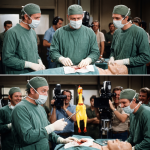
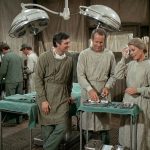
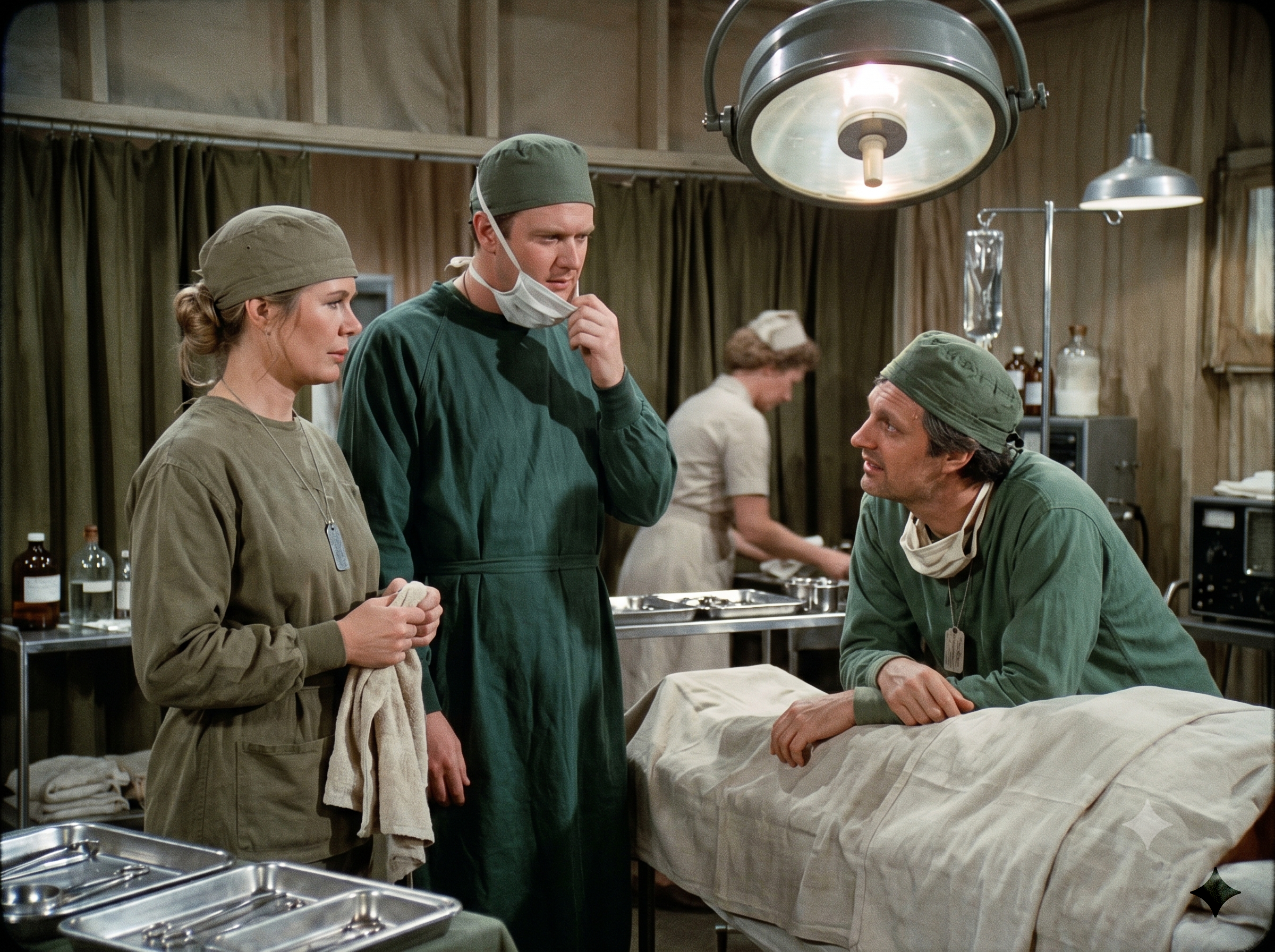
Under the harsh, pale glare of the overhead surgical lamps, the operating room looked exactly like what it was: a frontline butcher shop trying desperately to be a sanctuary. The air was thick and sour, heavy with the smell of ether, sweat, and copper.
Captain Hawkeye Pierce felt as though his bones had turned to wet cement. He leaned his entire weight onto his elbows, his lanky frame practically draped over the edge of the surgical table. Beneath the sterile white sheets lay a kid from Ohio who couldn’t have been old enough to buy a beer back home.
Hawkeye’s green scrub cap was pushed back, and his silver dog tags dangled over the olive drab canvas. He looked up, his face painted with an exhaustion so profound it bordered on spiritual. Yet, a weary, deeply fond half-smile tugged at the corner of his mouth.
Across the table stood Major Margaret Houlihan. She was perfectly still. Her fatigues were rumpled, and she held a simple, rough cotton towel tightly against her stomach.
She clutched that towel as if it were the only thing keeping her anchored to the floorboards. Margaret’s posture was, as always, strictly military. But her eyes betrayed the truth. They stared middle-distance, reflecting a quiet, hollowed-out fatigue and a desperate, silent relief that the bleeding had finally stopped.
But the center of gravity in the room had shifted entirely to the man standing between them. Major Charles Emerson Winchester III stood just a step back from the table.
Charles was a man who prized his dignity, his pedigree, and his absolute emotional control above all else. Right now, every ounce of that Boston armor was lying in pieces on the floor.
He reached up with thick, clumsy fingers and pulled his surgical mask down past his chin. He didn’t bother to untie it. He just dragged it down, gasping slightly for the stale air of the tent.
His face was a portrait of rare, naked shock. His eyes were wide and swimming with a reluctant, terrible compassion. He was staring blindly at the sleeping boy on the table.
Charles had spent the last three hours performing a vascular repair that was nothing short of a miracle. He had held a boy’s life between his thumb and forefinger, fighting the grim reaper millimeter by millimeter.
And the sheer terror of it had nearly broken him.
Charles swayed slightly on his feet. A fine tremor wracked his broad shoulders. The reality of the war, the endless, grinding misery of this place, was suddenly crashing over his carefully constructed walls.
He looked up, meeting Hawkeye’s gaze. Charles’s mouth opened slightly, his throat working as if he wanted to say something to dispel the heavy, agonizing humanity settling over his chest. But his voice failed him. The great Winchester was entirely without words, trembling on the edge of an emotional collapse in front of the people he usually fought with.
Hawkeye watched the aristocratic surgeon struggle to breathe. The silence stretched tight, brittle enough to snap.
In the Swamp, this was the exact moment Hawkeye would have fired a zinger. He would have launched a perfectly timed barb about Charles’s tailor, his ancestors, or his inflated ego, using humor like a scalpel to puncture the Major’s pomposity.
But this wasn’t the Swamp. This was the O.R. And in the O.R., after the last life was saved, the rules changed. They weren’t combatants here. They were survivors in the same battered lifeboat.
Hawkeye didn’t move from his slouch over the table. He just let out a soft, breathy sigh that carried gently across the quiet room.
“You know, Charles,” Hawkeye said, his voice scraped raw and raspy from shouting over the din all night. He kept that fond, tired half-smile firmly in place. “If you keep doing stitch-work like that, people might start to spread a nasty rumor.”
Charles blinked, trying to focus his wide eyes on the man across the table. He swallowed hard.
“Rumor?” Charles croaked. His voice lacked its usual booming resonance. It sounded small, fragile, and very far away.
Hawkeye nodded slowly, his eyes kind and understanding. “Yeah. They might start to think that underneath all that expensive Boston bluster… you actually care about someone other than yourself.”
It wasn’t a joke. Not really. It was a lifeline thrown across the sterile drapes. It was a quiet, profound acknowledgment of Charles’s brilliance and his buried humanity, wrapped in just enough dry wit to let the man save face.
Charles closed his eyes. The tremor in his shoulders finally stopped. He drew a long, shuddering breath, filling his lungs with the pungent air of the 4077th.
When he opened his eyes, the panic had receded. His spine stiffened just a fraction, the familiar, rigid posture of the Winchester family slowly reasserting itself.
“Pierce,” Charles muttered, finding his patrician cadence once more, though it remained remarkably soft. “My surgical brilliance is simply an involuntary reflex. I assure you, any pedestrian sentimentality you think you observe is merely a trick of the lighting.”
Hawkeye’s smile reached his eyes. He tapped the table twice with his knuckles. “Whatever you say, Chuck. Your secret is safe with me.”
The crisis of spirit had passed. But the heavy, bone-deep exhaustion remained in the room.
That was when Margaret finally moved.
She didn’t bark an order to the nurse quietly cleaning instruments in the background. She didn’t call for a corpsman to move the patient to post-op. She simply stepped away from her station and walked directly over to the towering surgeon from Boston.
Margaret stopped in front of Charles. Without a word, she raised the simple cotton towel she had been clutching so tightly.
With an incredibly gentle, steady hand, she reached up and wiped the heavy sheen of sweat from Charles’s pale forehead. It was an intimate, quietly maternal gesture. In that single motion, she wasn’t Major Houlihan, Regular Army. She was just a woman caring for a deeply weary friend.
Charles froze again. He looked down at the tough, uncompromising head nurse. The bravado completely vanished from his face.
For a fleeting second, Charles Emerson Winchester III looked utterly humbled by the simple grace of the act. He didn’t pull away. He let her tend to him.
“Thank you, Margaret,” he whispered. There was no sarcasm. No defensive bluster. Just pure, unadorned gratitude.
“You did good work tonight, Major,” Margaret replied softly, lowering the towel. Her voice was steady, warm, and deeply respectful. “We all did.”
She met Hawkeye’s gaze across the table. A silent, shared understanding passed between the three of them. They were a bizarre, mismatched trio. A rebellious Maine swamp Yankee, a strict Army brat, and an insufferable Boston snob.
Outside this tent, they drove each other crazy. They argued, they plotted, and they pushed each other to the brink of madness.
But here, bathed in the pale green light of the operating room, there was no division. There was only the shared, heavy burden of the lives they had saved, and the quiet comfort of knowing they didn’t have to carry it alone.
Hawkeye finally pushed himself off the table. He let out a loud, theatrical groan, his joints popping loudly in protest.
“Right. Well,” Hawkeye sighed, stretching his long arms over his head. “Now that we’ve established our mutual magnificence, I am going to go find something to drink that was recently distilled in a jeep radiator.”
Charles actually managed a small, tired smirk. “I shudder to think of the damage you are doing to your liver, Pierce. But I must admit… a drink sounds profoundly necessary.”
Margaret offered a weak, fond smile, turning to walk toward the scrub room. “Just don’t wake up the whole camp when you stumble to your tents. Some of us still have rounds at 0600.”
They moved slowly, their boots scuffing against the wooden floorboards. The tension had completely drained from the room, replaced by a warm, protective exhaustion.
As they pushed through the heavy canvas doors into the cool Korean night, they didn’t speak. They didn’t need to. The silence between them was no longer ringing or tense. It was just the comfortable, quiet peace of a family that had survived another day in hell, together.
They came for the war, but they survived for each other.