The Quietest Confession at the 4077th
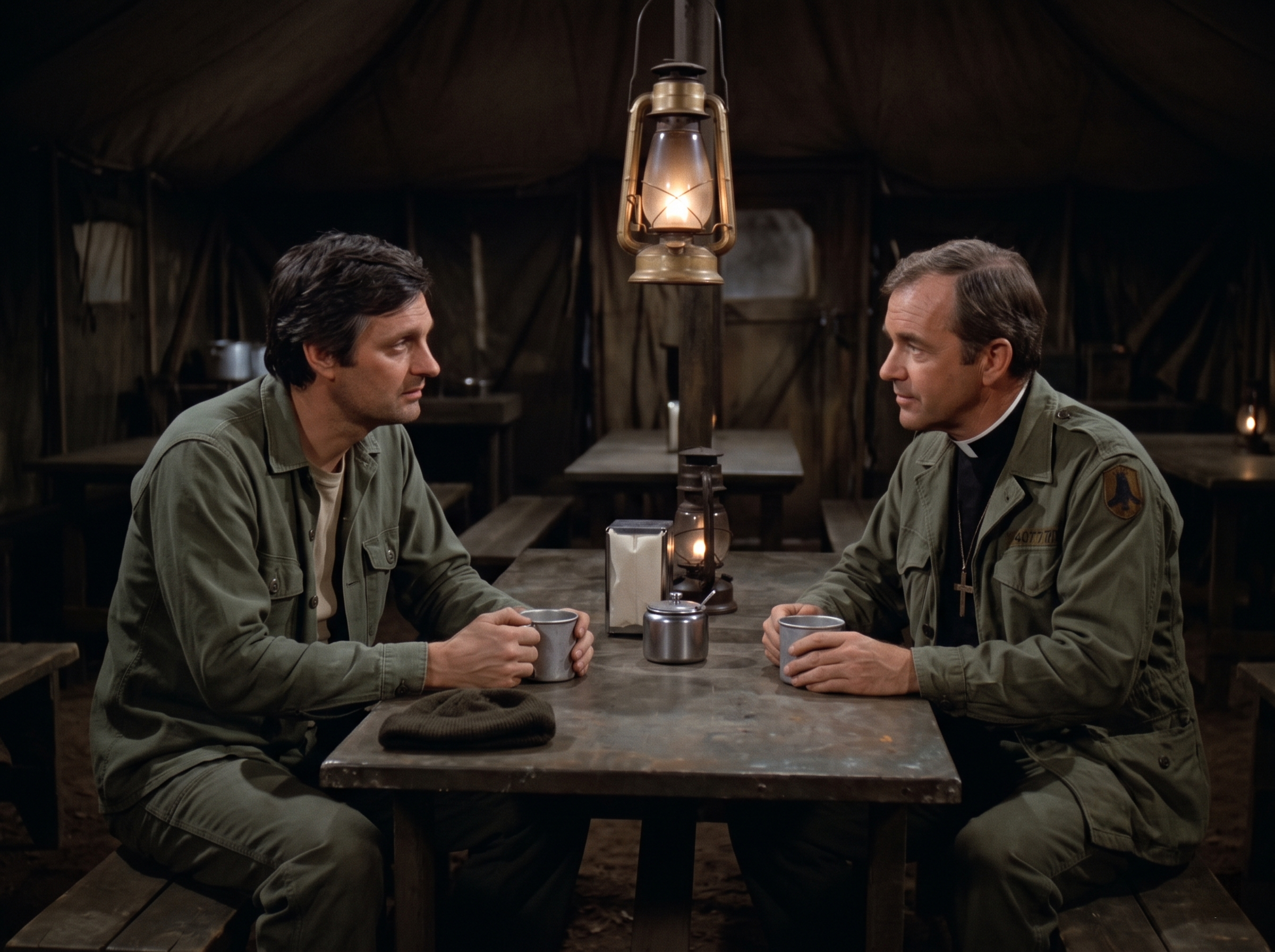
The mess tent was finally empty, the clatter of tin trays and the desperate, hungry chatter of the evening rush long faded into the damp Korean night. All that remained was the low hum of a hanging lantern and the rhythmic drip of condensation somewhere near the canvas flap.
Hawkeye Pierce sat hunched over the rough wooden table, his fingers tracing the rim of a metal cup that had long since gone cold. He looked exhausted, not just the physical kind that came after a twelve-hour shift in the OR, but the deep, marrow-thin fatigue that settled in when the mind couldn’t find a place to rest.
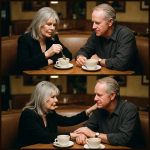
Across from him sat Father Mulcahy, his collar stark white against the olive drab of his jacket, his hands wrapped around his own mug as if seeking warmth. They hadn’t spoken for twenty minutes, yet the silence wasn’t awkward—it was the heavy, shared quiet of two men who had seen too much and were tired of trying to articulate why.
Hawkeye finally looked up, his eyes glassy and guarded, the usual sharp wit that served as his armor nowhere to be found. He opened his mouth to say something—a joke, perhaps, or a sarcastic remark about the coffee—but instead, a ragged, hitching breath escaped him, and he looked down at his lap, unable to meet the Father’s steady gaze.
Mulcahy leaned forward, his expression softening into that particular brand of gentle concern that had comforted countless souls in this godforsaken place. “You’re carrying a mountain again, aren’t you, Hawkeye?” the chaplain whispered, his voice barely audible over the wind outside.
Hawkeye didn’t answer, but his shoulders sagged, and the small, trembling movement of his hand gave him away, exposing a vulnerability so raw that it felt as though the very air in the tent had suddenly grown thin and sharp.
Mulcahy didn’t press him. He knew better than to try and dismantle a man’s defenses with a crowbar; he was a master of the soft touch, the quiet presence that invited a truth to come out on its own terms.
He watched as Hawkeye stared at the table, his jaw tight. The surgeon was reliving the day, the faces of the boys who hadn’t made it, the ones who had. It was a carousel of ghosts that only spun faster in the dark.
“I keep thinking,” Hawkeye started, his voice gravelly and distant, “that if I just scrubbed a little harder, or if I’d tried that one last stitch a second faster… maybe the math changes.”
He finally looked at the priest, his eyes searching, desperate for a dispensation that no one, not even a man of the cloth, could give. “It’s not just the blood, Father. It’s the sheer, ridiculous, unfair waste of it all. How do you keep the faith when God seems to be taking the night off every single day?”
Mulcahy waited a beat, letting the question hang there. He didn’t offer a sermon or a platitude about divine plans. Instead, he reached out and placed his hand briefly, firmly, over Hawkeye’s.
“I don’t think He’s taking the night off, Hawkeye,” Mulcahy said, his voice steady as a heartbeat. “I think He’s right here, in this tent. He’s in the hands that don’t stop moving, and He’s in the man who stays up late just to make sure he hasn’t lost his heart to the bitterness. You aren’t losing your faith, my friend. You’re just grieving. And there is nothing more holy than that.”
Hawkeye stared at him, the tension in his face slowly unspooling. The sharp, cynical lines around his eyes softened, replaced by a quiet, weary relief. He realized, in that moment, that he wasn’t carrying the mountain alone.
He picked up his cup and took a slow, deliberate sip of the lukewarm sludge, managing a tired, genuine smile—the first one of the day.
“You’re a terrible liar, Father,” Hawkeye said softly, his trademark dry humor finally flickering back to life. “But you’re a hell of a friend.”
Mulcahy smiled back, a small, knowing glint in his eye. “I’ll take the compliment, even if it comes with an insult.”
They sat together for a long time after that, two men in the dark of a war-torn land, simply existing in the quiet company of a friend who understood exactly what it cost to stay human. Outside, the war continued its jagged, senseless rhythm, but inside the tent, for just a little while, there was peace.
In the heart of the storm, sometimes the only map you need is the person sitting across the table.