The Weight of a Clean Shirt
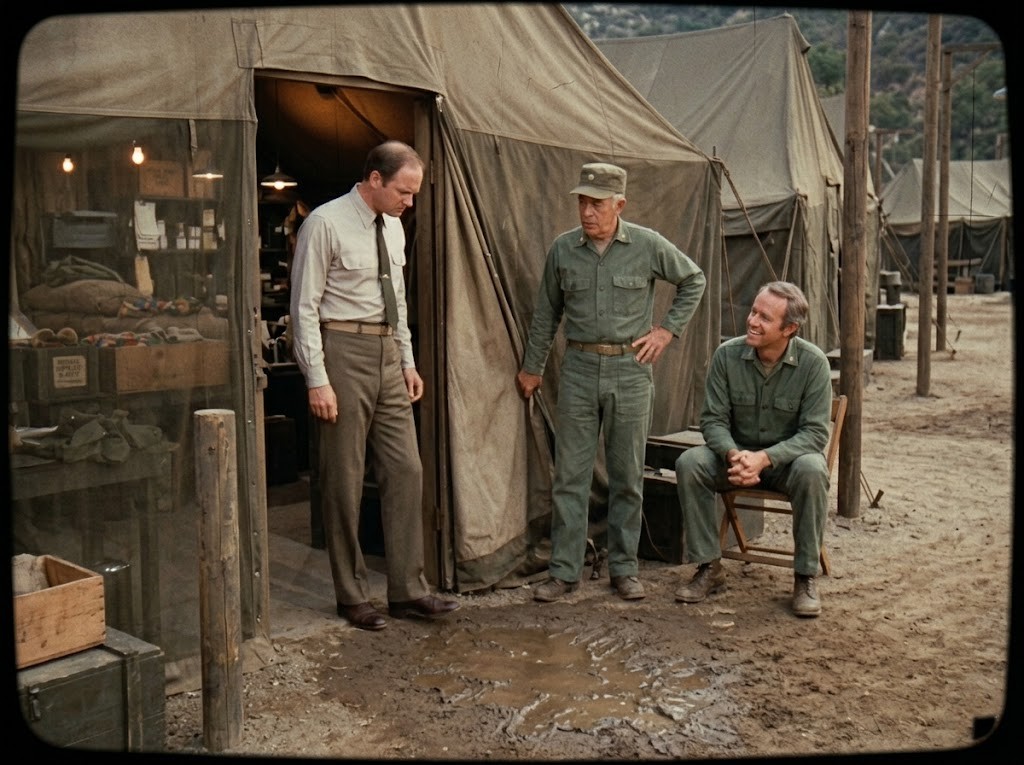
The Korean mud had a way of claiming everything eventually. It claimed the trucks, the tents, the boots, and, if you weren’t careful, it claimed your spirit. But on this particular Tuesday afternoon, Major Charles Winchester III was determined to draw a line in the dirt.
He stood at the precipice of the tent, looking down at the brown, gelatinous ooze with an expression of profound betrayal. Charles was wearing his absolute best: a crisp, neatly pressed, light-khaki civilian shirt, a perfectly knotted dark tie, and trousers that still held a faint crease from a Boston dry cleaner. He looked like an aristocratic professor who had accidentally wandered onto a construction site.
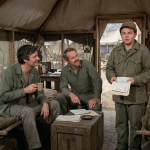
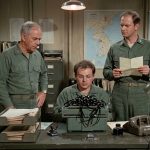
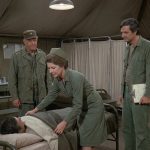
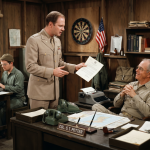
A few feet away, Colonel Sherman Potter stood with a hand resting on his hip, his utility cap pulled low. He looked at the mud, then at Charles, and then back at the mud. The Colonel had seen a lot of things in his three wars, but the sight of a Boston Brahmin having a silent standoff with a puddle was entirely new.
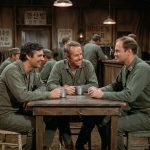
Sitting on a simple wooden chair just outside the screen door was Captain B.J. Hunnicutt. B.J. was already covered in the standard-issue grime of the 4077th, his boots caked in layers of dried earth. He watched Charles with a broad, easy grin, thoroughly enjoying the theatrical tension of the moment.
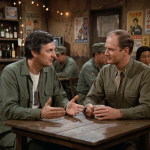
“It’s just water and dirt, Charles,” B.J. said, leaning forward and clasping his hands together. “It doesn’t have a personal vendetta against Massachusetts. I promise.”
Charles didn’t look up from the puddle. “To you, Hunnicutt, it is dirt. To me, it is the physical manifestation of this peninsula’s relentless assault on human dignity.”
“We’ve all got to walk through it, Major,” Colonel Potter said, his voice dry but not unkind. “Unless you plan on staying inside that supply tent until the armistice is signed. And frankly, I need those clipboards you’re standing next to.”
Charles shifted his weight, his expensive leather shoes creaking in protest. The shirt had arrived in a care package from his mother just yesterday, smelling faintly of lavender and home. To put on a clean shirt, to tie a proper necktie, was his only remaining armor against the endless cycle of the operating room.
He took a slow, agonizing breath, calculating the trajectory required to clear the widest part of the mire. His shoulders, usually so rigid, sagged just a fraction under the weight of a sudden, overwhelming wave of homesickness.
Just then, the distant, unmistakable wop-wop-wop of incoming choppers began to echo through the valley. The air in the camp instantly shifted, the lazy afternoon warmth evaporating into a cold, sharp reality.
Charles froze, his eyes still locked on the mud, caught between the immaculate memory of Boston and the immediate, messy demands of the 4077th.
The sirens didn’t blow yet, but they would in a matter of seconds. Every man in the camp knew the rhythm of the place by heart. The sound of those rotor blades was a string pulling them all back to the reality of the O.R.
B.J.’s smile faded, replaced instantly by the tired, focused look of a surgeon preparing for a long night. He didn’t stand up immediately, but his body tensed, ready to spring.
Colonel Potter took a step closer to Charles, his eyes softening beneath the brim of his cap. He knew exactly what that clean shirt meant to the Major. It wasn’t just vanity; it was a desperate attempt to hold onto a world that felt further away with each passing day.
“Charles,” Potter said softly, his voice dropping the commanding edge. “They’re coming in hot. We don’t have time for a detour.”
Charles looked up from the puddle, his eyes meeting the Colonel’s. For a fleeting second, the proud, sarcastic facade dropped, revealing a man who was simply exhausted, terrified of losing the last clean piece of himself to the war.
B.J. stood up from his chair, wiping his hands on his fatigues. He walked right up to the edge of the mud, looking across the small divide at his colleague.
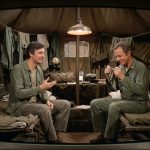
“Tell you what, Charles,” B.J. said quietly, offering a small, genuine smile. “If you ruin that shirt, I’ll let you wear my favorite flannel from San Francisco. It’s got character. And a few coffee stains, but it smells like a real home.”
Charles looked at B.J., then down at his own pristine cuffs. The choppers were louder now, roaring over the crest of the hill, bringing with them the inevitable influx of pain and broken bodies. The luxury of hesitation was officially gone.
With a sharp, dramatic sigh that was uniquely his own, Charles closed his eyes. “May God forgive this country,” he muttered.
He took a long, deliberate step forward.
*Squuelch.*
The thick, gray-brown muck swallowed his right shoe entirely, splashing up onto the hem of his perfectly pressed trousers. A single drop of mud flew through the air and landed square on the pocket of his immaculate shirt.
Charles stared at the spot for a beat, his face a mask of tragic resignation.
B.J. let out a short, barking laugh and clapped Charles on the shoulder, his own muddy hand leaving a fresh imprint on the Major’s back. “Welcome back to Earth, Charles. Glad you could join us.”
“You are an insufferable peasant, Hunnicutt,” Charles snapped, though the bite was entirely missing from his voice.
Colonel Potter chuckled, turning toward the main pad as the first chopper touched down, kicking up a storm of dust and wind. “Alright, gentlemen. Let’s go do what we came here to do. Shoes can be washed. People can’t be replaced.”
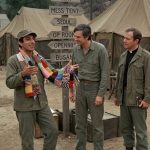
The three of them walked side by side toward the pre-op tent, their boots sinking equally into the mire. Charles walked with his chin held high, ignoring the stains on his clothes, carrying himself with the same dignity as if he were strolling down Beacon Street.
The shirt was ruined, but as they stepped into the heat of the pre-op tent together, surrounded by the family they had never asked for but desperately needed, Charles realized he had never felt more properly dressed.
In the 4077th, you learned that the things that kept you clean on the outside mattered very little compared to the friends who kept you together on the inside.