The Blanket of Ordinary Things
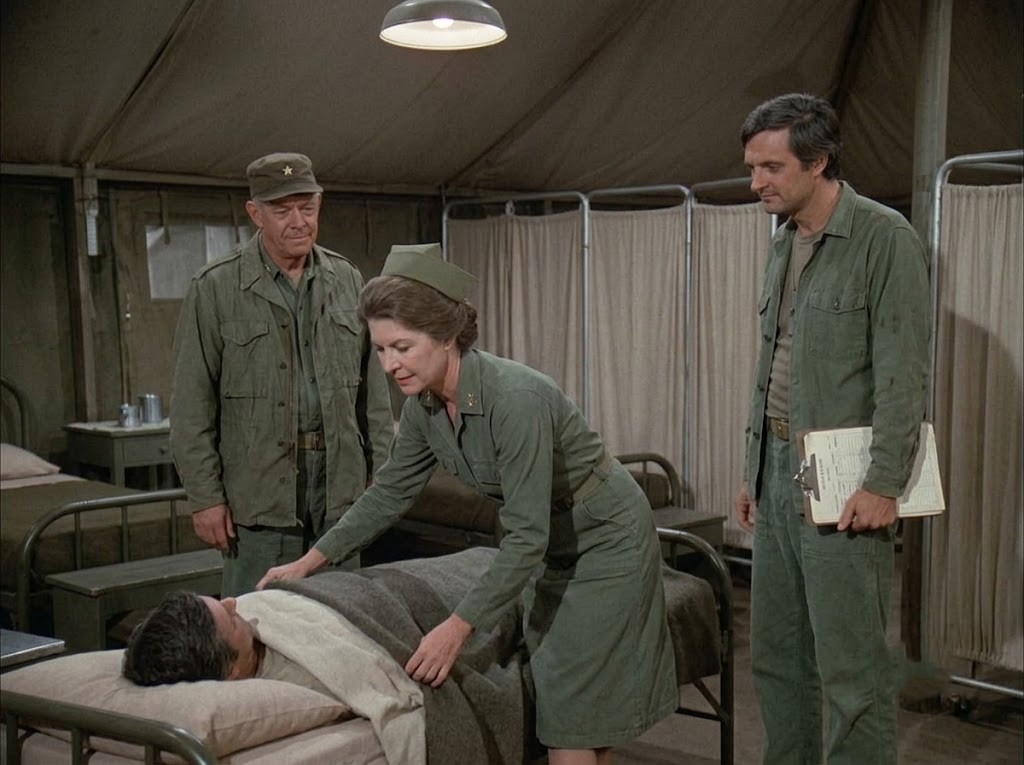
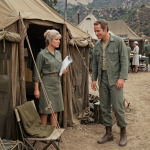
The Swamp had been cold for three days, but the post-op ward was always a different kind of freezing. It was the sort of chill that crawled into your boots and reminded you exactly how far away home really was.
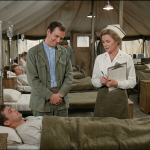
Hawkeye stood by the foot of the bed, his fingers curled around the metal edge of a clipboard he hadn’t looked at in twenty minutes. His jaw was tight, his uncombed hair falling into his eyes, looking every bit like a man who had traded forty-eight hours of sleep for a handful of stitched-together lives.
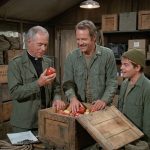
Beside him, Colonel Potter stood with his hands resting quietly at his sides, his shoulders slightly rounded beneath his heavy fatigue jacket. The silver star on his cap caught the dim light of the overhead lamp, but his eyes were fixed entirely on the young man under the wool.
In the bed lay Corporal Danny Miller, an eighteen-year-old from a small town in Ohio who had spent the last twelve hours whispering to a mother who wasn’t there. He wasn’t bleeding anymore—the active crisis had passed three hours ago—but he wouldn’t wake up, and he wouldn’t stop shivering.
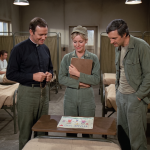
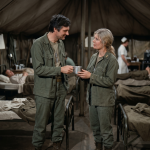
Margaret stepped forward, her movements efficient but unhurried, her uniform impeccable despite the dust of the compound. She reached for the heavy olive-drab blanket, her fingers folding the edge down with the precise, practiced care that only a head nurse could manage after a long shift.
“His temperature is still dropping, Colonel,” Margaret said, her voice dropping into that quiet, gravelly register she reserved for the middle of the night. “We’ve given him two extra blankets, but the dampness just settles right into the canvas.”
Potter took a slow, heavy breath, the kind that smelled faintly of cheap cigars and immense, unshared exhaustion. “The boiler in the generator shed gave out an hour ago. Radar’s out there now with a wrench and a flashlight, swearing at it in three different languages.”
Hawkeye shifted his weight, a familiar, dry sarcasm bubbling up to mask the knot forming in his throat. “If Radar doesn’t fix it soon, I’m going to start performing appendectomies just to use the cauterizing iron as a space heater.”
Nobody laughed, not because the joke was bad, but because they were all too tired to carry the weight of it.
Margaret didn’t look up from the bed; she carefully tucked the fabric around the boy’s shoulders, her hand lingering for a brief second against his collarbone to check his pulse. “He doesn’t need a space heater, Pierce. He needs to believe he’s warm enough to open his eyes.”
For a second, the ward was completely silent except for the low, rhythmic hum of the wind rattling the tent flaps outside.
Then, Danny’s fingers twitched against the coarse sheet, and his lips moved, shaping a single, desperate syllable that made Hawkeye drop the clipboard against his thigh with a dull thud.
“Ma…” the boy whispered, the sound barely clearing his dry lips. “The kitchen window’s open. It’s freezing in here.”
Margaret froze, her hands still resting on the blanket, her eyes widening slightly as she looked down at the pale face of the boy from Ohio.
Hawkeye took two steps closer, his usual frantic energy instantly dissolving into a quiet, grounded stillness. He looked at Potter, whose expression hadn’t changed, but whose jaw had set into a hard, protective line.
“He’s back in Ohio,” Hawkeye murmured, his voice losing every trace of the cynical doctor. “He thinks he’s home in bed, and the weather’s turning.”
Margaret didn’t hesitate; she leaned over the mattress, her face inches from the boy’s ear, her voice dropping into a soft, steady rhythm that didn’t sound like a major in the United States Army at all. “It’s alright, Danny. Your mother’s right here. She’s fixing the window now.”
She looked up at Potter, a rare, unshielded vulnerability in her eyes. “Colonel, we need something else. Not army wool. Something that doesn’t smell like supply depots and diesel fuel.”
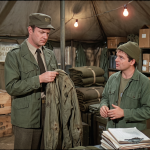
Potter nodded once, a slow, decisive movement. “Pierce, get over to my quarters. In the bottom locker, under the extra boots. There’s a quilted afghan my wife Mildred made before I shipped out. It’s ugly as sin—bright yellow and green—but it’s heavy.”
Hawkeye looked at the commander, surprised. “Colonel, that’s your home blanket. If the laundry orderly gets a hold of that, it’ll come back looking like a dishrag.”
“Move it, Pierce,” Potter said softly, though there was no anger in it, only the quiet authority of a father telling his son what needed to be done. “Before I find a reason to use my riding crop on you.”
Hawkeye didn’t need another word; he turned and disappeared through the tent flaps, his boots clicking sharply against the wooden duckboards outside.
A few minutes later, he returned, a bit breathless, carrying a bundle of thick, brightly colored yarn that looked entirely ridiculous against the olive-drab backdrop of the 4077th.
Together, without speaking, the three of them spread the homemade quilt over the top of the army blankets. It was a chaotic pattern of warm gold and faded green, smelling faintly of lavender and old cedar chests.
Margaret carefully smoothed the edges, her rough hands gentle against the bright yarn, ensuring it covered the boy right up to his chin.
They stood there in the dim light of the single bulb—the colonel, the surgeon, and the head nurse—watching the small rise and fall of the boy’s chest.
Slowly, almost imperceptibly, the deep, ragged shivering began to ease. The tight lines around Danny’s eyes softened, his head sinking deeper into the pillow as the familiar, domestic weight of the quilt seemed to pull him back from the edge.
Hawkeye looked down at the bright yellow stitches, his mouth twitching into a small, genuine smile that didn’t hide any pain behind it. “You know, Colonel… Mildred’s got a terrible eye for color, but her tension is magnificent.”
Potter let out a dry, short chuckle, reaching out to pat the boy’s covered foot through the quilt. “She made it out of old sweaters, Pierce. Said a man needs a piece of his own living room when the world gets too loud.”
Margaret kept her hand on the boy’s shoulder, her thumb moving in a tiny, comforting circle until Danny’s breathing became deep, even, and regular.
Outside, the generator suddenly coughed, groaned, and sputtered back to life with a distant, familiar roar, bringing the first faint hiss of steam through the pipes.
But inside the tent, under a ridiculous yellow blanket, the real warmth had already arrived.
Sometimes the best medicine didn’t come from a pharmacy, but from a locker box and a memory of home.