The Quiet Miracles of Post-Op
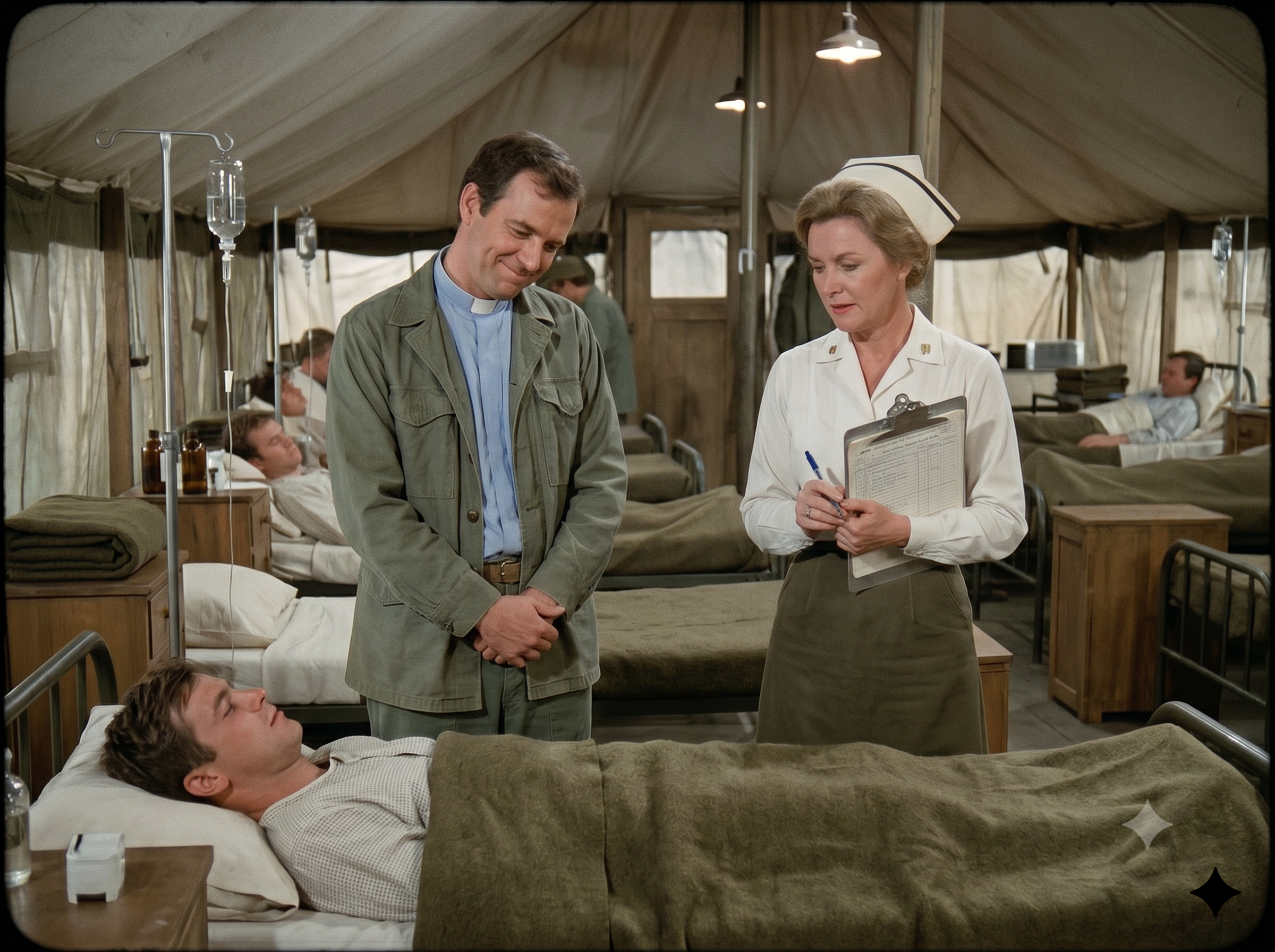
The hardest part of the war was never the deafening roar of the incoming choppers, nor was it the frantic, bloody chaos of the operating room. For the men and women of the 4077th, the heaviest moments always lived in the breathless silence of the Post-Op ward.
This was the quiet room.
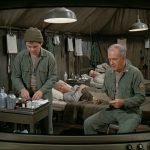
The heavy canvas walls held the muted sighs, the troubled dreams, and the ragged breathing of a dozen young men caught somewhere between a nightmare and a miracle. The air always smelled faintly of strong antiseptic, damp wool, and stale coffee.
Major Margaret Houlihan walked the narrow aisle between the cots, her crisp white shoes making almost no sound on the dusty wooden floorboards.
She carried her medical clipboard with both hands, holding it close to her chest like a protective shield. As the Head Nurse, she had to be the rock of this camp. She demanded absolute discipline from her nurses and projected an aura of unshakeable authority to the surgeons.
She couldn’t afford to let the endless parade of broken, frightened boys break her own heart. If she let the war in, she feared she might never get it out.
But every so often, usually in the dim, quiet hours of the afternoon, the armor slipped.
She paused at the foot of bed number four. She clicked her blue pen and looked down at the chart. Private Thomas Miller. He was nineteen years old, from a small farming town in Ohio she had never heard of.
He lay perfectly still beneath the scratchy, olive-drab blankets. His eyes were wide open, staring up at the slanted roof of the tent. He had been lying just like that since the heavy anesthesia had finally worn off a few hours ago—silent, frozen, and completely terrified to move.
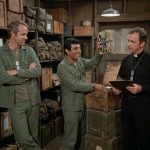
Father Francis Mulcahy stood quietly on the other side of the cot.
He wore his faded, oversized green fatigue jacket over his light blue clerical shirt. His hands were clasped gently in front of him, a posture of endless, patient faith. He had been making his quiet rounds, offering silent prayers and soft words to the boys who were waking up far from home.
Mulcahy knew Private Miller’s medical file just as well as the doctors did. He knew the shrapnel had come perilously close to the young man’s spine.
“How is our patient doing today, Major?” Mulcahy asked. His voice was warm, carrying that familiar, gentle cadence that somehow always made the room feel a little safer.
Margaret didn’t look up from her clipboard right away. “His vitals are steady, Father. Captain Pierce did a masterful job in O.R. As usual.”
She stepped to the side of the bed, her professional mask firmly in place. “Private Miller? I need to check your chart.”
The young boy didn’t blink. He just turned his head slowly against the thin white pillow, his exhausted eyes locking onto Margaret.
He looked so incredibly young in the standard-issue hospital gown. He looked like he belonged behind a desk in a high school history class, not lying battered in a mobile field hospital in the middle of Korea.
“Ma’am?” the boy’s voice was raspy, dry as the dust outside the tent flaps.
“I’m Major Houlihan,” she said, her tone crisp, efficient, but not unkind. “You’re in the Post-Op ward of the 4077th MAS*H. Your surgery was a success.”
The boy swallowed hard. He looked from the pristine white of Margaret’s nursing cap to the soft, worn collar of Father Mulcahy’s shirt. A deep, agonizing fear swam in his eyes.
“My legs,” the boy whispered, the panic suddenly rising in his chest, cracking his frail voice. “I can’t… I can’t feel them moving. The field medic out there… before they put me on the chopper… he said I might not…”
Margaret froze.
She knew exactly what the chart said. She had read Hawkeye’s messy, hurried scrawl after the agonizing three-hour spinal procedure. She knew the medical reality of the boy’s condition.
Mulcahy leaned in just a fraction of an inch, his gentle eyes moving from the frightened boy to Margaret’s face. He knew the terrifying weight of this exact moment. He had seen it a hundred times before.
The boy’s breathing hitched, his eyes shining with unshed tears as he braced himself for the absolute worst news a soldier could hear.
“Tell me the truth, Major,” the boy pleaded, his voice dropping to a terrified whisper. “Please.”
Margaret stared down at the clipboard in her hands. The distant rumble of a jeep outside faded away, and the silence inside the tent suddenly felt deafening.
For a long, agonizing second, Major Houlihan didn’t speak. She just looked at the neat rows of medical data on the paper in front of her.
Military protocol dictated that she maintain her emotional distance. She was supposed to give him a brief, clinical update, check his IV drip, and move efficiently to the next bed.
But she looked at the boy’s terrified face. Then, she glanced across the narrow cot.
Father Mulcahy was watching her. He didn’t offer a religious platitude. He didn’t interrupt to save her from the difficult conversation. He simply offered her a soft, profoundly hopeful smile, his hands still folded peacefully together.
It was a look of pure grace. It was a look that said, You can be human, Margaret. It’s safe here.
Margaret took a slow, quiet breath. Her strict, rigid military posture softened, just a fraction. The sharp edges of her authority melted away, leaving only the deeply caring woman who had dedicated her entire life to healing the sick.
She lowered the clipboard, resting it gently against her uniform.
“Private Miller,” she said.
Her voice was completely different now. It wasn’t the loud, brassy voice that barked strict orders in the mess tent. It was low, rich, and remarkably tender.
The boy stared up at her, trembling beneath the green wool blanket.
“The medic in the field was doing his absolute best to prepare you for a worst-case scenario,” Margaret explained gently, looking directly into the young soldier’s eyes. “But he didn’t know you were going to have the finest surgeons in all of Korea working on you today.”
She reached out with her free hand. She didn’t take his pulse. She didn’t adjust his bandages. She simply laid her hand over his on top of the blanket.
“There is still a considerable amount of swelling near the nerves in your back,” Margaret explained slowly, making sure he absorbed every word. “That is exactly why you feel numb right now. It is completely normal for this type of procedure.”
The boy held his breath, his eyes wide. “But… but I will…”
“You are going to walk, Thomas,” Margaret said firmly. The absolute, unshakeable certainty in her voice left no room for the boy’s doubts. “It is going to take some time, and it’s going to take a whole lot of physical therapy when they send you to Tokyo. But you are going to walk back into your home in Ohio on your own two feet.”
A profound, shuddering exhale left the boy’s lungs. It was the beautiful sound of a living nightmare finally coming to an end.
Tears spilled over his eyelashes, tracking down his dirt-smudged cheeks, but they were tears of pure, unadulterated relief. The heavy tension that had gripped his body vanished, leaving him suddenly limp and exhausted.
“Thank you,” he choked out, his fingers weakly grasping at Margaret’s hand. “Thank you so much, ma’am.”
Margaret’s own eyes shone with a hidden, unshed emotion, but she offered him a warm, reassuring smile that reached all the way to her eyes. “Don’t thank me, soldier. You did the hard part just holding on out there. Now your only job is to rest.”
Across the bed, Father Mulcahy leaned in closer, his gentle smile widening with immense warmth. He radiated a quiet, deeply felt joy, looking at the young boy with the tender pride of a loving parent.
“You see, my son,” Mulcahy said softly, his tone light and deeply comforting. “The Lord works in mysterious ways, it’s true. But He also works quite frequently through the remarkably skilled hands of our doctors, and the deeply compassionate care of our Major here.”
Margaret looked up at the priest. A silent, powerful communication passed between them over the sleeping boy’s body.
Mulcahy’s eyes held nothing but absolute respect for her. He saw the immense toll this endless war took on her spirit, and he saw the beautiful, aching humanity she tried so desperately to hide behind Army regulations and brass polished rules.
Margaret gave a small, almost imperceptible nod of gratitude to the Father. She needed that silent support, that quiet validation of her own heart, more than she would ever admit aloud.
The boy’s eyes were already drooping, growing heavy with the massive weight of his exhaustion. The terrifying fear that had kept him awake was entirely gone, replaced by the heavy, healing pull of sleep.
Margaret gently slipped her hand free from his. She picked up her blue pen, clicking it once, and made a small, neat checkmark on his medical chart.
She was Major Houlihan again, but the air inside the canvas tent felt undeniably lighter.
“He’ll sleep peacefully through the night now,” Margaret whispered, reaching down to expertly tuck the blanket around the boy’s shoulders to keep out the draft.
“You gave him a truly wonderful gift today, Margaret,” Mulcahy replied quietly, his hands still comfortably clasped together. “You gave him back his tomorrow.”
“It was just the medical facts of the chart, Father,” she said, though the usual defensive, sharp edge was entirely absent from her voice.
“Of course it was,” Mulcahy smiled, his eyes twinkling with quiet knowing. He turned to walk with her down the center aisle. “But facts are often much easier for a frightened soul to swallow when they are served with a little bit of grace.”
They moved on to the next bed together, an Army officer and a parish priest, walking side by side through the dim, golden light of the Post-Op ward.
Outside, the distant, thumping rumble of artillery echoed over the jagged Korean hills, a constant, grim reminder of the brutal war that raged on without end.
But inside these canvas walls, in the quiet, sacred spaces between the cots, the men and women of the 4077th fought back. They didn’t fight with rifles or artillery. They fought back with clean bandages, steady hands, silent prayers, and the incredible, stubborn healing power of a simple human touch.
The war took everything it could, but it could never take the heart of the 4077th.