A Sock Full of Hope
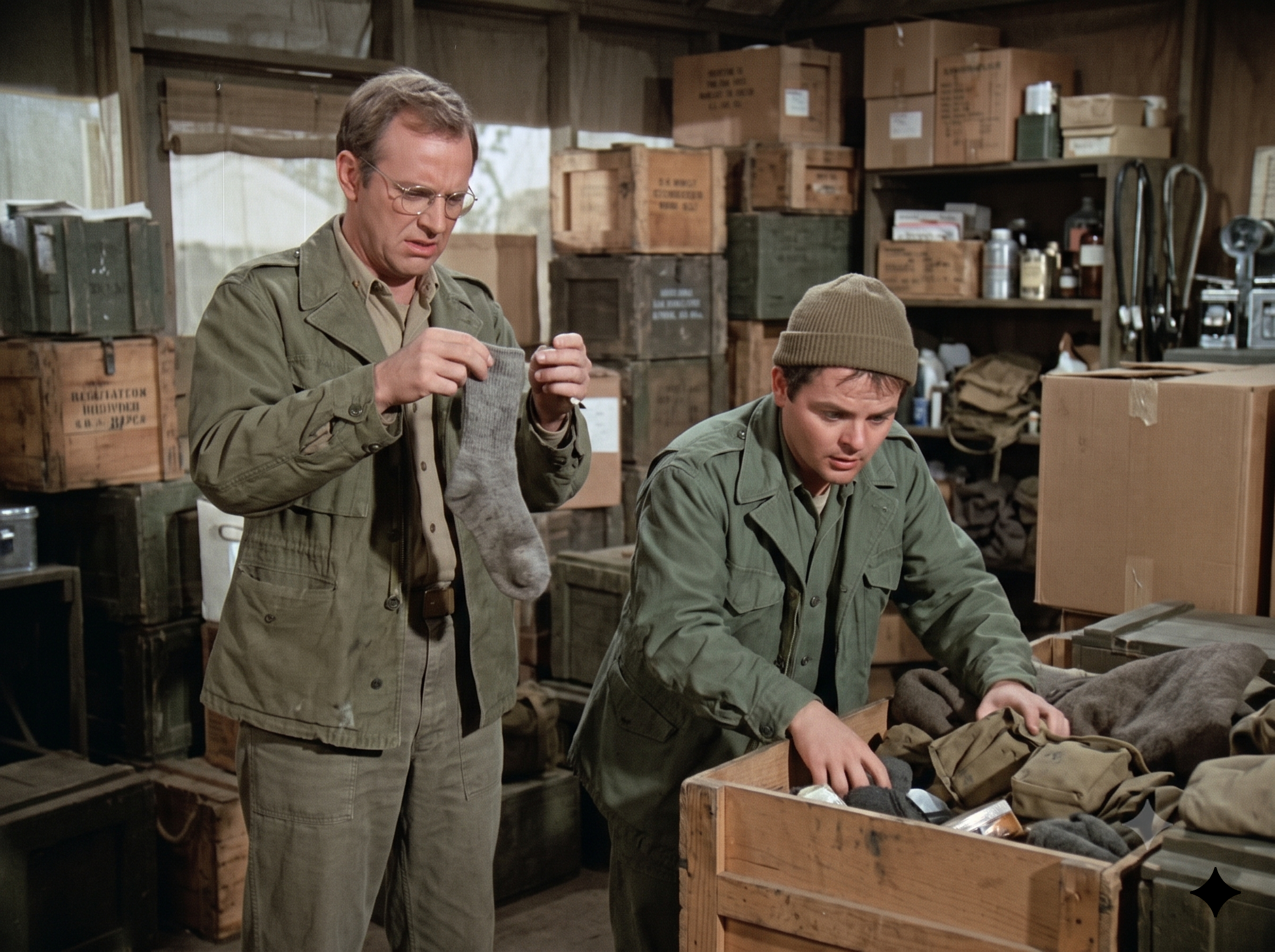
Sometimes, it was the smallest things that kept the 4077th from going absolutely, entirely stark raving mad.
Take, for instance, a clean pair of socks.
After three straight days of operating, when your boots feel fused to your feet and your brain feels fried by fatigue and the smell of antiseptic, a warm, soft pair of grey wool socks is more precious than any medal.
It was mid-afternoon, one of those rare, stolen lulls in the fighting.
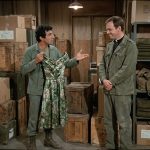
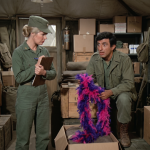
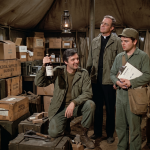
Colonel Potter’s supply tent was, predictably, a disorganized catastrophe, but it was *their* catastrophe.
The wooden crates, many stacked like precarious skyscrapers of bureaucracy and bandages, lined the walls, each one a testament to the endless, chaotic logistics of keeping a field hospital running.
Radar, that small miracle of clerical intuition, was buried waist-deep in a particularly large wooden box.
His ever-present wool cap was pulled down tight, a singular beacon of warmth against the chill that seemed to seep through the canvas.
He’d claimed that this crate contained the elusive “Comforts of Home” shipment that had gone missing somewhere near Seoul, but so far, all he’d produced was a crate of dried apricots and a puzzling abundance of canned peaches.
Radar: “I *know* they’re here, Colonel. The requisition form specifically said ‘Miscellaneous Personnel Linens, Winter, Style A.’ This has to be the place. But so far, it’s mostly just things that used to be fruit and… well, that.”
The “that” in question was currently being held up by Colonel Potter, who was scrutinizing it with the intensity he usually reserved for reviewing surgical schedules or trying to find his reading glasses.
He held it gingerly, as if it might decide to self-combust or suddenly spout Chinese propaganda.
Potter: “Style A, you say? I’ve seen things style-A’d that were more identifiable as socks than this. This looks less like a garment and more like something a particularly depressed moth decided was too drab to eat.”
Potter: “And what is *this* texture, Radar? It feels like the coarse hair of a very grumbly mule.”
Radar: “That’s the high-quality wool blend, sir. Guaranteed to keep feet toasty, or at least, that’s what the fine print said. Once we wash it, maybe… three times? The smell of naphthalene and sadness might fade.”
Potter, with a sigh that carried the weight of the last three days: “It’s the only one, son. Just one solitary, forlorn, slightly-unraveled sock.”
He held it up to the light filtering through the dust-moted air of the tent. It was a perfect, silent monument to administrative oversight.
Potter: “One sock, Radar. A fine comfort. For a man with one foot. And apparently, a severe tolerance for coarse textiles. Do you have any *idea* how many pairs of frozen, exhausted feet are waiting for a shipment like this to magically materialize?”
Radar looked up, his expression a familiar mix of earnestness and panic.
Radar: “Well, *technically*, yes, sir. I calculated the average foot-count and subsequent sock-deficit, and it’s… significant. I’m very sorry, Colonel. I tried. I really did. It’s just this whole system… it’s a big machine, and we’re just the little cogs getting chewed up in the gears of bureaucracy, and all we want is clean socks.”
Potter’s face, which had been a mask of frustration, suddenly softened.
He looked at the small soldier, surrounded by his crates of dried fruit and single-sock tragedies.
Potter: “No, son. You didn’t fail anyone. If anything, you’re the only cog that’s even *greased* around here. Don’t you worry about the rest of the feet. This one is special.”
He carefully set the grey sock down on the edge of the large wooden crate Radar was leaning against, as if it were a fragile artifact.
Potter: “It’s not just a sock, Radar. It’s a reminder. A small, woolly reminder of what we’re *not* going to become. We are not going to become cold, or uncaring, or broken by this whole rotten mess.”
Potter: “If we can look at this single, lonely, slightly awful sock and still hope for a pair, then we’ve won. We haven’t let the machine break us. Not entirely.”
He walked over and clapped a hand on Radar’s shoulder.
Potter: “Now, pull yourself together and see if you can requisition a whole set of long underwear for Klinger that *isn’t* sheer lace. That man is going to catch his death, and the nurses are starting to get distracted.”
Potter: “And Radar? Leave the sock right there. For luck. It’s the least we can do for the poor fellow who has to keep digging through these crates.”
Radar looked back down into the crate, and then at the single grey sock resting on its edge.
He reached up and adjusted his wool cap, a small, grateful smile spreading across his face.
The tension in the tent had evaporated, replaced by a warm, tired, bittersweet sense of shared understanding.
They knew they were still surrounded by the chaos and the exhaustion, but they also knew that in that cluttered supply tent, they had something that no bureaucrat, no general, and no amount of mud could ever take away from them.
They had each other. And they had hope.
Radar watched the Colonel walk out, and then he reached back into the crate.
Radar: “Alright, peaches. Let’s see what *you’re* hiding. I just *know* I can find a match. Somewhere. Maybe.”
And with that, he resumed his search, the single grey sock keeping its quiet vigil on the edge of the crate, a small, imperfect symbol of something very, very real.
In a place built on heartbreak, it was the small, funny, human moments—and the search for that other sock—that truly kept us warm.