The Quiet After the Storm
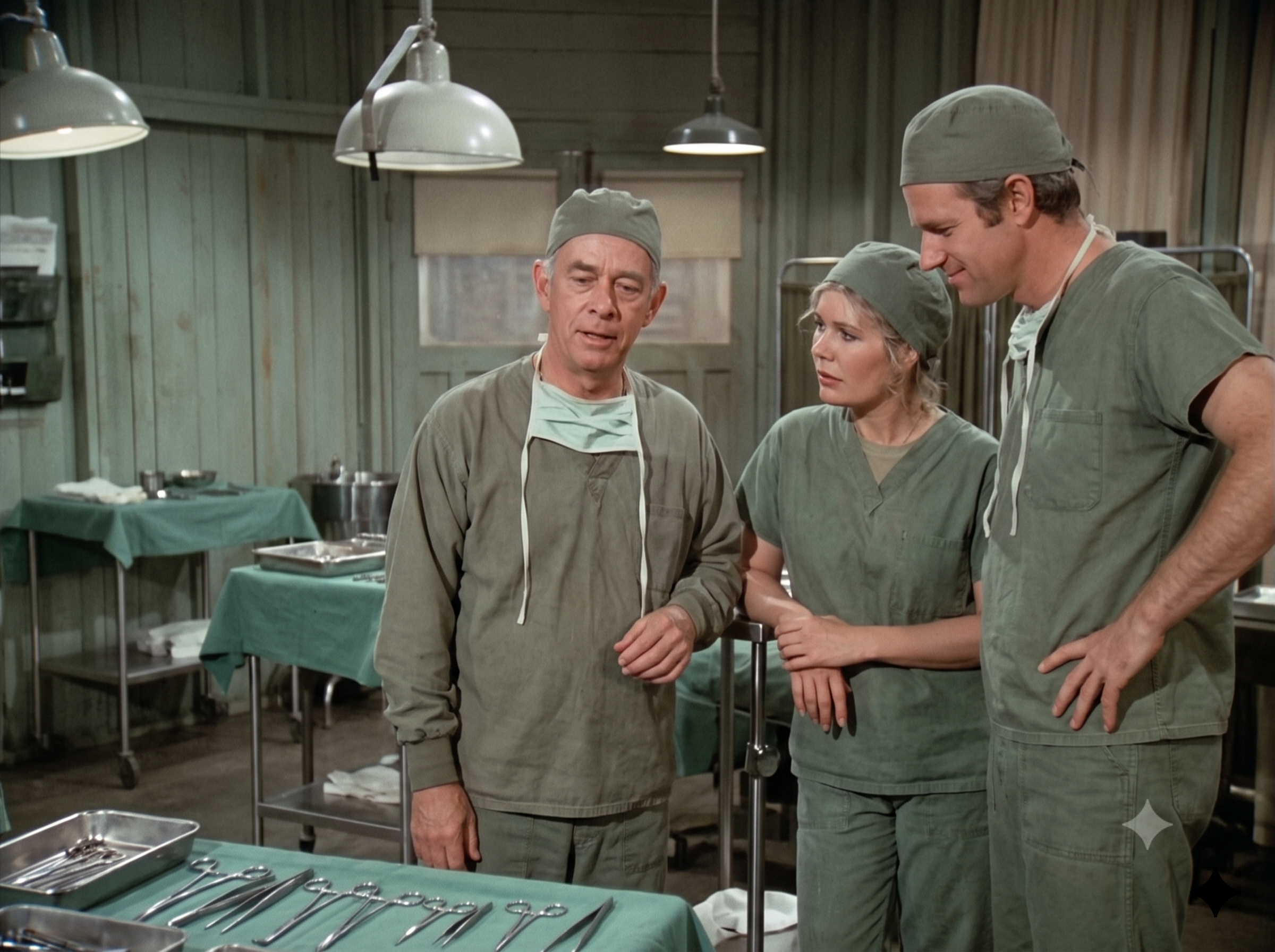
The hardest part of the Operating Room wasn’t the deafening roar of the incoming chopper blades; it was the heavy, suffocating silence that always followed.
The 4077th had just survived another marathon.
It had been eighteen hours of endless, grueling meatball surgery. They had fought a desperate battle against time, mud, and shrapnel, working until their hands cramped and their eyes burned.
Now, the last patient had been wheeled away to post-op. The bleeding had finally stopped.
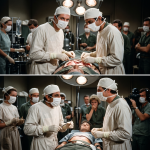
The scrub sink trickled softly in the background, a lonely, rhythmic sound in the cavernous, pale green room.
The bright overhead lamps cast a soft, practical glow over the surgical trays. Neat rows of silver clamps, forceps, and scissors rested quietly on sterile green towels, catching the light like artifacts from a battle just finished.
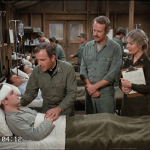
Colonel Sherman T. Potter stood near the center of the room, the adrenaline finally draining from his boots.
With a slow, deliberate, and exhausted motion, he pulled his surgical mask down past his chin. He let out a long, ragged breath that seemed to echo in the stillness.
It was the deep sigh of an old cavalryman who had seen far too much over three different wars, yet somehow still felt the profound sting of every single loss.
To his right, Major Margaret Houlihan was doing something she almost never allowed herself to do in front of the commanding officer.
She was letting her guard down.
It was just a fraction of an inch, but it was undeniably there. She leaned her hip against the metal frame of a medical tray, folding her arms loosely as her rigid, professional composure melted away.
Her blonde hair was tucked haphazardly beneath her green surgical cap. Her eyes, usually bright with fierce, unwavering authority, were clouded with a deep, aching fatigue.
She looked surprisingly small standing there in her practical, worn scrubs, surrounded by the remnants of the day’s desperate work.
Beside her stood Captain B.J. Hunnicutt.
His hands rested casually on his hips, his own green scrubs deeply wrinkled and stained from the long night. He wasn’t cracking a joke. He wasn’t looking for a punchline to lighten the mood.
He was simply watching her, his shoulders slumped with the same bone-deep weariness.
The silence stretched out between them, thick with the lingering scent of iodine, ether, and exhausted humanity.
Margaret stared blankly at the meticulous arrangement of instruments on the tray. When she finally spoke, her voice wasn’t her usual parade-ground bark.
It was a quiet, fragile whisper that seemed entirely out of place in the sterile room.
“Colonel,” she began, her voice trembling just slightly around the edges. “I don’t know if I can keep washing the smell of this place out of my hands.”
She didn’t just mean the physical long hours. She meant the endless, heartbreaking tide of wounded nineteen-year-old boys.
She meant the profound emotional toll of piecing together shattered lives, day after agonizing day, in the middle of a senseless, dusty war.
Margaret looked up at Potter, her usual impenetrable armor completely stripped away.
She stood fully exposed, vulnerable, and completely drained of her immense strength.
For one terrible, suspended second, it looked as though the toughest head nurse in the United States Army was finally going to shatter into a million irreparable pieces.
The quiet in the surgical ward deepened, hanging heavy and still in the warm air.
Nobody moved. Nobody panicked at the sight of Major Houlihan’s rare, terrifying crack in her foundation.
Instead of looking away, B.J. Hunnicutt simply turned his head slightly toward her. He offered Margaret a small, dryly supportive nod.
It wasn’t a look of pity. It was a look of pure, empathetic solidarity.
His soft, tired smile was a quiet lifeline thrown across the sterile room. It was a silent message that said, I know, Margaret. I feel it too. We all do.
It was the profound, wordless connection of people who share the exact same nightmares every time they close their eyes.
Colonel Potter didn’t flinch, either. He didn’t cite army regulations or offer a stiff, patriotic speech about duty and country.
The old commander just looked at her. His weathered face, lined with decades of impossible decisions, softened into a mask of pure, paternal relief.
He was actually relieved she had finally said it. He was relieved she was human enough to feel the unbearable, crushing weight of their daily miracles.
“Margaret,” Potter said, his voice sounding like warm gravel, steady and endlessly grounding. “The day you stop feeling like you can’t go on… is the day you actually can’t.”
He shifted his weight, his eyes filled with a deep, abiding respect.
“It’s the simple fact that this place breaks your heart that makes you the best damn nurse I’ve ever had the privilege to serve with,” Potter told her softly. “If this tent ever stops hurting us, Major, that’s when we’ve truly lost the war.”
Margaret took a slow, shaky breath. The slight trembling in her shoulders finally began to subside.
She absorbed the quiet, undeniable truth of his words, letting his fatherly wisdom anchor her back to the muddy reality of the 4077th.
The iron spine didn’t immediately return to her posture, but the panicked, frayed edge of her fatigue was gently replaced by a soft, quiet acceptance.
B.J. shifted his stance, his hands still resting comfortably on his hips.
“Besides, Major,” B.J. added, his voice warm and teasingly gentle in the quiet room. “If you pack it in, who’s going to yell at Hawkeye for leaving his dirty socks on the mess tent tables? The whole camp would fall into total anarchy by Tuesday afternoon.”
A tiny, exhausted smile finally broke through the vulnerability on Margaret’s face.
She looked over at B.J., deeply appreciating the dry, steady comfort of his humor. Then she looked back at Potter, seeing the steadfast, unwavering care in his tired eyes.
The heavy tension fully evaporated, leaving behind a profound sense of peace.
They weren’t just army personnel standing in a canvas mobile hospital thousands of miles from home.
They were a family. They were a family forged in blood, sweat, and ether, holding each other up when the world outside their doors made absolutely no sense at all.
“Alright,” Margaret whispered. Her voice finally found its familiar, solid footing, though it remained much softer than usual. “But if I have to inventory one more box of wooden tongue depressors today, I am personally writing my congressman.”
Potter chuckled. It was a dry, raspy sound that brought genuine warmth back to the cold, pale room.
“Fair enough, Major,” Potter said, turning his tired boots toward the double doors. “I hereby declare this session of the 4077th exhaustion club officially adjourned. I suggest we all go find some of whatever it is the mess tent is generously calling coffee today.”
“Lead the way, Colonel,” B.J. said, stepping back with a gentlemanly gesture to let Margaret pass first.
She pushed off the medical tray, her posture naturally straightening as she found her strength again. She was still bone-tired, but she was no longer carrying the immense weight of the war entirely by herself.
They walked out of the O.R. together, side by side.
They left the bright lamps and the sterile green silence behind them, stepping back out into the dirt and chaos of Korea with the only thing that truly mattered: each other.
In the end, the medicine saved the patients, but it was the people who saved each other.