The Weight of a Quiet Morning at the 4077th
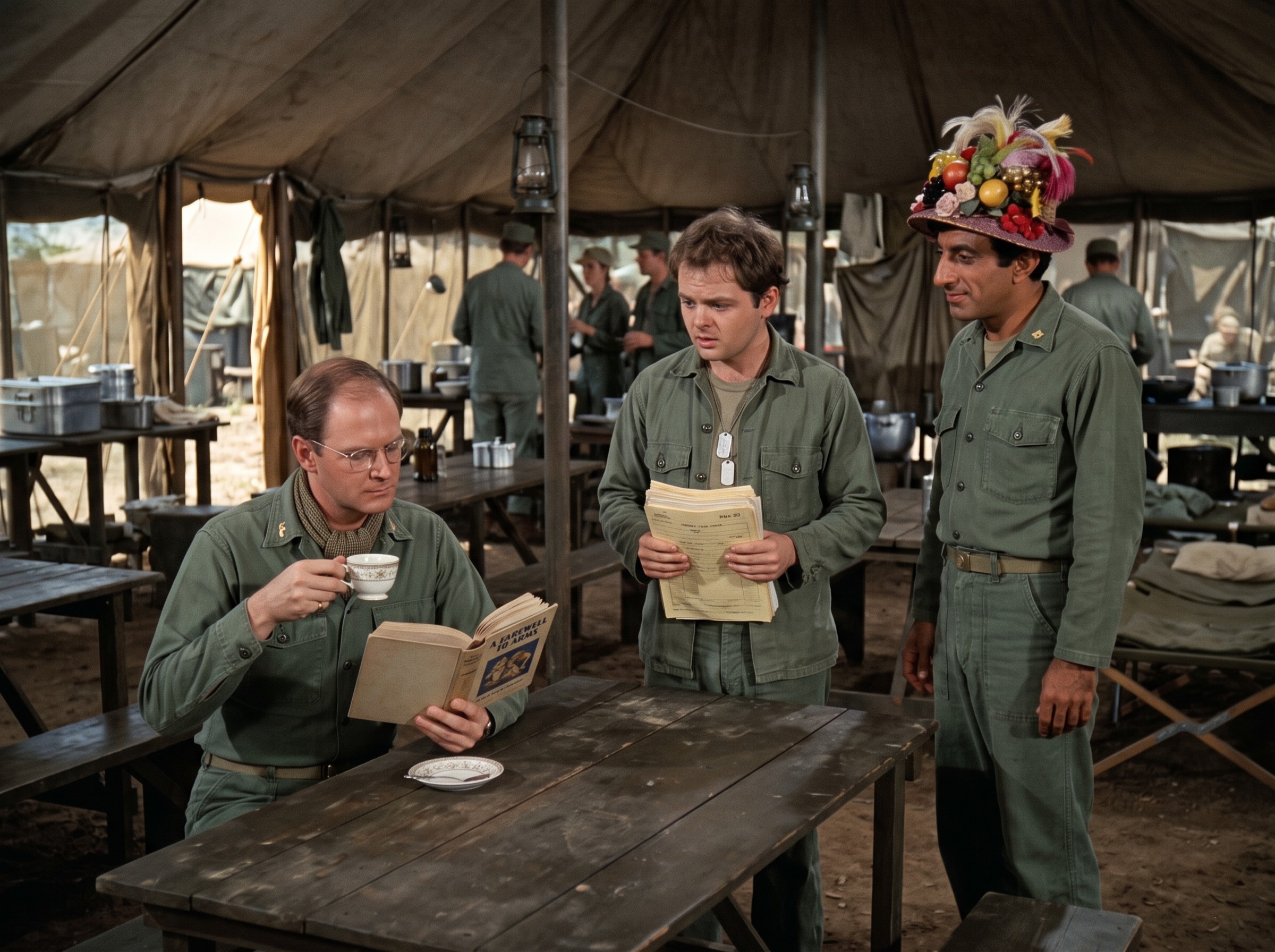
The mess tent always smelled like a peculiar cocktail of burnt coffee, damp canvas, and the lingering, metallic scent of the compound’s proximity to a war that never seemed to take a day off. It was a Tuesday—or maybe a Wednesday—it was hard to keep track when the sun rose and set to the rhythm of choppers rather than clocks.
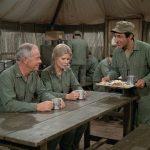
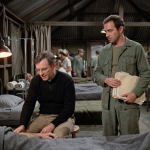
Major Charles Emerson Winchester III sat at the head of the weathered wooden table, looking as though he had been transported directly from the Harvard Club to this sweltering patch of Korean mud. He held his china teacup with a delicate precision that defied the chaos surrounding him, his other hand anchored firmly on a well-worn copy of *A Farewell to Army*.
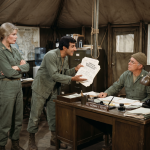
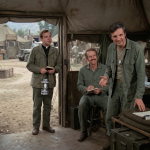
Beside him stood Corporal Radar O’Reilly, looking perpetually startled, clutching a stack of requisition forms to his chest like a shield. Radar’s eyes flicked back and forth between Charles and the third member of their strange little trio, Max Klinger.
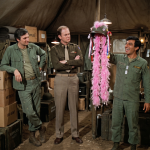
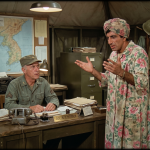
Klinger was wearing a hat that could only be described as a horticultural disaster—a fedora sprouting a cornucopia of fake plastic fruits, feathers, and vibrant, wilting flowers. He stood at attention, his expression a masterpiece of deadpan stoicism that bordered on the heroic.
“I don’t recall authorizing a salad to be served atop your head, Corporal,” Charles remarked without looking up from his book. He took a slow, deliberate sip of his tea.
Klinger didn’t blink. “It’s a morale booster, Major. Very chic in Toledo this time of year. Plus, the cherries are aerodynamic.”
Radar shifted, the papers rustling in his grip. “Major, sir, I really think you need to look at these reports. The supply trucks are delayed again, and if we don’t get the requisition signed, we might be out of gauze by tomorrow morning.”
Charles sighed, a sound of profound intellectual suffering, and finally lowered his book. He looked at the forms, then at the ridiculous headgear, and finally at the exhausted lines around Radar’s young eyes. The humor left the air, replaced by that heavy, familiar silence that always reminded them exactly where they were.
“Very well, Corporal,” Charles said, his voice dropping an octave, his usual sneer replaced by a flicker of genuine alarm as he scanned the top document. “But if this supply shipment fails, you can be certain that I will be wearing your fruit basket as a penance.”
He reached for his pen, but as he moved to sign, a distant, rhythmic thumping began to vibrate the floorboards of the tent. It wasn’t the usual supply truck rumble. It was the heavy, low-frequency beat of a medevac bird, coming in low and fast, way ahead of schedule.
The pens stopped moving. The laughter that had been simmering in the corners of the mess tent evaporated instantly.
Charles dropped the form onto the table. Radar didn’t even wait for the sound to get closer; he was already halfway to the tent flap, his face pale and set in that grim, focused expression he wore when the reality of the 4077th finally crashed through his defenses.
Klinger took off his fruit-laden hat, holding it in his hands as if it were a fragile bird. “Is it a heavy load?” he asked, his voice losing its theatrical lilt.
“Too heavy,” Charles murmured, standing up. He caught the look in Klinger’s eyes—the quiet, desperate hope that this particular chopper wouldn’t be bringing in anyone he knew, or anyone too young.
They stood there for a heartbeat, anchored to the spot by the sound of the approaching rotors. In that moment, the absurdity of the hat, the arrogance of the tea, and the frustration of the paperwork simply didn’t exist. There was only the war, the wounded, and the three of them, waiting to do whatever small, imperfect thing they could to help.
“Go,” Charles said, gesturing toward the door. “Get the supply lists to Potter. I’ll meet you in Post-Op.”
Radar nodded and bolted into the sunlight, the requisition forms flapping like wings. Klinger followed, pausing only to place his hat carefully on the table, a strange, colorful relic left behind in the sudden storm of duty.
Charles remained for a moment. He looked at the book, *A Farewell to Army*, and then at the spot where the boys had stood. He felt a sudden, sharp pang of something he rarely admitted to—not loneliness, exactly, but the crushing weight of being away from everything that had once made his life feel like his own.
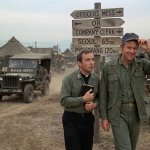
He walked toward the exit, stopping to grab his surgical cap. As he stepped out into the blinding Korean light, he saw them—Hawkeye and B.J. were already jogging toward the pad, their faces gaunt, already shedding the exhaustion of the previous night.
He watched them for a second, a team moving in a dance they had perfected through sheer necessity. He joined them, falling into step. They didn’t speak. They didn’t need to. They all carried the same invisible luggage, the same quiet, bruised hope that today, somehow, would be a little less final than yesterday.
Back in the mess tent, the hat remained on the table, a splash of vibrant, impossible color in a world of drab green. It was a reminder that even here, among the ghosts and the bandages, someone had tried, just for a second, to remember what it was like to be lighthearted.
The wind blew through the open flap of the tent, knocking a single plastic grape onto the floor. It rolled into the shadows, quiet and forgotten, as the sirens began to wail across the compound, calling them all back to work.
Whatever the world demands of us, we face it together—one cup of tea, one requisition, and one heartbeat at a time.