The Best Kind of Mess
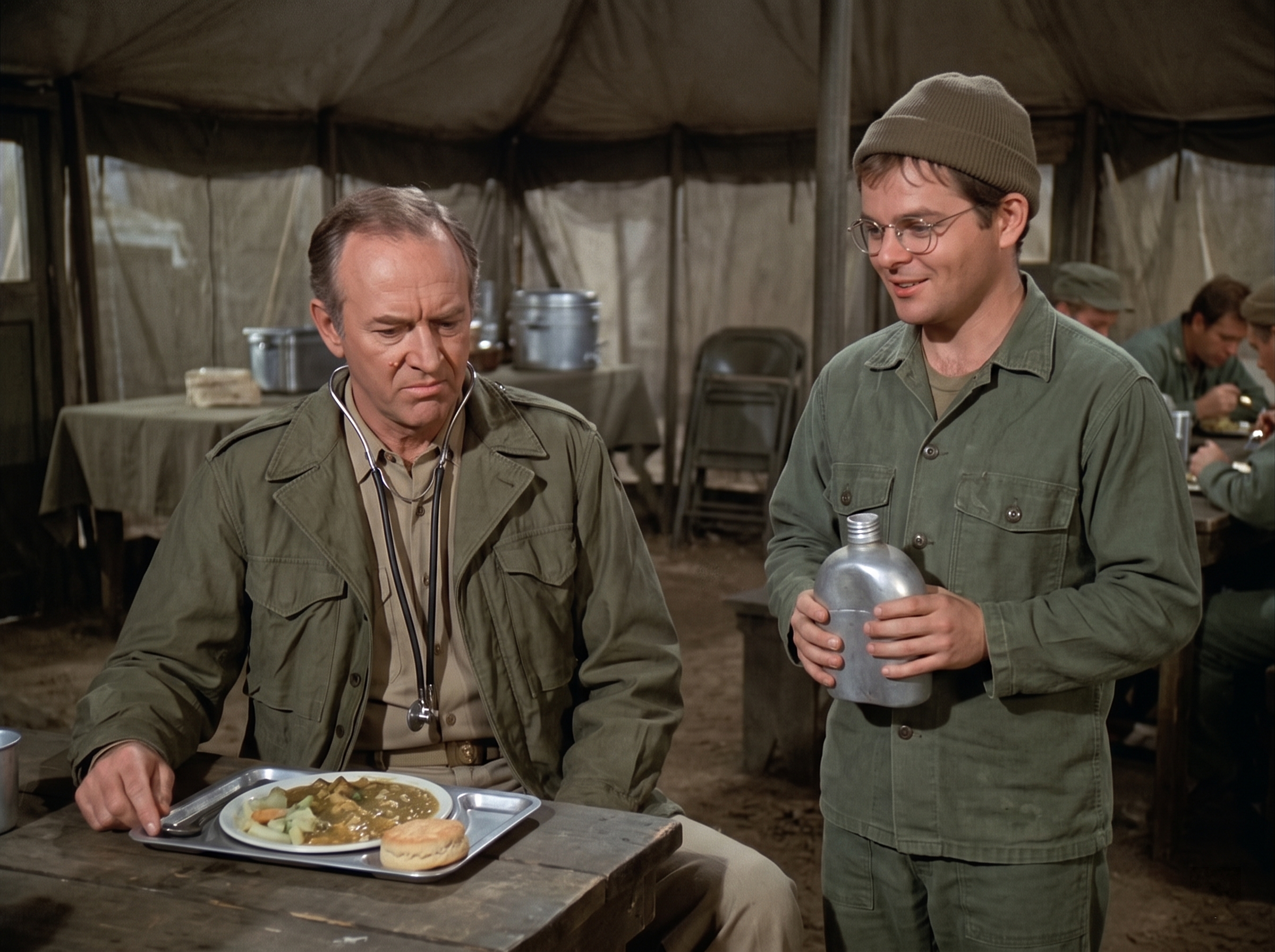
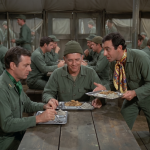
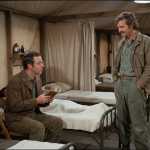
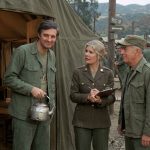
The mess tent was a symphony of clattering tin, the low hum of tired men trying to forget the day, and the persistent, unidentifiable aroma of dehydrated mystery meat. Colonel Potter sat at the rough-hewn table, his shoulders slumped under the weight of a twelve-hour shift that felt more like a lifetime. The stethoscope around his neck served as a grim reminder that duty was never truly off-call. He stared down at his tray—a sad, grey-brown concoction of stew that looked remarkably like it might fight back if poked too hard.
Radar approached, his gait slightly hurried, clutching a canteen as if it held the secrets to the universe. His glasses caught the harsh light of the hanging bulbs, obscuring his eyes, but the nervous, hopeful tilt of his head told the story. He had bypassed the mess line entirely, cutting a path through the noisy room with the singular focus of a man on a mission. He stopped right beside the Colonel, offering the canteen with a gentle, tentative nudge.
“Sir,” Radar began, his voice barely rising above the din of clanging silverware. “I… I know it isn’t much, and the kitchen staff wasn’t exactly thrilled about me raiding the back stock, but I thought maybe… well, you looked like you could use something that didn’t come out of a powdered bag.”
Potter looked up, his weary, crinkled eyes meeting the young corporal’s gaze. He took the canteen, its cool metal surface starkly different from the humid warmth of the tent. He unscrewed the cap, caught a faint, unmistakable scent of real, home-grown apple cider, and felt a sudden, sharp lump form in his throat. The tent seemed to grow quiet, the chatter fading into a distant buzz as the Colonel realized that in the middle of a war, someone had remembered he was a man, not just a commander.
The Colonel didn’t speak at first. He just sat there, the canteen heavy in his hand, looking at Radar as if seeing him for the very first time. The boy wasn’t just a clerk anymore; he was a lifeline. Potter cleared his throat, his gruff exterior cracking just enough to let a genuine, unbidden smile peek through the lines of his face.
“Radar,” he said softly, his voice rasping with exhaustion. “Do you have any idea what this represents? It’s not just cider. It’s a miracle in a tin cup.”
Radar beamed, a shy, proud flush spreading across his cheeks. “I figured the stew needed a little… inspiration, sir.”
Potter laughed, a dry, wheezing sound that held more genuine affection than any formal commendation. He took a slow, deliberate sip. The tart, sweet burn of the cider was like a jolt of pure memory, transporting him for a fleeting second away from the mud and the sounds of the choppers and back to a porch in Hannibal. He looked down at the bland, unappealing stew on his plate and then back at the boy who had crossed a crowded room just to offer a little bit of home.
“Sit,” Potter commanded, gesturing to the empty space on the bench.
Radar hesitated, glancing at the line, but sat. They didn’t talk about the patients. They didn’t talk about the casualty reports or the impending inspection. They just sat in the quiet bubble they had created, sharing a moment of civilian grace in the heart of a conflict that tried its best to strip that away. Other soldiers moved around them, caught in their own private miseries and triumphs, but the Colonel and his corporal remained anchored, two friends tethered by a simple, thoughtful gesture.
As the late-afternoon sun dipped below the canvas walls, casting long, golden shadows across the table, the mess tent felt less like a place of transition and more like a home. The laughter from a nearby table—someone telling a tall tale about a nurse and a goat—joined the clinking of canteen cups. It wasn’t a perfect world. It was far from it. But as Potter took another sip and watched Radar recount some mundane news from the mail call, he knew that as long as they could still find moments like this, they were going to be alright.
The war would continue, the duty would press on, and the long hours would eventually bleed into tomorrow. But for now, the stew was forgotten, the exhaustion had dimmed, and there was nothing left but the quiet, enduring comfort of being exactly where you were needed, with the people who needed you just as much.
It’s the small, quiet acts of kindness that keep the soul from rusting in the mud.