The Toledo Masterpiece
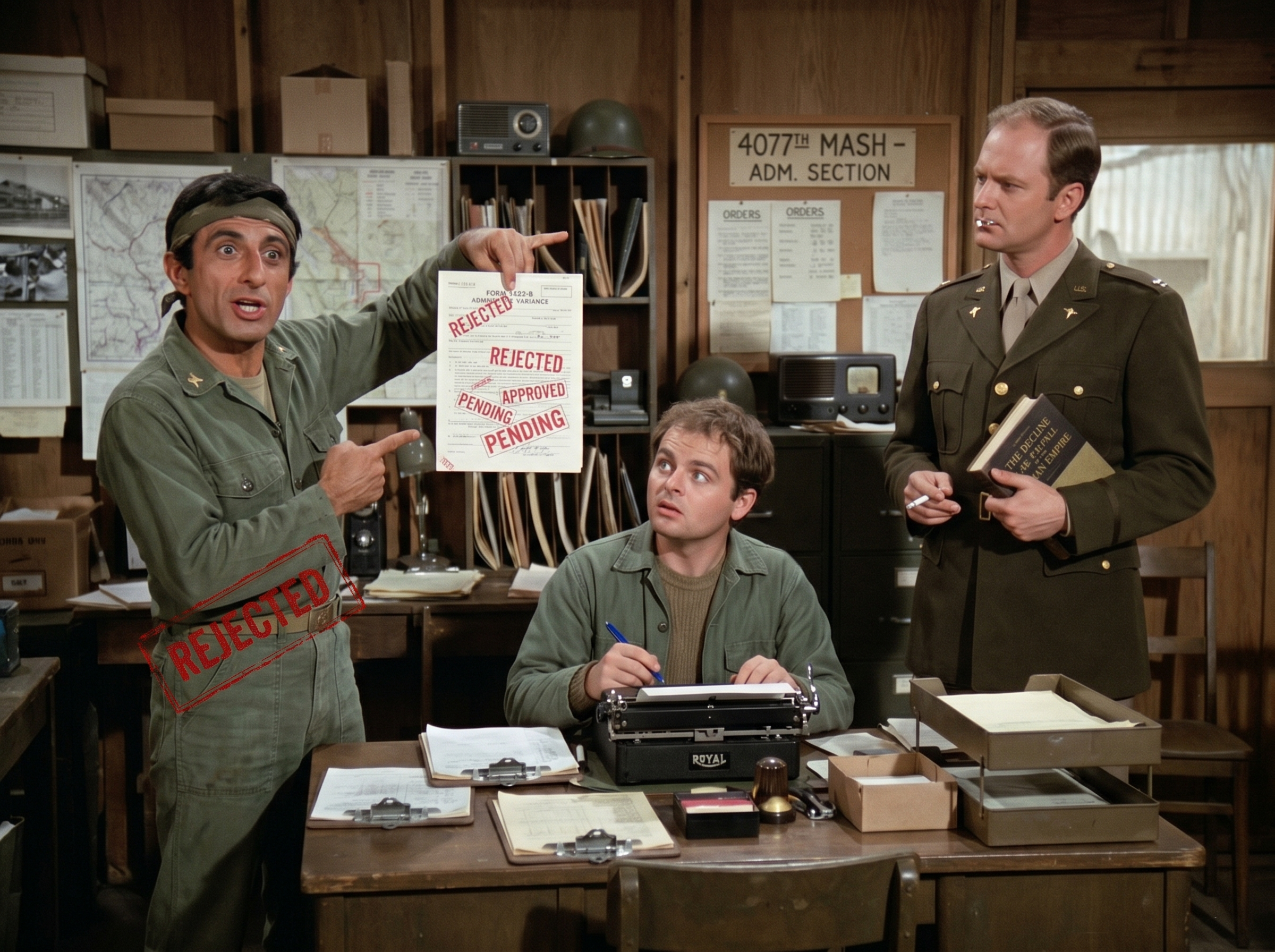
There were days at the 4077th when the war seemed to pause, taking a brief, exhausted breath just beyond the surrounding hills.
On those rare, quiet afternoons, the company clerk’s office became the beating heart of the camp. It was a modest, cluttered sanctuary of olive drab canvas, stacked file trays, and the ever-present smell of stale coffee and carbon paper.
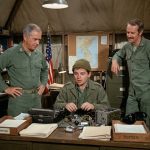
Corporal Walter “Radar” O’Reilly sat behind his battered wooden desk, diligently hunting and pecking at his heavy black typewriter. He was a boy doing a man’s job, holding the administrative chaos of a mobile army surgical hospital together with paperclips and sheer, earnest willpower.
The rhythmic clacking of the typewriter was suddenly interrupted by a grand, sweeping entrance.
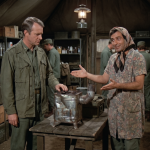
Maxwell Klinger stepped into the office, standing tall and radiating an aura of absolute, comic triumph. He wasn’t in one of his usual extravagant outfits today, just his worn, dusty fatigues, but his posture was purely theatrical.
He held a single sheet of paper in his hands, presenting it to Radar with the dramatic flair of an explorer unveiling a map to El Dorado.
“Behold, O’Reilly!” Klinger announced, his voice echoing in the small space. “The masterpiece. The golden ticket. The grand opus of my military career!”
Radar stopped typing and peered up through his round glasses. His face immediately contorted into a mask of wide-eyed, innocent confusion.
He took the paper, holding it by the edges as if it might bite him. It was a bureaucratic nightmare.
The document was completely covered in a chaotic, overlapping mosaic of bright red stamps. There were stamps that said “APPROVED,” stamps that said “PRIORITY CLASSIFIED,” and several stamps that were completely illegible, smeared with heavy, deliberate ink.
“Wow,” Radar breathed, squinting at the page. “Klinger, what is this? I’ve never seen a Form 409-J look like… well, like a crime scene.”
“It is not a crime scene, my nearsighted friend,” Klinger declared, puffing out his chest with immense pride. “It is my official, undeniable, undeniably official medical discharge. Signed, sealed, and stamped by every imaginary general from here to Tokyo.”
Standing nearby, leaning casually against a filing cabinet, was Major Charles Emerson Winchester III.
Charles had sought refuge in the clerk’s office to read a leather-bound volume of poetry in peace, far away from the juvenile antics of Pierce and Hunnicutt. He slowly lowered his book, fixing Klinger with a look of refined, patrician irritation.
“Corporal,” Charles drawled, his voice dripping with dry superiority. “Are you honestly attempting to pass off a child’s finger-painting project as a legal military decree?”
“It’s airtight, Major!” Klinger shot back, tapping the paper in Radar’s hands. “Look at the red ink! The army respects red ink. It means business!”
Radar leaned closer to the paper, his brow furrowing so deeply it nearly touched his glasses. He pushed his cap back on his head, his innocent face suddenly shifting into a look of genuine, worried concern.
“Uh, Klinger…” Radar started slowly, his voice dropping to a nervous whisper.
“Read it and weep, Radar!” Klinger cheered, already imagining the hot dogs at Toledo’s Mud Hens stadium. “Just tell me which jeep is taking me to Seoul!”
“Klinger,” Radar said again, pointing to a very specific, heavily stamped paragraph near the bottom of the page. “Did you actually read what you stamped over?”
Klinger’s triumphant smile faltered for just a fraction of a second. “Of course I did. It’s standard Section 8 babble. Why? What does it say?”
Radar gulped, looking up at Klinger, then over to Major Winchester, who had suddenly raised an intrigued, aristocratic eyebrow. The room went entirely still.
“Well,” Radar said softly, tracing the faint type beneath a massive red ‘APPROVED’ stamp. “According to this, you didn’t just apply for a psychological discharge.”
“I didn’t?” Klinger asked, his dramatic posture deflating just an inch.
“No,” Radar said, adjusting his glasses. “You used a Form 409-J. That’s for agricultural logistics. And with all these specific approval stamps… Klinger, you just successfully registered yourself as a surplus military pack mule.”
Charles let out a single, sharp bark of laughter. He snapped his poetry book shut, stepping forward to peer over Radar’s shoulder.
“A pack mule,” Charles repeated, the corners of his mouth twitching with cruel, delighted amusement. “How utterly, devastatingly accurate. Tell me, Corporal, do you require a stable, or will a simple trough of oats suffice for your evening meal?”
“A mule?” Klinger snatched the paper back, his eyes darting wildly across the text. “Where does it say mule? I’m a man! I’m a raving lunatic, but I’m a human lunatic!”
“Right there in subsection C,” Radar pointed helpfully from across the desk. “It says you’re ready for immediate transfer to the heavy artillery transport division in the Alaskan tundra. As a beast of burden.”
Klinger stared at the paper. The bright red stamps, which just moments ago had looked like the keys to freedom, now looked like the bars of a cage.
The chaotic comedy of the moment slowly began to fade, replaced by the heavy, familiar reality of the 4077th. The war was still outside. They were still here. And nobody was going home today.
Klinger’s shoulders slumped. The theatrical pride washed right out of him, leaving behind a very tired, very homesick man from Ohio. He let the paper drop to his side.
“Alaska,” Klinger muttered, his voice quiet and stripped of its usual bravado. “It’s cold in Alaska, Radar. It’s even colder than here. And I don’t think they have Tony Packo’s hot dogs on the tundra.”
Radar’s face instantly softened. The strict, rule-following company clerk melted away, leaving only the gentle, deeply empathetic farm boy from Iowa. He understood that Klinger’s schemes were never really about trying to beat the system. They were just a desperate way to keep hoping.
“I’m sorry, Klinger,” Radar said gently. “It was a really good try. The stamps are real pretty. They look very official.”
Even Charles, who usually relished the misfortune of the enlisted men, felt the sudden shift in the room. He looked at Klinger’s defeated posture, the worn fabric of his uniform, and the genuine exhaustion in his eyes.
Charles cleared his throat, adjusting the cuffs of his impeccably pressed, yet still slightly dusty, fatigue shirt.
“Corporal,” Charles said, his tone entirely stripped of its former sarcasm. It was quiet, steady, and surprisingly human.
Klinger looked up, expecting another insult.
“For what it is worth,” Charles continued softly, “your bureaucratic forgery showed a level of creativity and… persistent dedication that is sorely lacking in this miserable theater of war. It was a noble, if thoroughly misguided, effort.”
Klinger managed a small, sad half-smile. “Thanks, Major. Coming from you, that almost means something.”
“Don’t let it go to your head, you ridiculous man,” Charles murmured, though his eyes remained kind. He turned and quietly walked out of the office, giving them a moment of peace.
Radar opened the bottom drawer of his desk. It was a special drawer, entirely separate from the official Army records. It was filled with feathered hats, velvet swatches, and dozens of heavily stamped, utterly ridiculous forms.
“Hand it over, Klinger,” Radar said softly.
Klinger handed the red-stamped masterpiece across the desk.
“I’ll file it right here with the others,” Radar promised, slipping the paper safely into the drawer. “Right next to the time you tried to convince the General you were a druid. It’s safe here.”
“Thanks, Radar,” Klinger sighed, turning toward the door. He paused, looking back at the young clerk sitting behind the typewriter. “You think maybe… next week, we try the Navy?”
Radar smiled, a warm, genuine grin that lit up the dim office. “I’ll get the transfer forms ready, Klinger. I’ll even find you some blue ink.”
Klinger nodded, his theatrical spark returning just a tiny bit as he pushed through the screen doors and back out into the war.
Radar watched him go, then slowly turned back to his typewriter. He rolled a fresh sheet of paper onto the platen, took a deep breath, and started typing again. They were all stuck at the end of the world, but at least they were stuck here together.
In a place where nothing made sense, the craziest thing of all was how deeply they cared for each other.