The Longest Night’s Light
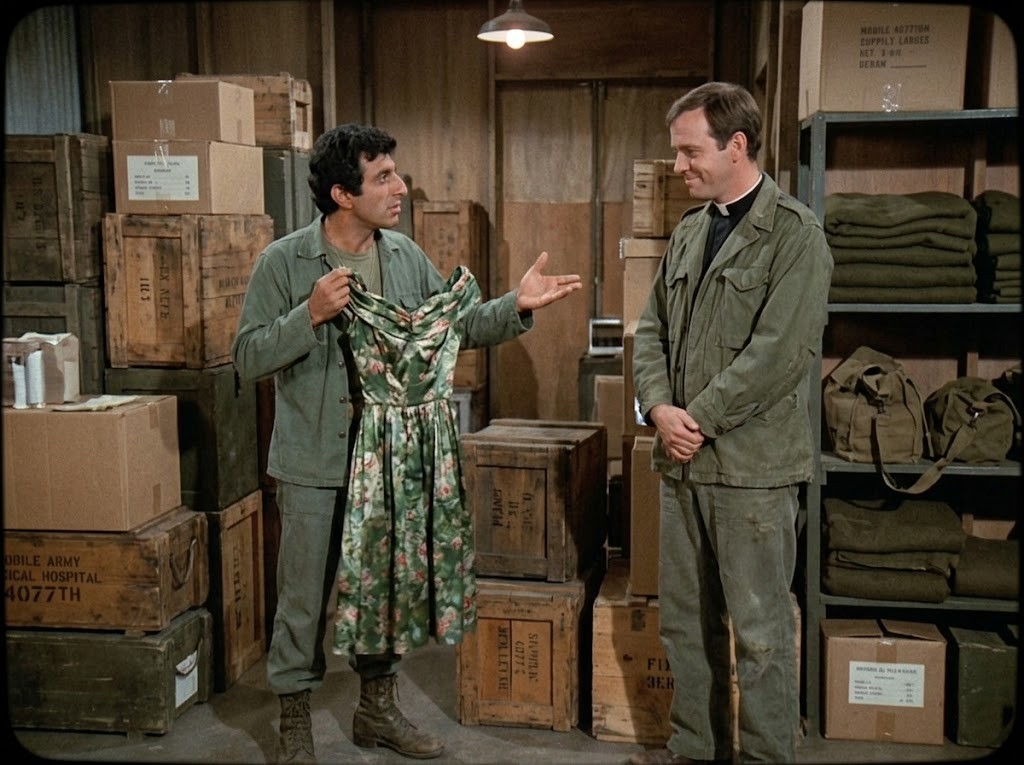
The hanging lanterns in the post-op tent didn’t give off light; they leaked shadows, pooling in the tired eyes of the 4077th’s command. It was 03:00, and the sounds of the camp were down to a collective, exhausted sigh, punctuated only by the distant, rhythmic squeak of a water pump and the occasional cough of a patient struggling for sleep.
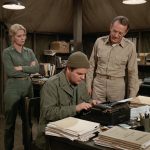
Colonel Sherman Potter stood by the foot of a cot, the weight of a thousand surgeries seemingly woven into his brown cardigan. He adjusted his glasses, peering down at the sheet of paper he held—a patient’s status report that offered sterile, clinical data about a non-sterile, deeply human situation.
Next to him, Father John Mulcahy, his knitted toque pulled low, leaned in with a gaze so compassionate it felt like a warm compress. He wasn’t looking at the chart. He was looking at the young soldier in the cot, Private Miller.
Miller was stable, medically. But he had arrived three days ago with a face that looked like it had been eroded by rain and fear, and even now, eyes closed in deepest sleep, he looked like he was bracing for an impact that had already happened.
“Temperature’s down another point,” Potter murmured, his voice a dry, grandfatherly rasp in the stillness. He looked down at Miller’s clenched right fist, resting tight against his chest.
Mulcahy nodded. He had spent hours with Miller before surgery, listening to the boy recount, not his service, but his memory of his mother’s flower garden back in Ohio, and his specific, heartbreaking fear that he might die without telling her he had forgotten the smell of the petunias.
“He asked me, Sherman,” Mulcahy whispered, “if the prayer of someone who truly forgot… is still heard.” The high point of emotional tension hung in the air—the impossible burden of offering spiritual comfort to a broken soul in a place that seemed to actively break them.
“I promised him I’d hold onto something for him, to make sure his prayer was remembered.”
Potter let out a breath that sounded like a tire deflating. He set the status chart on the small wooden table that held the brown tincture bottles, allowing the physical record of Miller’s survival to rest for a moment. He respected Mulcahy more than he would ever admit, and he knew when to step back and let the man with the different kind of operating table work.
“What’s he got there, Father?” Potter asked softly, indicating the boy’s clenched fist.
Mulcahy looked, his own expression mirroring the concern in Potter’s gaze. “I don’t know. He wouldn’t let go of it, even on the table. He said it was his faith. Hawkeye and Hunnicutt left it. Told me it was probably a rock from his platoon’s last position.”
Just then, Miller stirred. His eyes didn’t open all the way, just a flutter, a dawning of consciousness in a room that was always night. His gaze, glassy and confused, found Mulcahy.
“Father… is Rusty okay?” Miller’s voice was barely a whisper. “Did the prayer work? Did you keep him safe?”
Mulcahy hesitated for a single, profound heartbeat. He had promised not safety, but *rememberance*. He knew Rusty was Miller’s dog, a big retriever who had been his shadows since childhood. To tell the soldier he had no way of knowing would be the literal truth, but the metaphorical death.
Instead, Mulcahy leaned closer, placing his hand gently over the boy’s clenched fist.
“I held it, son. Just like I said. And let me tell you, love like that? A prayer from the heart about a boy and his dog? It doesn’t get lost. It doesn’t get forgotten. It is heard loudest of all. Rusty knows. And he is waiting.”
The line, born of faith, gentleness, and the sheer desperation to heal what medicine couldn’t touch, worked its magic. The tension in Miller’s face visibly dissolved, a rare peace smoothing his brow. The boy’s eyes closed, and his fingers, one by one, finally unclenched.
As they loosened, a small, polished object fell from his hand onto the sheet.
It wasn’t a rock. It was a single, small brass dog tag, heavily scuffed. And on it, worn but still legible, was the name: RUSTY.
A slow, dry smile spread across Colonel Potter’s face as he picked up the tag. It was the exact kind of small, impossible victory that kept the 4077th from drowning in the noise. He rubbed the tag with his thumb.
“Well I’ll be,” Potter said softly. “The boy didn’t have faith; he had memory. And a piece of dog tag. Good for him. Good for you, Father.”
They stood for another quiet minute, just watching Miller’s peaceful breathing. Then, together, without a word, they turned and continued their endless rounds, the small brass tag placed carefully back onto Miller’s chest, a single point of certainty in a sea of shadow.
Sometimes the only peace found in a war is the peace we bring to each other.