The Letter in Bed Nine, and the Hands that Heal
If there’s one sound that breaks a surgeon’s heart quicker than artillery fire, it’s the specific, dry crinkle of an airmail letter being folded for the thousandth time.
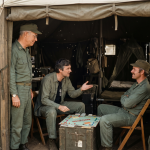
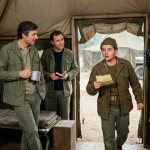
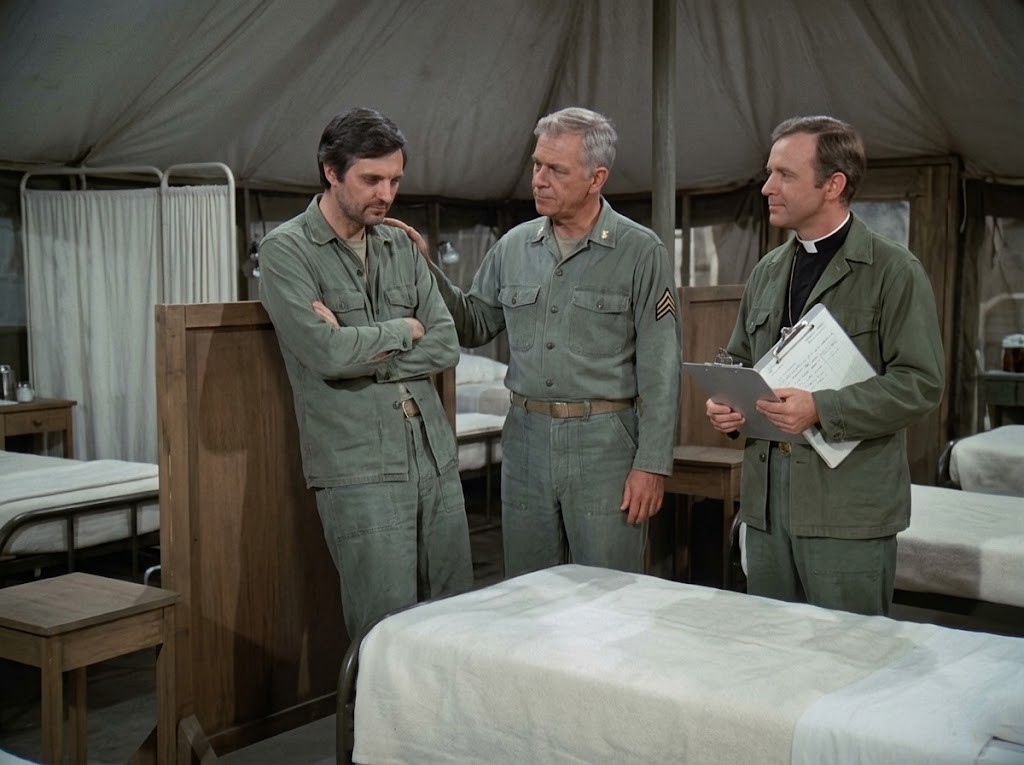
Captain Hawkeye Pierce stood in the near-empty post-op tent, leaning against a privacy screen near Bed Nine. His arms were crossed over his olive fatigues, his head bowed, staring at the canvas floor as if the answers to everything were written in the dust. He was a man who usually moved on adrenaline and wit, but right now, he was still. Too still.
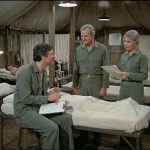
The tent around him was quiet, a rare and fragile quiet that always felt unnatural. The cots were neatly made, white linens stretched tight, patient charts hanging like silent reports on human fragility. There were no nurses rushing, no doctors shouting orders. Just the slow, steady rhythm of breath, and this profound stillness.
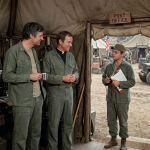
Colonel Potter watched him from across the aisle. His own fatigues were immaculate, his expression a map of years of commanded concern. The Colonel had seen Hawkeye in high gear, cracking jokes to keep the operating room from collapsing. He’d seen him angry. He’d seen him drunk on Swamp gin. But he hadn’t seen this quiet deflation very often. It was the look of a man who had successfully kept death at bay for another night, only to have a single piece of paper knock the wind out of him.
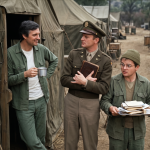
Beside the Colonel, Father Mulcahy stood, clutching a clipboard to his chest like a shield. The gentle priest always seemed to carry a visible quietude, but today, his brow was furrowed, mirroring Potter’s concern. Mulcahy wasn’t just the camp’s spiritual guide; he was its emotional meter. When the humor became brittle and the fatigue became heavy, he was the one who usually knew it first. He recognized this stillness.
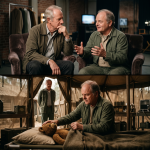
Hawkeye didn’t move as Potter approached, his boots making only the softest sound on the canvas. The Colonel didn’t say a word at first. He just reached out, placing his hand gently on Hawkeye’s shoulder. The touch was simple, brief, a silent message: *I’m here. We’re here. We know.*
Father Mulcahy shifted slightly, his gaze dropping to the clipboard, but only to avoid intruding on the moment of contact. The entire scene was suspended, a tableau of shared burden and quiet solidarity. In a place where you fought to save strangers, sometimes your own soul was the hardest thing to keep from bleeding out.
The Colonel’s hand remained on Hawkeye’s shoulder, a firm, fatherly anchor. Hawkeye finally took a shallow breath, still looking down, his body relaxing only slightly. The silence in the tent stretched taut, an emotional high point where the weight of the war and home met in one small space. Everyone waited to see if the surgeon would speak.
“It was just a line,” Hawkeye said, his voice quiet, almost swallowed by the canvas. He still didn’t look up. “He was 19. A farmer from Iowa. He just wrote his sister: *‘Tell Ma I’ll be home in time for the harvest. Don’t let Pa run the tractor to death.’*”
The hand on his shoulder tightened, just for a second, then relaxed. Colonel Potter nodded slowly. “I know. Harvests don’t wait.” The Colonel knew about harvests. He knew about things that were supposed to continue, things that the war violently interrupted. He’d read thousands of those lines, and each one stung.
Father Mulcahy finally took a small step forward, clutching his clipboard. “The boy in Bed Nine? He was very brave.” The Father had a way of cutting through to the essential humanity of every patient. “He spoke about the harvest right until the end. About the smells… the dirt.” He offered a small, tentative smile that Hawkeye didn’t see.
Hawkeye finally unfolded his arms and rubbed his eyes. He exhaled a long, tired sigh. “He shouldn’t have been thinking about dirt. He should have been *in* it. Plantin’ corn. Worrying about rain. Not about… this.” He gestured vaguely around the sterile, green tent. He didn’t mention the letter itself, currently tucked away, or how the dry crinkle of it had started to sound like dried autumn leaves.
He looked at Colonel Potter and the Father. His expression was a familiar mix: exhausted, sarcastic, and yet intensely tender underneath the facade. The humor that was so much a part of him struggled to surface, but only managed a faint, ironic twist. “You know, the Army is really missing out. They should recruit scarecrows. They don’t bleed, and they have excellent posture. Plus, they understand crops.”
Potter’s smile was dry. “I’ll make sure to put that in my weekly report, Pierce. Right under the request for more olive drab towels.” The dry humor was their common language, the balm they used to treat each other’s invisible wounds. The Father chuckled softly, the sound reassuring in the post-op silence.
Hawkeye finally patted the Colonel’s hand on his shoulder and then stepped away, looking at the empty beds. “Another night shift? Another harvest of bodies?” He was pushing the joke again, the protective layering returning. But the rawness was still visible.
Potter shook his head, looking Hawkeye square in the eye. “No. Another shift of healing. And *this* one’s done for today. Get some sleep, son.” He clapped Hawkeye on the shoulder one final time before turning and walking down the aisle.
Father Mulcahy offered a nod, then added, “If you want to talk… or maybe just sit in silence… I’m available. And you’re always welcome to come by.” He started to turn, then stopped. “The boy in Bed Nine? His name was Thomas. For the report.”
Hawkeye watched the Father walk away, clipboard still tucked securely. “Thomas,” Hawkeye said to the empty tent. “Home for the harvest, Thomas.” He looked down at the empty Bed Nine once more, then finally, tiredly, turned away, walking towards the tent exit.
The tension in the post-op tent didn’t fully resolve. It never truly did in Korea. But it had eased, softened by three men in green, three sets of shoulders that knew how to carry a burden, and a moment of understanding that was deeper than any medical chart or military order.
Sometimes, the strongest sutures weren’t made of silk, but of quiet hands and shared silence.