The Midnight Watch and the Company We Keep
There is a very specific kind of quiet that settles over the Post-Op ward at three in the morning. It is never a truly peaceful silence. It is a fragile, temporary truce.
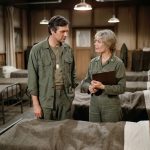
The air is thick with the lingering scent of ether, damp wool, and the metallic tang of dried blood. Outside, the Korean wind snaps at the heavy green canvas, a constant reminder of the war waiting just beyond the compound. Inside, the soft, warm glow of the overhead lights casts long, gentle shadows across the rows of simple metal cots.
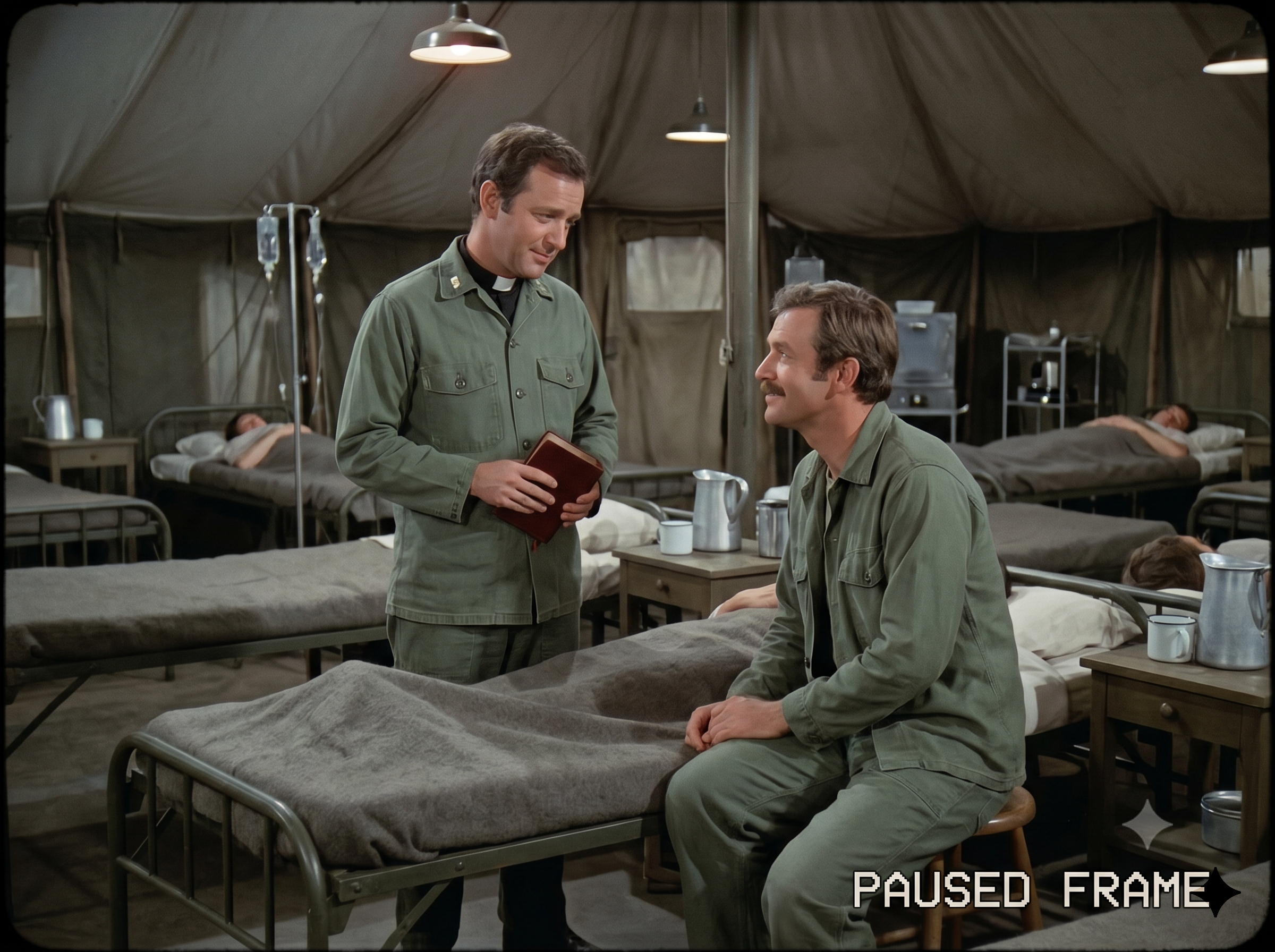
Captain B.J. Hunnicutt sat on a small, wobbly wooden stool beside cot number four. He had been sitting there for the better part of an hour, long after his shift in the OR had technically ended. He was still in his worn green fatigues, the fabric wrinkled and stiff from a grueling eighteen-hour marathon of surgery.
B.J. leaned forward, his elbows resting on his knees, his posture completely relaxed but his eyes intensely focused. He offered a gentle, tired smile to the empty space above the sleeping soldier’s chest. He was running purely on adrenaline, black coffee, and the stubborn refusal to let this particular patient out of his sight.
The kid in the bed was barely nineteen. He had arrived on the last chopper with shrapnel dangerously close to his spine. B.J. and Hawkeye had spent three agonizing hours putting him back together. Now, the boy was locked in the deep, restless sleep of a body trying to decide if it wanted to keep living.
The canvas flaps at the entrance parted with a soft rustle. Father Francis Mulcahy stepped into the ward, his footsteps practically silent against the wooden floorboards. The chaplain looked as exhausted as the surgeons, but his presence immediately brought a sense of calm to the drafty room.
He wore his standard oversized green fatigue shirt, the silver cross on his collar catching the pale light. In his hands, he gently clutched a small, worn burgundy prayer book. Father Mulcahy made his slow rounds, pausing at the foot of each cot to offer a silent blessing, before quietly stepping over to where B.J. was keeping his vigil.
“Still awake, Captain?” Mulcahy asked, his voice barely above a whisper.
“Just making sure our handiwork holds together, Father,” B.J. replied, not taking his eyes off the steady rise and fall of the boy’s chest. “He had a rough time of it on the table. I just wanted to be here when the anesthesia wears off.”
Mulcahy stood slightly to the side, his expression caught somewhere between quiet sadness and hopeful warmth. He looked down at the young, pale face against the muted white pillow. “He looks so impossibly young,” the priest murmured. “Sometimes I look at them and I swear I’m seeing children.”
“He practically is,” B.J. said softly. “He told me before he went under that he was supposed to take his girl to the prom this weekend in Ohio.”
Suddenly, the boy on the cot let out a sharp, ragged gasp. His eyes shot open, wide and unseeing in the dim light. His hands flew up, tangling in the pale gray blankets, his chest heaving in absolute panic.
“Get down! Get down!” the boy screamed, his voice raw and terrified, shattering the quiet of the ward. He thrashed against the mattress, pulling at his fresh stitches, convinced he was back in the mud and the blood of the front line.
B.J. lunged forward, grabbing the boy’s shoulders to keep him from tearing himself apart. “Hold on, son! You’re safe! You’re in a hospital!” B.J. urged, but the boy couldn’t hear him over the phantom artillery shells exploding in his own mind. The monitor beside the bed began to rattle, and the boy’s desperate strength threatened to undo hours of delicate surgery.
“Sergeant! Listen to my voice!” B.J. said firmly, pressing down on the boy’s shoulders with gentle, steady pressure. “You are at the 4077th. The fighting is over. You are safe.”
Father Mulcahy moved instantly. He didn’t call for the nurses or step back in fear. He stepped right up to the head of the cot, leaning in close so his face filled the boy’s line of sight. He placed a warm, steady hand directly over the boy’s trembling, cold fingers.
“You’re alright, my son,” Mulcahy said. His voice was not the booming tone of a Sunday sermon, but the quiet, unshakable voice of a father soothing a frightened child in the dark. “You are safe now. The Lord has you, and Captain Hunnicutt has you. You are completely safe.”
The priest’s calm, melodic tone seemed to cut through the fog of the boy’s terror. The young soldier blinked, the sheer panic in his eyes slowly dissolving into confusion, and then into agonizing exhaustion. He looked at B.J., then up at the silver cross gleaming on Mulcahy’s collar.
“I’m… I’m not there?” the boy whispered, his voice trembling.
“No, son,” B.J. said softly, his own heart hammering against his ribs. He slowly released his grip on the boy’s shoulders, sinking back onto his wooden stool. “You’re with us. You’re going to be just fine. You just need to rest now. Let the medicine do its job.”
The boy let out a long, shuddering sigh. He turned his head into the pillow, his eyes drifting shut as the remnants of the sedative pulled him back under. Within moments, his breathing leveled out, returning to a slow, steady rhythm. The crisis had passed as quickly as it had arrived.
B.J. let out a breath he felt like he’d been holding since Tuesday. He dragged a hand down his face, rubbing the exhaustion from his eyes. When he looked back up, he found Father Mulcahy standing perfectly still, watching him with that same expression of quiet empathy.
The tense atmosphere in the ward slowly evaporated, replaced once again by the warm, pale glow of the hanging lamps. B.J. shifted his weight on the stool, resting his hands on his knees. He looked up at the chaplain, offering a tired, genuine smile.
“Thanks, Father,” B.J. whispered. “He almost tore right through his sutures. You’ve got a good bedside manner.”
Mulcahy smiled back, a gentle, modest curve of his lips. He adjusted his grip on the small red book in his hands. “It wasn’t me, B.J. Sometimes, all they need is to know that someone is standing watch in the dark. You were doing the heavy lifting.”
“I don’t know about that,” B.J. chuckled softly, the dry humor returning to his voice. “I was about two seconds away from sitting on him. I’m pretty sure your method is more approved by the Geneva Convention.”
Mulcahy let out a quiet, breathy laugh that barely disturbed the air in the room. He looked around the silent ward, at the rows of sleeping men wrapped in muted green and gray blankets. “It is a heavy burden you carry, B.J. Stitching them up, only to send them back out, or sending them home broken. It takes a remarkable toll.”
B.J. leaned forward again, his eyes returning to the sleeping teenager from Ohio. “I just think about Erin,” he said, his voice dropping to a low, intimate murmur. “I know she’s just a baby, but I look at these kids and I think… some father out there is waiting for a telegram. Some mother is pacing a floor somewhere. I just want to make sure I send this one back to them.”
“And you will,” Mulcahy said with absolute certainty. He took a small step closer, his presence acting as a sturdy, invisible pillar of support. “You are a good doctor, B.J. But more importantly, you are a good man. That compassion is what keeps this place from going entirely mad.”
“I thought Klinger’s dresses were keeping us from going mad,” B.J. replied, his eyes crinkling at the corners.
“Well,” Mulcahy conceded, his eyes twinkling with shared amusement. “The Lord works in incredibly mysterious, and heavily accessorized, ways.”
They shared a quiet, sincere moment of connection in the dim light. It wasn’t a profound medical breakthrough, nor was it a miraculous end to the war. It was just two weary men, thousands of miles from home, finding a sliver of grace in the middle of hell.
B.J. relaxed his shoulders, the knot of anxiety in his chest finally loosening. He knew he would still be sitting on this hard stool when the sun came up, but the night didn’t feel quite so cold anymore. Father Mulcahy gave the boy one last approving look, tapped his small book gently against his leg, and gave B.J. a final, reassuring nod.
As the chaplain turned to continue his silent rounds through the softly lit tents, B.J. settled back in, perfectly content to keep the midnight watch.
In a place designed to fix broken bodies, it was often a quiet word in the dark that truly saved a life.