The Weight of a Potato Peel
Some afternoons in the Uijeongbu valley didn’t smell like ether or burnt oil. Every once in a while, if the wind shifted just right, the camp smelled simply of damp canvas, old coffee, and the quiet, exhausted sighs of tired men.
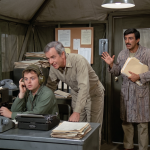
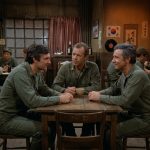
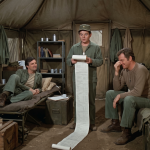
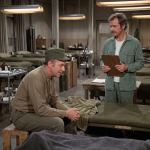
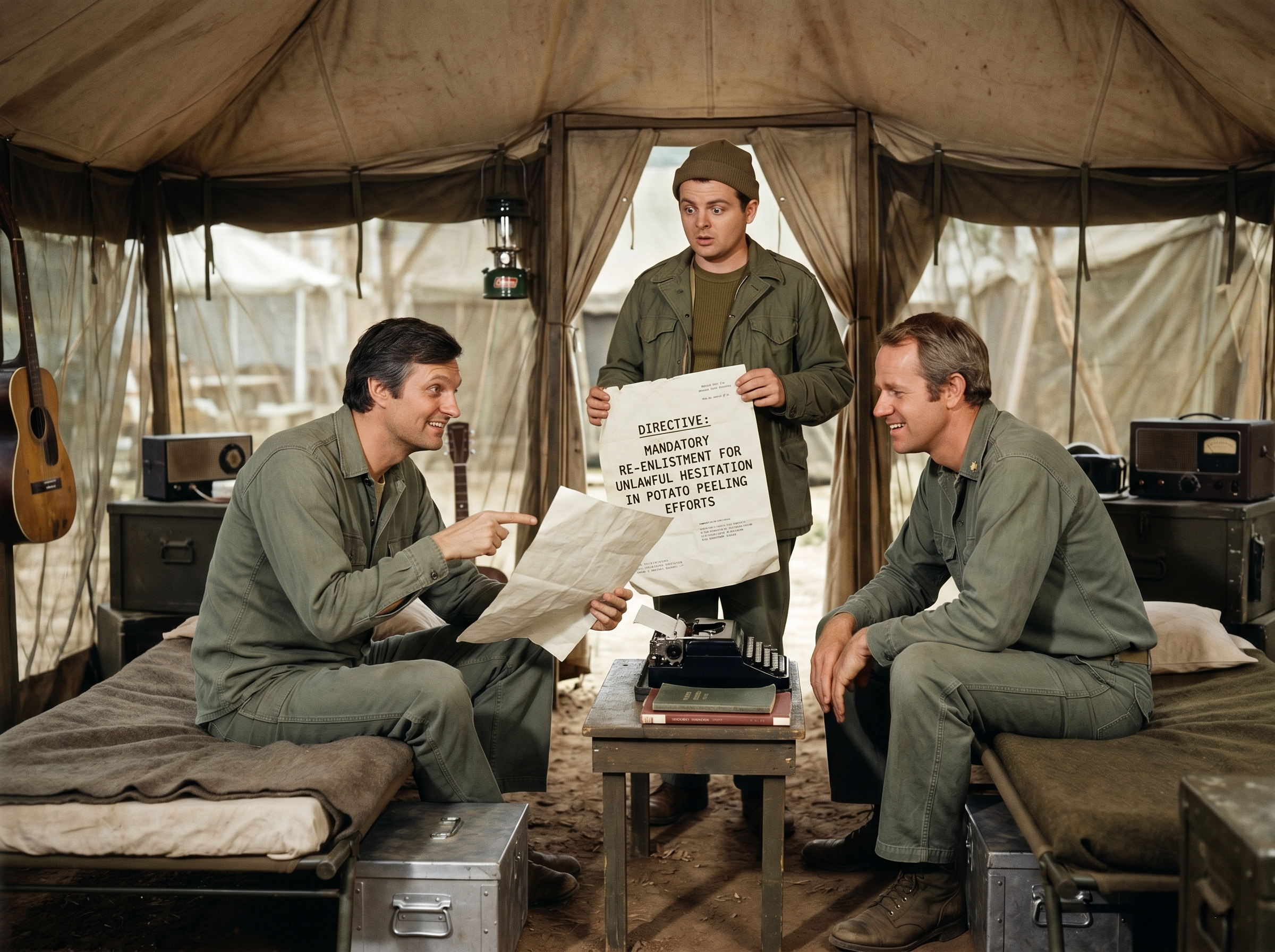
In the swamp, the air was uncharacteristically still. Hawkeye sat on the edge of his cot, his olive-drab shirt unbuttoned at the collar, a rare, genuine smile creasing his eyes as he looked over a crumpled piece of paper. Beside him, B.J. leaned forward from his own cot, his expression a perfect mix of gentle amusement and steady, comforting presence, his hands resting loosely near his knees.
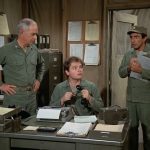
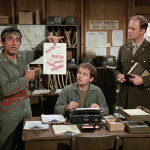
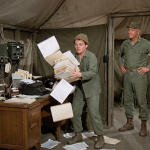
Between them stood Radar, still wearing his olive beanie, his arms raised high as he held up a freshly typed “directive” with a look of pure, theatrical horror.
The paper, typed out on the clunky black typewriter sitting on the small wooden table between them, read in bold, uneven letters: *DIRECTIVE: MANDATORY RE-ENLISTMENT FOR UNLAWFUL HESITATION IN POTATO PEELING EFFORTS.*
“I’m telling you, Captain,” Radar squeaked, his voice cracking slightly as his eyes darted between the two doctors. “If the Colonel sees this, he’s gonna have a cow. A whole herd of ’em. He might actually sign it just to get the mess tent back on schedule.”
Hawkeye pointed a finger at the page, his wit cutting through the afternoon fatigue. “Radar, my faithful scribe, this isn’t just a document. This is a masterpiece of military bureaucracy. It captures the sheer, unadulterated essence of the United States Army: punishing a man by making him stay exactly where he doesn’t want to be, doing exactly what he isn’t good at.”
B.J. let out a soft chuckle, shaking his head. “You have to admit, Radar, it’s got a nice ring to it. ‘Unlawful hesitation.’ I think I used that excuse once to avoid doing the dishes back in San Francisco. Peg didn’t buy it either.”
The small room felt warm, insulated from the rest of the war by three canvas walls and a flimsy screen door. It was the kind of moment they lived for—the quiet spaces between the incoming choppers where they could pretend that the biggest crisis in Korea was a mountain of unpeeled potatoes and a joke played on a nervous clerk.
But the laughter in the swamp always had a shelf life.
Just as Hawkeye opened his mouth to deliver another punchline, the distinct, low thrum of a helicopter engine began to vibrate through the floorboards. The humor vanished from B.J.’s eyes, replaced instantly by the familiar, heavy alertness that every surgeon in the 4077th wore like a second skin.
Radar’s arms dropped, the funny directive suddenly looking incredibly small in his hands as his head tilted toward the sky. “Choppers,” he whispered, his eyes widening as the first distant siren began to wail across the compound.
The transition from the warmth of the swamp to the cold reality of the pre-op tent always happened in a heartbeat.
Within minutes, the joke about potato peeling was forgotten, buried under the rush of incoming casualties. The afternoon sun dipped below the hills, casting long, dark shadows across the compound as the doctors worked under the harsh, buzzing lights of the operating room.
For hours, the only sounds were the clicking of hemostats, the rhythmic sigh of the anesthesia bellows, and Colonel Potter’s steady, fatherly voice directing the traffic of human pain. Margaret moved between the tables with fierce, professional grace, her quiet tenderness showing in the way she wiped sweat from a young soldier’s forehead without breaking her stride.
Hawkeye worked in silence, his usual barrage of jokes absent as he focused entirely on the flesh and bone in front of him. Beside him, B.J. remained steady, an anchor of calm in the crimson sea.
It was long past midnight when the last stitch was put in place. The surgeons washed their hands in the sterile basins, their shoulders slumped, the weight of the day pressing down on them like a lead apron.
Hawkeye walked back to the swamp alone, his feet dragging in the dirt. The camp was silent now, save for the crickets and the distant, lonely bark of a stray dog. He pushed open the screen door, expecting the cold, empty darkness of a post-OR night.
Instead, he found a small lantern burning on the center table.
Sitting next to the typewriter was a heavy aluminum mess tray. On it sat three bowls of cold potato soup, a few jaggedly cut slices of bread, and the crumpled “directive” Radar had been holding earlier that afternoon.
At the bottom of the page, beneath the typed text, someone had added a messy, handwritten note in blue ink: *The mess tent reports that due to heroic, non-hesitant efforts by the staff, extra rations have been secured. Eat your soup. — O. Potter.*
B.J. walked in a moment later, stripping off his jacket with a heavy sigh, but stopped when he saw the tray. A soft, tired smile broke through his mustache. “Looks like the Colonel intercepted the paperwork.”
Hawkeye sat down on his cot, the sharp edges of his exhaustion softening as he looked at the cold soup. He picked up a spoon, the dry humor returning to his eyes, though his voice was thick with a quiet gratitude.
“You see that, Beej?” Hawkeye murmured, gesturing to the tray. “In the real world, you get a medal. In the 4077th, you get starch. And honestly, I wouldn’t trade it for anything in the world.”
Radar peeked his head through the door, checking to see if the coast was clear, his face relaxing when he saw the captains eating. They didn’t say much after that. They didn’t need to. In the middle of a forgotten valley, surrounded by canvas and mud, the soup was warm enough, and the family they had found was entirely real.
Out here, a shared laugh was the only thing that kept the cold from getting in.