A Mess Tent Masterpiece
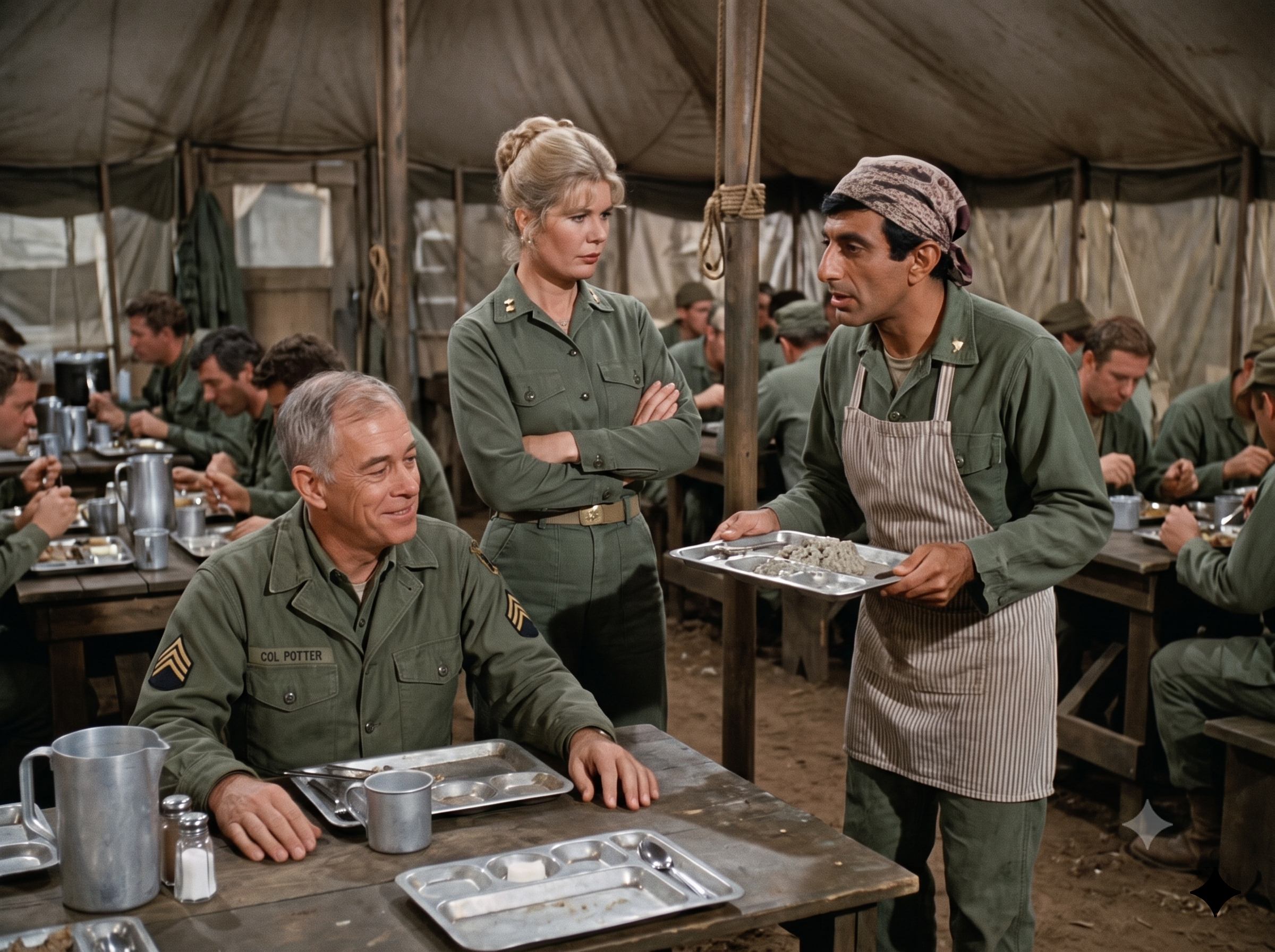
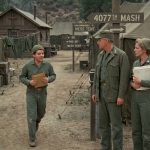
There is a very specific kind of silence that falls over the 4077th Mobile Army Surgical Hospital after a marathon session in the OR.
It is not a peaceful silence.
It is a heavy, ringing quiet, broken only by the scrape of boots on dirt, the distant rumble of artillery, and the low, mechanical hum of the mess tent generators. It was 0630 hours, and the camp was wrapped in a cold morning fog.
Colonel Sherman T. Potter knew this silence in his bones.
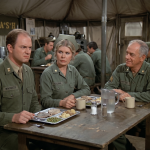
He sat at one of the long, simple wooden tables in the canvas dining tent, both hands wrapped tightly around a tin mug of coffee. The coffee tasted faintly of motor oil and burnt dreams, but it was hot, and right now, that was all that mattered.
He leaned slightly forward over the table, his shoulders carrying the invisible, crushing weight of the past forty-eight hours. His eyes held a weary, dryly amused wisdom. He was bone-deep exhausted, but he was also the anchor holding this ragtag outfit to the earth.
Beside him stood Major Margaret Houlihan.
Even exhausted, Margaret maintained an iron grip on her composure. She was the very picture of military order in a world of chaos. Her arms were folded tightly across her chest, a physical barricade against the madness around her.
She stood as a pillar of focused discipline, projecting a controlled frustration at the sheer, unyielding messiness of their situation. The smell of ether and iodine still clung to her practical, lived-in uniform. She was a professional first, always, but underneath that rigid posture, she felt the exact same desperate fatigue as the old cavalry man sitting beside her.
The mess tent was quiet. The war, for a brief, fleeting moment, was on pause.
Then, the heavy canvas flap of the tent flew open.
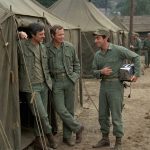
In marched Corporal Maxwell Q. Klinger.
He didn’t just walk into the room; he took the stage. He was dressed in standard issue fatigues, practical and worn, yet his posture was purely theatrical.
He approached the Colonel’s table with the solemnity of a pallbearer carrying a fallen king.
In his hands, he held a dull metal food tray. He held it out before him with expressive, wounded dignity, as if he were presenting the final, damning piece of evidence at a murder trial.
“Colonel,” Klinger announced, his voice vibrating with tragic resonance, echoing off the damp canvas walls. “I am a man of the world. I have experienced many hardships. I have eaten questionable hot dogs at Mud Hens games. I have consumed things in back-alley Toledo diners that would make a billy goat write out its last will and testament.”
Margaret’s jaw tightened. “Corporal, whatever it is, just sit down and eat it. We have all had a very long night, and the Colonel does not have the patience for your morning cabaret.”
Klinger turned his large, wounded eyes toward the Major. “Major Houlihan, with the utmost respect to your rank, your dedication, and your remarkable constitution… this is not a cabaret. This is a cry for justice.”
He dramatically lowered the tray onto the table, placing it right in front of Colonel Potter with a heavy thud.
Potter didn’t flinch. He just slowly lowered his tin coffee mug and peered down at the tray.
Sitting in the center compartment of the dull metal tray was a solitary, unidentifiable lump. It was gray, slightly gelatinous, and possessed a grim, stubborn texture that looked as though it could deflect small-arms fire.
“I ask you, Colonel,” Klinger whispered, pointing a trembling finger at the tray. “What has this innocent camp done to deserve… this?”
The mess tent held its breath. Margaret’s arms folded even tighter, her eyes flashing with a dangerous mix of exhaustion and impending fury.
Potter leaned in closer to the tray, squinting, waiting to see just how far this absurd, early-morning standoff was going to go.
Colonel Potter stared at the lump for a long, quiet moment. The tension stretched tight across the room, thick enough to cut with a scalpel.
“Well, Klinger,” Potter finally said, his voice a dry, gravelly drawl that carried years of patience. “I’ve seen a lot of things in my time. I’ve seen horses refuse to eat better-looking oats. I’ve seen saddle leather that looked more appetizing.”
He picked up a tin fork and gave the gray mass a gentle, exploratory prod. It didn’t yield. It actually seemed to push back.
“I firmly believe,” Potter concluded softly, “that if you put a saddle on this thing, it could ride us all the way to Seoul.”
Margaret let out a sharp, exasperated breath. “Honestly! It’s powdered eggs and reconstituted meat, Corporal! It’s standard military rations. It is designed to keep you alive, not to win a blue ribbon at the county fair!”
“Alive?” Klinger gasped, clutching his chest as if he had been shot. “Major, this thing isn’t food. It’s a biological weapon. If I put this in my body, my stomach will court-martial my mouth. I will be discharging it for the next three days!”
“You are being ridiculous,” Margaret snapped, her professional mask slipping just a fraction, revealing the frayed nerves underneath. “The cooks do the absolute best they can with what the army sends us. We are in the middle of a war zone, Corporal, not a fine dining establishment in Paris!”
“I’m not asking for Paris, Major,” Klinger pleaded, his wounded dignity radiating through the room. “I’m asking for something that doesn’t bounce when you drop it! I’m a sensitive man. My digestive tract requires a gentle touch, a little romance. This… this is a frontal assault on my internal organs.”
Potter looked up from the tray.
He looked at Klinger, standing there with all the righteous, theatrical indignation of a wronged prophet.
Then he looked at Margaret, wound so tight she was practically humming with defensive, nervous energy.
And then, something wonderful happened.
Potter smiled.
It wasn’t a big, booming smile. It was a slow, tired, gentle curving of the lips. The weary wisdom in his eyes gave way to a genuine, fatherly amusement.
He let out a low, rumbling chuckle.
The sound of the Colonel laughing, even quietly, was like a pressure valve releasing in the damp, claustrophobic tent.
Margaret looked at Potter, shocked for a split second. She tried desperately to maintain her fierce, disciplined glare. She truly did. She tightened her arms, lifted her chin, and prepared to scold them both for insubordination and foolishness.
But she was too tired. They were all just too tired.
The eighteen hours of blood, chaos, and fear they had just survived in the operating room suddenly felt a little further away. The heavy shadow of the war lifted, just for a second, replaced by the sheer, magnificent absurdity of this moment.
The corners of Margaret’s mouth twitched. She bit her lower lip, fighting a losing battle against her own humanity.
A soft, stifled laugh finally escaped the Major.
Once Margaret broke, the spell was entirely shattered. Klinger’s theatrical mask dropped. He offered a small, knowing grin, his eyes shining with quiet affection.
He had seen how exhausted they were when they walked in. He knew exactly what he was doing. This wasn’t a complaint about the food; it was a rescue mission for their spirits.
“Alright, alright,” Potter said, waving a hand in surrender, wiping a phantom tear of exhaustion from his eye. “You win, Klinger. As commanding officer of this outfit, I am officially declaring this meal unfit for human consumption. And probably unfit for animal consumption, too.”
“Thank you, sir,” Klinger said, his dignity magically restored. “I shall dispose of it with full military honors.”
“Just throw it in the trash, Corporal,” Margaret said. Her voice was softer now, the harsh, commanding edge completely gone.
She reached out and gave Potter’s shoulder a brief, gentle squeeze—a rare, quiet moment of unguarded tenderness between the two old soldiers.
“Yes, Major,” Klinger said. He picked up the dull metal tray, spinning on his heel with a theatrical flourish, though his step was noticeably lighter as he walked away.
Potter picked up his coffee cup again. The dark liquid inside was cold and bitter, but somehow, the morning didn’t feel quite so bleak anymore.
He looked over at Margaret. She finally uncrossed her arms, letting her shoulders drop, and sat down on the wooden bench beside him. They didn’t need to say anything else.
In the middle of the madness, in a muddy camp halfway across the world, they had found a single, shining moment of grace over a terrible breakfast.
It was just another morning at the 4077th. They were tired, they were freezing, they were entirely too far from home, and they were completely reliant on each other to survive the day.
And somehow, beautifully, that was enough.
In a place where everything was broken, they always knew exactly how to put each other back together.