A Little Piece of Home in the Mud
The afternoon at the 4077th was thick with the kind of oppressive humidity that makes a person forget what a breeze feels like. Inside the tent, the air hung heavy, smelling of damp canvas, stale coffee, and the lingering, clinical scent of antiseptic.
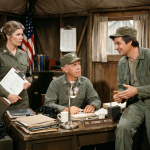
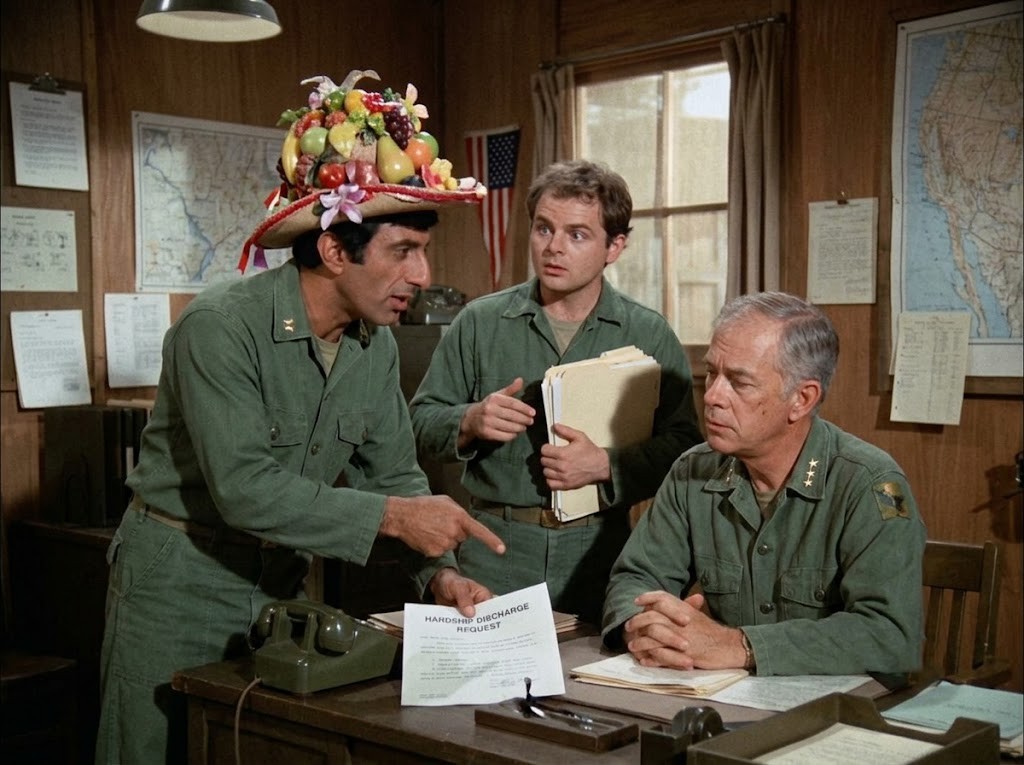
Colonel Potter sat behind his desk, his posture a testament to thirty years of military discipline, though his eyes held that familiar, weary glint of a man who’d seen too many seasons in the mud. He was staring down at a stack of requisitions, but his mind seemed miles away, perhaps back in Hannibal, Missouri.
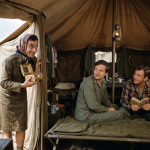
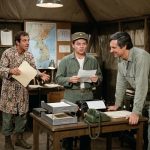
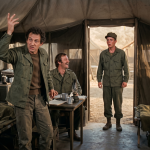
Suddenly, the flap of the tent parted. Max Klinger stepped in, looking like a man carrying the weight of a Parisian fashion house on his shoulders. He was dressed in his usual ensemble of eclectic finery, but today, his pièce de résistance was a straw hat of magnificent, almost absurd, proportions. It was adorned with a massive, silken rose that looked like it had been plucked from a garden at the peak of spring.
Radar, caught in the doorway with his clipboard clutched to his chest like a shield, froze. He peered over the top of his glasses, his face a mask of nervous confusion, as if trying to calculate the tactical significance of a woman’s hat in the middle of a war zone.
Klinger gestured to the hat with a flourish of his free hand, his expression earnest and slightly affronted, as if the colonel were the one failing to appreciate a work of art. “Sir,” Klinger began, his voice echoing with the dramatic flair of a Shakespearean actor, “I’m not asking for a discharge. I’m asking for an aesthetic upgrade. Surely, even in this godforsaken dirt, a man deserves to provide a little shade with some style.”
Potter looked up, his brow furrowing as he processed the sight. For a moment, the silence was absolute. Then, his hand hovered over his desk, his jaw working as he wrestled between a reprimand and a sigh. The tension in the tent felt tight enough to snap. Radar braced himself, clearly expecting the explosion that usually followed such a display.
Potter didn’t explode. He didn’t even yell. Instead, he took off his glasses, rubbed the bridge of his nose, and let out a long, wheezing breath that sounded suspiciously like a laugh being held back by years of decorum.
“Klinger,” Potter said, his voice quiet, lacking its usual bark. “Where in the name of horse sense did you get that thing?”
Klinger’s theatrical posture softened, just a fraction. “Found it in a box of medical supplies, sir. Some misguided soul thought it was a replacement for a basin. I thought it was a crying shame.”
Radar stepped fully into the room, his curiosity momentarily overcoming his fear. “Is it… is it real silk, Klinger?” He leaned in, his eyes wide, looking at the giant rose as if it were a rare, delicate creature from a planet far away.
Klinger nodded solemnly. “The real deal, Radar. It’s got more personality than the whole mess tent combined.”
The humor in the room shifted, shedding its edge of absurdity and becoming something softer, something shared. Klinger looked at the hat, then at the colonel, and his shoulders slumped just a little. The performance was still there, but the exhaustion underneath was visible. He wasn’t just playing a game; he was holding onto something pretty, something normal, in a place that offered very little of either.
Potter leaned back in his chair, looking at the two of them—the boyish clerk and the man who refused to stop dreaming of home, even if he had to wear a hat to do it. The colonel reached for his pipe, his movements slow and deliberate.
“It’s a ridiculous hat, Klinger,” Potter said, his voice gentle. “It’s completely out of uniform. It’s an insult to the dignity of the United States Army.”
He paused, a faint, sad smile touching the corners of his mouth. “But God knows, it’s a better view than what’s out that window.”
Radar let out a small, breathless giggle, and Klinger’s face broke into a genuine, tired grin. For a few seconds, the war didn’t exist. There was no incoming, no list of casualties, no separation from the lives they had left behind. There was just a ridiculous hat, a tired colonel, and the quiet, stubborn grace of men trying to stay human in the middle of a storm.
Klinger adjusted the hat, tilted his head, and gave a mock salute. “I’ll keep it out of the field, sir. Wouldn’t want to distract the enemy with such high fashion.”
Potter waved a dismissive hand, turning back to his paperwork, but his eyes were softer than they had been all morning. “Get out of here, Klinger. Before I decide to charge you for the loss of my peace and quiet.”
Klinger turned and headed for the flap, his stride a little lighter. Radar lingered for a moment, looking at the colonel, a silent understanding passing between them—a recognition that today, for one brief moment, they had all been granted a small, silly reprieve.
In the heart of the 4077th, even a silk flower on a straw hat was enough to remind us that we were still us.