The Light in the Green Room
The hum of the camp generator was the only sound left in the world.
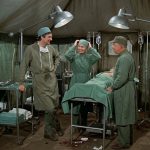
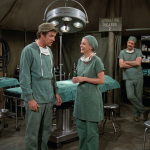
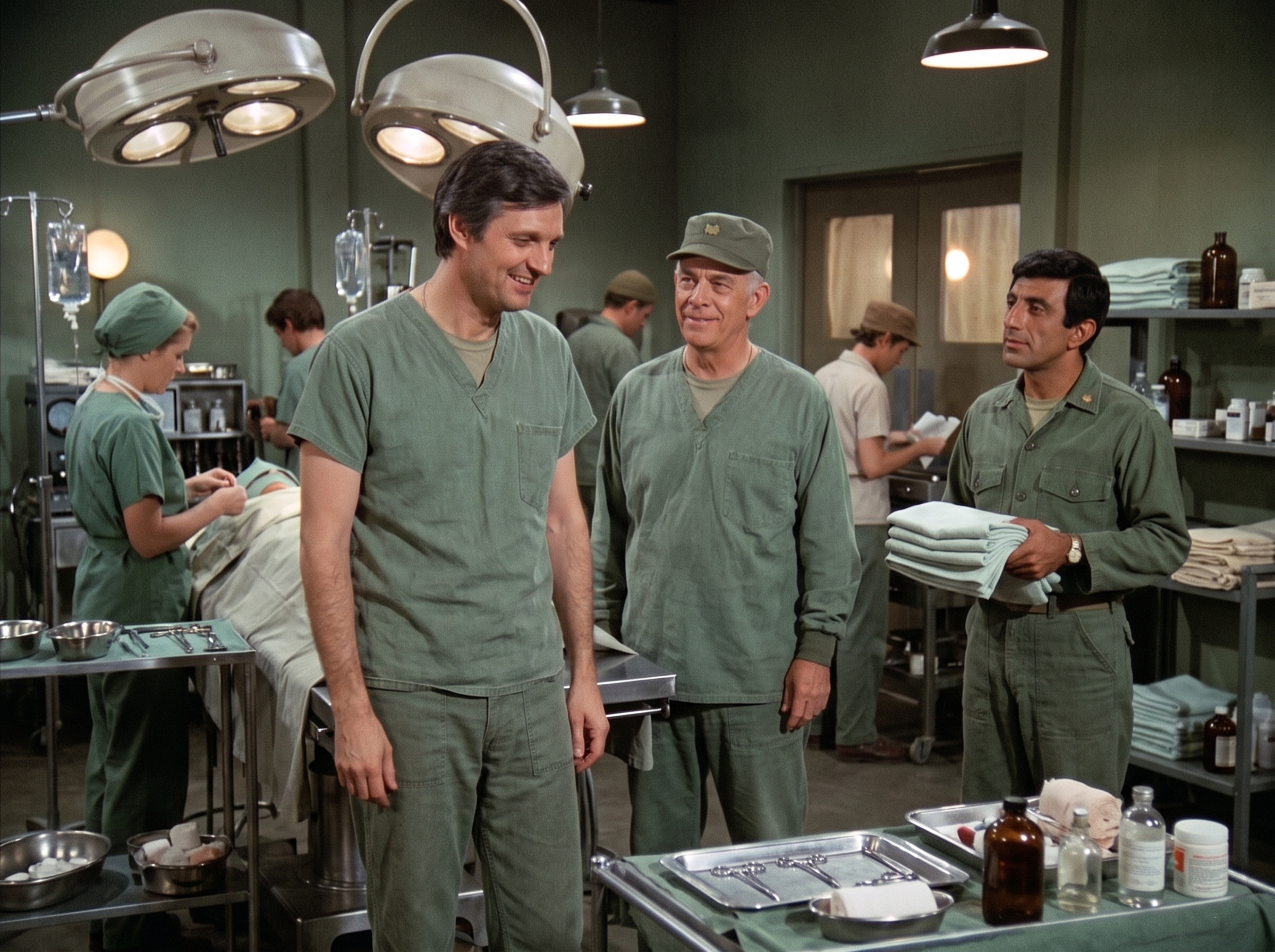
It was a low, steady thrum that rattled the floorboards of the Operating Room, vibrating right up through the soles of their boots. The harsh, bright glare of the overhead surgical lamps beat down on the empty table, casting long, exhausted shadows against the pale green canvas walls.
They had been standing in this room for fourteen hours. Maybe fifteen. Time had long since stopped meaning anything to the surgeons of the 4077th.
The endless parade of litters had finally stopped. The last wounded boy had been patched, bandaged, and gently carried out to Post-Op. The sudden emptiness of the room was almost heavier than the chaos that had filled it all day.
Hawkeye Pierce stood near the surgical table, leaning just an inch of his weight against the cold metal edge. His shoulders were slumped, the dark circles under his eyes standing out starkly against his pale, exhausted face. His green scrub shirt was dark with sweat, sticking to his chest in the stifling heat of the room.
Yet, despite the bone-deep fatigue that threatened to pull him to the floor, Hawkeye wasn’t ready to surrender to it just yet.
He slowly stripped off his rubber gloves, dropping them into a stainless steel basin with a dull, hollow thud. He looked around the quiet room, his eyes scanning the simple, period-appropriate instruments being packed away. The air was thick with the sharp smell of antiseptic and the heavy, unspoken weight of the day’s survival.
If they stayed quiet for too long, the silence would win. If the silence won, the reality of the war would rush back in to fill the gap.
Standing just a few feet away, Colonel Sherman T. Potter watched him.
Potter stood with his hands on his hips, a posture of absolute, calm control. His back was straight, refusing to bow to the exhaustion that he felt just as keenly as the younger men. His sharp eyes tracked Hawkeye’s movements, reading the subtle signs of a surgeon pushed to the very absolute edge of his endurance.
Potter’s face held a look of stern authority, the kind that held the entire camp together when the sky was falling. But underneath that weathered, military discipline, there was a deep, loving warmth. He wasn’t just looking at his Chief Surgeon. He was looking at a son.
In the background, lingering near the supply cabinet, stood Corporal Maxwell Klinger.
For once, Klinger wasn’t wearing a feathered hat or a velvet evening gown. He was in simple, worn olive drab, clutching a thick stack of clean white towels to his chest. He stood quietly in the soft light, waiting to hand them out.
His face showed the same exhaustion as the doctors, but there was something else there, too. A resilient, sly hope. A quiet emotional sincerity that he usually hid behind his theatrical schemes to get back to Toledo. He was watching Hawkeye, waiting for the inevitable spark.
The tension in the room was pulled tight, like a rubber band stretched to its absolute breaking point. The heavy, emotional residue of saving lives in a war zone hung thickly over the empty surgical table.
Hawkeye wiped a forearm across his sweating brow. He looked down at the empty table, then slowly turned his head to look at Potter.
The corner of Hawkeye’s mouth twitched. A small, familiar gleam returned to his tired eyes. The silence stretched out, breathless and heavy, waiting to be shattered.
“You know, Colonel,” Hawkeye said, his voice a raspy whisper that carried perfectly across the quiet room. “If the United States Army was a restaurant, I’d have to send this war back to the kitchen. It is completely undercooked, the service is terrible, and the decor is decidedly lacking in ambiance.”
He offered an amused, teasing smile, a spark of defiance against the crushing weight of the day. “I mean, look at this lighting. How is a guy supposed to enjoy his powdered eggs under this kind of interrogation glare?”
The dry one-liner floated into the air, hanging there for a split second before doing exactly what it was meant to do.
It broke the spell.
Colonel Potter didn’t laugh out loud, but the stern lines of his face instantly softened. The corners of his eyes crinkled with that experienced, fatherly warmth. He let out a low, huffing breath through his nose, shaking his head slowly.
“Pierce, if the Army was a restaurant, you’d have been fired as a busboy on your first day for harassing the waitstaff,” Potter replied, his tone dry as dust but laced with unmistakable affection. “And the only thing you’d be serving is a life sentence in the stockade for insubordination.”
Hawkeye’s smile widened just a fraction, the tension visibly draining from his shoulders. “I resent that, sir. I happen to be an excellent waiter. I just refuse to serve anything less than a decent martini.”
In the background, Klinger stepped forward, bringing the fresh towels into the circle of light.
“I don’t know, Captain,” Klinger chimed in, his voice bringing a sudden, grounded reality to the banter. He held out a crisp, white towel to Hawkeye with a hopeful, sly grin. “If this place was a diner in Toledo, I’d at least be able to get a decent plate of Tony Farraday’s chili dogs. And maybe a bus ticket out the back door.”
Hawkeye took the towel, nodding gratefully to Klinger. “Maxwell, if this were Toledo, I’d buy you all the chili dogs you could carry. In a matching evening gown, of course.”
“Just say the word, sir,” Klinger said, his eyes shining with that unbreakable, sincere resilience. “I’ve got a lovely springtime floral pattern that would go perfectly with mustard.”
The three men stood there in the soft, muted glow of the surgical lamps. The pale greens of the canvas walls suddenly felt a little less confining. The bright whites of the remaining sterile linens didn’t seem quite so harsh.
Hawkeye pressed the towel to his face, letting the rough, clean cotton absorb the sweat and the lingering stress of the long surgical shift. When he lowered it, he looked over at Potter again.
Potter was still watching him, the sternness completely gone now. There was a quiet, mutual understanding passing between them. It was the unspoken language of the 4077th.
They were thousands of miles from home, covered in dirt and exhaustion, surrounded by the madness of a world that didn’t make sense anymore. But in this room, in this one specific moment, they were completely safe.
Hawkeye wasn’t just a drafted doctor who hated the army. Potter wasn’t just a Regular Army colonel trying to keep order. And Klinger wasn’t just a desperate kid trying to fake his way to a Section 8.
They were a family. A strange, mismatched, profoundly tired family, forged in the fires of a mobile army surgical hospital.
Hawkeye draped the towel around his neck, finally letting out a long, ragged sigh that seemed to empty his lungs completely. He leaned back against the surgical table, his posture finally relaxing into the reality of his fatigue.
“Go get some sleep, Pierce,” Potter said softly, the command carrying the gentle weight of a father sending a child to bed. “That’s an order.”
“Yes, sir,” Hawkeye murmured. “Just as soon as I figure out how to tell my legs to start walking again.”
Klinger stepped up beside Potter, holding out the last towel to the Colonel. “I can carry him, sir. For a small fee. Say, a three-day pass to Seoul?”
Potter took the towel, wiping his own hands carefully. “Nice try, Klinger. You’re carrying yourself to your bunk. We’re all off duty until the choppers bring us more company.”
Hawkeye pushed himself off the table, standing up straight on trembling legs. He looked at the empty room one last time, honoring the quiet dignity of the space where they fought their own private war against death every single day.
He walked toward the doors, pausing to clap Klinger on the shoulder and offer a tired, respectful nod to Colonel Potter.
“Goodnight, gentlemen,” Hawkeye said quietly. “See you at the next seating.”
Potter watched him walk out into the cool Korean night, the heavy wooden doors of the OR swinging shut behind him. The Colonel sighed, a sound full of weary gratitude, and turned to Klinger.
“Turn out the lights, son,” Potter said softly. “Let’s go home.”
Klinger smiled, a genuine, completely sincere smile that had nothing to do with schemes or dresses. “Yes, sir.”
The overhead lamps clicked off one by one, leaving the pale green room in peaceful, well-earned darkness.
In a place where tomorrow was never promised, the quiet moments of shared survival were the closest thing they had to a miracle.