A Cup of Comfort in the Storm
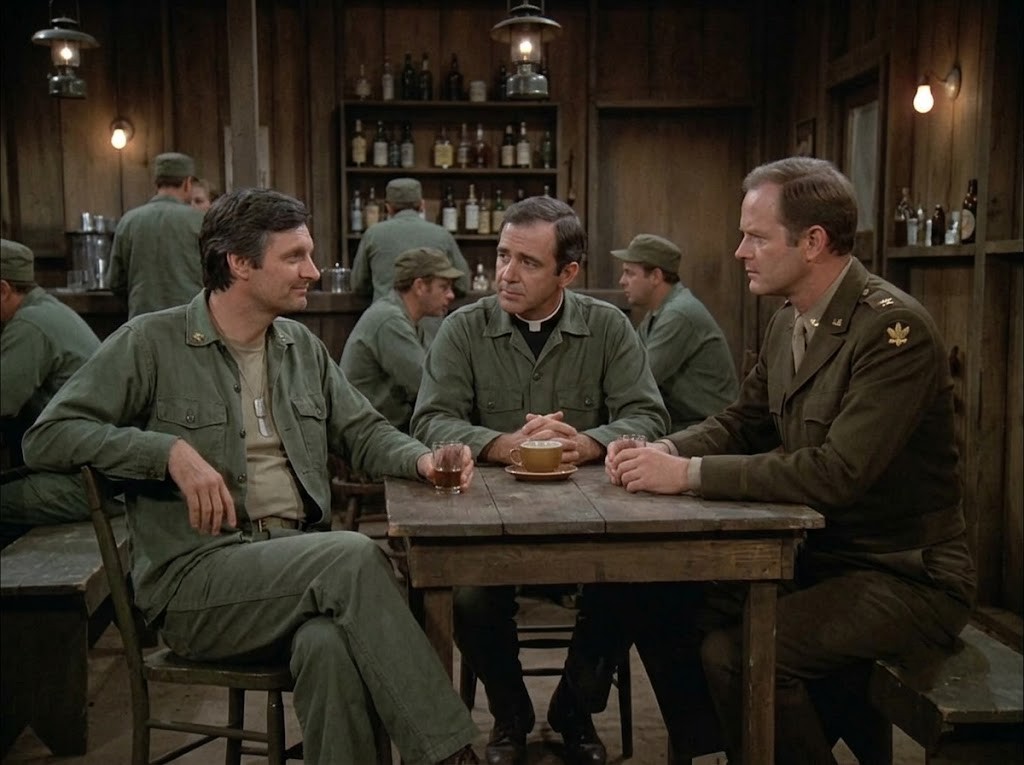
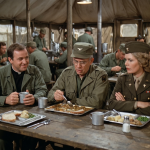
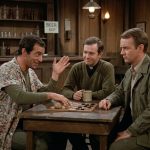
The Swamp can get small when the mud outside is ankle-deep and the artillery in the distance won’t stop its low, rhythmic rumbling. But tonight, the Officers’ Club felt even smaller, wrapped in the dim, yellow glow of kerosene lamps and the heavy scent of cheap whiskey and damp olive drab.
We had been in the OR for fourteen hours straight, stitching up pieces of boys who should have been home going to senior proms or driving tractors through Iowa cornfields. My hands were still cramping, and the smell of antiseptic seemed permanently lodged in the back of my throat.
I sat back, crossing my legs and cradling a glass of amber liquid that tasted mostly like paint thinner, trying to find a joke to break the silence. Across the scarred wooden table sat Father Mulcahy, his hands clasped tightly over a modest mug of tea, and Charles, looking as though he had been mistakenly detoured to a logging camp on his way to the Boston Symphony.
“You know, Father,” I said, leaning back and letting a tired smile slide across my face, “if this war goes on much longer, I’m going to forget what a real highball tastes like. This stuff could strip the rust off a Jeep.”
Mulcahy smiled gently, his eyes filled with that quiet, infinite patience that somehow kept the 4077th from spinning off its axis. “Now, Hawkeye, count your blessings. It’s warm, we have a roof over our heads, and for the moment, the choppers are grounded.”
Charles didn’t smile; he just stared down at the table, his fingers twitching slightly against his sleeve, his usual sharp wit buried under a mountain of exhaustion. He looked up, his jaw set in that rigid, aristocratic line, but his eyes were wide, holding back a shadow that none of us wanted to name.
“It isn’t the quality of the spirits that offends me, Pierce,” Charles said, his voice unusually quiet, missing its standard theatrical boom. “It is the relentless, suffocating mediocrity of this entire geographic mistake.”
He paused, his gaze drifting toward the shelves of bottles behind the bar, where a few tired soldiers were trying to forget the color of blood. “Today… there was a boy from Maine. He spoke with an accent that reminded me of summers in Kennebunkport. He kept asking if the snow had melted yet.”
Charles stopped abruptly, swallowing hard, his knuckles turning white as he gripped the edge of the table.
The silence that followed was heavy, the kind that settles over men who have seen too much and said too little. Mulcahy shifted slightly, his eyes locked onto Charles with a deep, pastoral concern, while I let my smile fade, the joke dying on my lips.
“He made it, Charles,” I said softly, the armor of my sarcasm slipping away completely. “You closed him up yourself. He’s on a bus to Seoul right now.”
Charles looked at me, his eyes searching mine as if looking for a guarantee that neither of us had the right to give. “For how long, Pierce? To what end? We patch them up, we send them back, and the wheel just keeps turning.”
Mulcahy reached out, his hand resting gently next to Charles’s tightly clenched fist. “We cannot fix the world in an afternoon, Major. But for that boy, today, you were the difference between darkness and seeing the spring thaw again. That is not mediocrity. That is a miracle.”
Charles stared at the Father’s hand, his shoulders dropping a fraction of an inch as the tension slowly drained out of him. He looked down at his own hands—the hands of a brilliant surgeon, currently shaking just a little bit from fatigue and heartache.
“I suppose…” Charles muttered, looking away, trying to recapture his defenses. “I suppose the boy had some semblance of resilience. Typical New England stock.”
I took a sip of my terrible drink, feeling a sudden, overwhelming wave of affection for the pompous Brahmin sitting across from me. We fought, we insulted each other’s typing, we stole each other’s robes, but in the dark, we were all we had.
“Come on, Charles,” I said, clinking my glass against his sleeve. “Drink your terrible liquor. Tomorrow we’ll go back to being mortal enemies, but tonight, you’re just another tired doc who did good.”
Charles looked at me, a tiny, almost imperceptible softening appearing around his eyes, and he gave a single, dignified nod. The artillery rumbled again in the distance, but inside the shack, under the warm light of the lanterns, the world felt a little bit safer.
Sometimes the best medicine at the 4077th didn’t come from a bottle in the pharmacy, but from the quiet understanding of the people sharing your table.