The Architecture of Hope and Distilled Grace
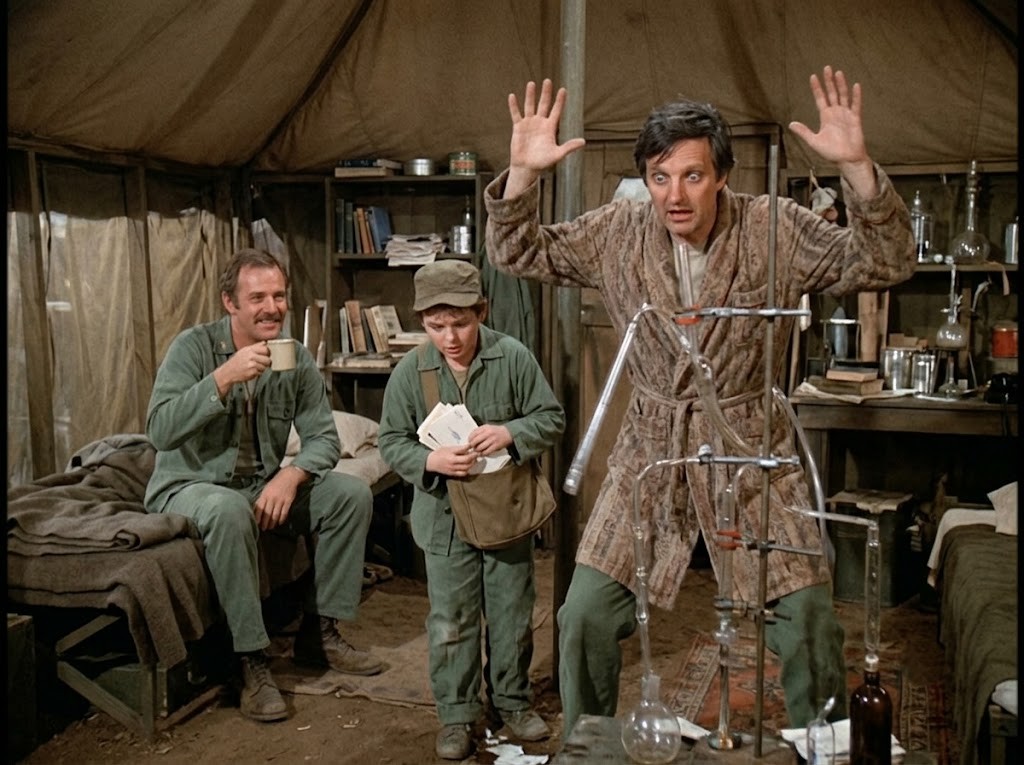
The Swamp always smelled of three distinct things: damp canvas, floorboards that had given up the ghost, and the sharp, unapologetic bite of surgical alcohol. On an afternoon where the heat felt like a wet wool blanket thrown over the entire Korean peninsula, that third scent was the only thing keeping the madness at bay.
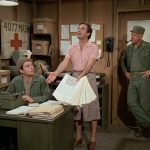
Hawkeye Pierce stood frozen in the center of the tent, his arms raised high in the air like a man staring down the business end of a firing squad. His eyes were wide, fixed on a precarious junction of glass tubing and rubber hoses that constituted the true heart and soul of the 4077th. The still was his cathedral, his laboratory, and his therapist all rolled into one beautiful, fragile contraption.
“Don’t move, nobody breathe, don’t even think about the color green,” Hawkeye hissed, his voice a frantic whisper. “If anyone so much as sneezes, this delicate ecosystem of sanity will collapse into a puddle of highly flammable heartbreak.”
Sitting comfortably on his cot in the background, B.J. Hunnicutt took a slow, casual sip from his tin mug. A relaxed, easy smile played under his mustache as he watched his roommate’s theatrical display of panic. For B.J., watching Hawkeye negotiate with the laws of chemistry was better than any matinee back home in San Francisco.
“Relax, Hawk,” B.J. said, his tone grounded and steady. “The last time it made that gurgling sound, it just meant the plumbing was lonely. Besides, you’re scaring the mail carrier.”
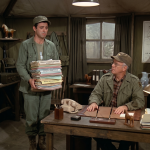
Between them stood Radar O’Reilly, looking small and perpetually overwhelmed in his oversized fatigues and mud-dusted cap. He was clutching a thick stack of envelopes against his chest, his eyes cast down toward the letters as if trying to read through the paper with sheer force of will. He didn’t look up at Hawkeye’s raised hands; he was caught in his own quiet world of administrative anxiety.
“It’s not just the plumbing, BJ,” Radar murmured, his voice cracking slightly as his fingers nervously sorted through the mail. “I’ve got letters here. Lots of ’em. And one of them is from Crabapple Cove.”
Hawkeye didn’t lower his hands, but his expression softened, the manic energy in his eyes suddenly giving way to a raw, exposed vulnerability. Any mention of Maine, of his father, of the quiet docks and the smell of saltwater, could pierce through his armor faster than a piece of shrapnel.
“Is it from Dad, Radar?” Hawkeye asked, his voice losing its theatrical edge, replaced by a quiet, sudden ache. “Tell me he didn’t try to fix the roof himself again.”
“No, sir,” Radar whispered, finally looking up with an expression that made B.J. slowly lower his tin mug. “It’s not from your dad. It’s from the town council. They… well, they sent a packet.”
The still gave a sudden, sharp *clink* as a heavy bubble forced its way through the glass tube, but nobody looked at it now. The casual humor that usually insulated the room felt incredibly thin, stretched to the breaking point by the look on the young clerk’s face.
Radar held out a large, heavy envelope that looked entirely too official for a sleepy town in Maine, his hands trembling slightly as he waited for Hawkeye to take it.
—
Hawkeye slowly let his hands drop to his sides, the colorful pattern of his bathrobe suddenly looking incredibly out of place against the drab olive drab canvas of the tent. He stepped around the fragile glass tubing, his movements uncharacteristically slow and deliberate, and took the packet from Radar’s hands.
B.J. stood up from his cot, the easy smile completely gone from his face, replaced by the quiet, solid support that defined their entire friendship. He didn’t crowd Hawkeye; he just stood close enough to let him know he wasn’t standing alone in the mud.
“What is it, Hawk?” B.J. asked softly, his hand resting on the wooden frame of the still.
Hawkeye tore open the envelope, his fingers clumsy as he pulled out a stack of neatly typed pages and a handful of photographs. He stared at the top page for a long moment, his eyes scanning the words as the silence in the Swamp grew heavier than the artillery rumbles in the distance.
Suddenly, a dry, familiar voice cut through the tension from the tent flap. “Alright, what’s the holdup in here? The canvas is sagging, the coffee is cold, and I can hear Pierce’s brain cells grinding all the way from my office.”
Colonel Potter stepped into the tent, his hands tucked into his pockets, his wise, fatherly eyes immediately taking in the scene. He looked at Hawkeye’s pale face, then at B.J.’s protective stance, and finally at Radar, who was still holding the rest of the mail like a shield.
“Everything alright, son?” Potter asked, his voice dropping its military bark, replacing it with the gentle tone of a country doctor who had seen every kind of human pain imaginable.
Hawkeye looked up, a strange, breathless laugh escaping his lips—a sound that was half a sob and half a chuckle. “They’re building a new wing on the community clinic back home,” he said, his voice shaking. “The town council… they raised the money. They’re naming the children’s ward after me.”
Radar let out a small, relieved breath, a bright smile breaking across his young face. “They say everybody in town donated, Captain. Even old Mr. Cloutier, and he hasn’t spent a dime since the Hoover administration.”
B.J. clapped a heavy, warm hand onto Hawkeye’s shoulder, shaking him gently. “The Benjamin Franklin Pierce Wing for Incurable Wisecrackers. I like the sound of that.”
“They sent pictures of the foundation,” Hawkeye whispered, staring at a black-and-white photograph of a dug-out trench in the Maine soil, so different from the trenches dug for survival a few miles north of their camp. “My dad is standing right in the middle of it, holding a shovel and looking like he personally invented the concept of pride.”
Major Margaret Houlihan chose that moment to march into the tent, a stack of supply requisitions in her hand, her posture rigid and professional. “Pierce, if you don’t sign these—” She stopped mid-sentence, her sharp eyes immediately picking up on the emotional residue in the room.
She looked at the photographs in Hawkeye’s hand, then at the gentle expression on Colonel Potter’s face. The strict military exterior softened, her shoulders dropping slightly as a quiet, genuine tenderness showed through her usual armor.
“It’s beautiful, Hawkeye,” Margaret said softly, stepping closer to look at the picture over his arm. “Your father must be absolutely over the moon.”
“He looks about ten feet tall,” Hawkeye admitted, rubbing his eyes with the back of his hand, trying to laugh away the moisture building there. “Which is quite a feat for a man who still wears his trousers pulled up to his ribs.”
From the corner of the tent, Father Mulcahy peeked in, his gentle face radiating kindness as he took in the gathering. “I couldn’t help but hear the good news from the compound, up to and including the Hoover administration reference. Truly, Benjamin, it is a testament to the lives you’ve touched, both here and across the sea.”
Even Charles Emerson Winchester III appeared at the edge of the doorway, his chin held high, looking thoroughly annoyed by the lack of privacy but unable to entirely hide the flicker of genuine respect in his eyes. “A clinic in Maine,” Charles murmured, sniffing thoroughly. “How appropriately rustic. I suppose they will celebrate with an extra ration of maple syrup and a very loud town meeting.”
“Shut up, Charles, and have a drink,” B.J. said, though there was no malice in it, only the comfortable rhythm of their shared captivity.
Hawkeye looked around at the faces filling the cramped, messy space of the Swamp—the colonel who kept them sane, the nurse who kept them disciplined, the priest who kept them hopeful, and the friends who kept them alive. The war was still waiting outside the canvas, relentless and loud, but inside, for just a few minutes, the world was perfectly still.
He turned back to his beloved glass contraption, which gave another cheerful, rhythmic bubble as the first clear drop of homemade gin dripped into the collection jar.
“Well,” Hawkeye said, his classic wit returning like an old friend, though his eyes were still bright with gratitude. “If I’m going to have my name on a building, I’d better make sure the honorary chairman is properly lubricated. Radar, grab some mugs. Colonel, I believe you have the first toast.”
In the heart of the mud and the madness, they found that home wasn’t just a place they left behind, but a quiet promise they kept alive for each other every single day.