The Small Victory and the Pink Floral Apron
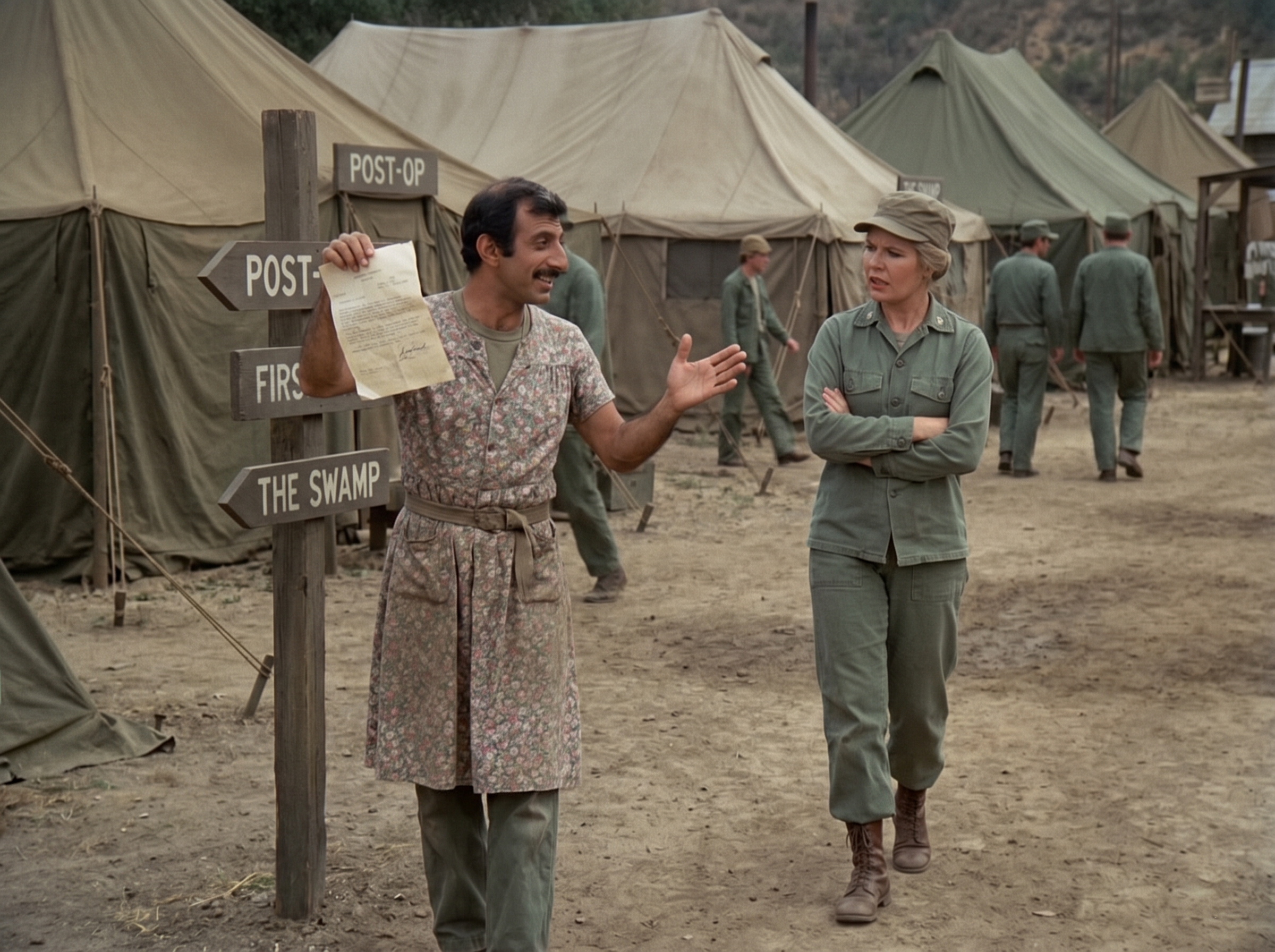
The dust of the 4077th’s compound gets everywhere—your coffee, your boots, and sometimes, it feels like, into the very thoughts in your head.
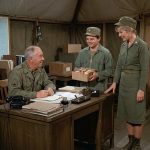
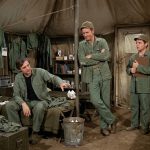
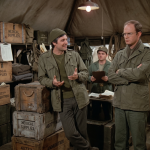
On days like this, with the heat beating down on the faded canvas tents, small things loom large. The sight of Corporal Max Klinger, standing firm in a patterned pink floral apron over his fatigue pants and holding out a weathered sheet of paper, was standard operating procedure for our eccentric world. Major Margaret Houlihan, her uniform crisp and her arms crossed, gave him that look that could cut glass.
“Klinger, explain why I’m looking at you, a non-commissioned officer, dressed as a flower patch,” Margaret’s voice was even, professional, but beneath it, the fatigue of the war’s grind and a long post-op was palpable. In a unit this tired, the smallest diversion from the rules could feel like an anchor in a storm, or just another annoyance.
Klinger, a man whose performance art could fill an entirely different kind of theater, just flashed that winning smile. It was the smile of someone who saw opportunity where others only saw trouble.
“It’s not an apron, Major! It’s a message! A sign from above, an omen of change! It arrived with the mail call, and it’s from the one place on this godforsaken peninsula where order, sanity, and pink florals still rule!” He brandished the paper like a holy text, his expression earnest, his eyes wide, gesturing with his free hand. He was trying to bring a little drama, maybe a little joy, to a dusty day. He was trying to be his best self, the comedian who kept us afloat.
“A letter, Klinger? And from whom? Have you heard from your fictional Aunt Minnie in Toledo again?” Margaret was used to the act, and her crossed arms were a shield against both the silliness and the fatigue. She wanted efficient reports and a sterile environment, not theater and floral patterns on the parade ground. Her gaze was weary, the memory of wounded patients a heavy weight.
The moment hung there in the dusty air, a small stalemate in our little found family.
Klinger’s grin didn’t falter; it just shifted, becoming less of a performance and more of a genuine attempt at shared laughter. “No, Major! It’s from the orphanage in Seoul. The new headmistress, she sent a letter of thanks. Apparently, the pink floral print we sent down? The one I secured from that rather confused QM supply sergeant at Kimpo? They made curtains for the main room!”
A small ripple seemed to go through Margaret. Her posture softened, just a fraction. The crossed arms loosened. Klinger’s performance was always a joke, but his heart, particularly for those kids, was never a comedy act. The orphanage had been a shared, quiet project of the entire 4077th, a beacon of hope we could focus on when everything else seemed to be falling apart.
“They made curtains?” Margaret repeated, the official edge of her voice melting away to a tired tenderness. “Out of that ridiculous print?”
Klinger nodded vigorously, a quiet pride replacing his usual flourish. “Every window. She says it makes the whole place feel warmer, like… well, like a home. She wanted to thank the officers and the entire camp. They even wrote down the names of all the nurses who sent clothes and the doctors who sent medical kits.”
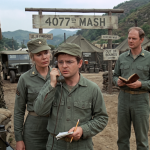
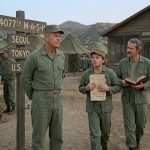
Behind him, other figures in fatigues were moving, the busy life of the camp continuing. But for a moment, the world narrowed down to these two, standing on a patch of dusty earth near the famous ‘Swamp’ and ‘Post-Op’ signs. A small victory, earned with a ridiculous apron and some floral print, in the middle of a world that was often gray and brutal.
Margaret looked at the letter in Klinger’s hand, then up at his hopeful face, framed by his cap. She looked at the pink floral apron, a symbol of his eccentricity and, now, of a quiet success for some children who had so little.
A small, genuine smile finally reached her tired eyes. “The print was absolutely hideous, Klinger,” she said softly, her voice missing its usual command. “Utterly non-regulation. A violation of several uniforms and Supply and Logistics guidelines. But… I suppose curtains are different.” She took a breath, letting the moment sink in, the weary professional allowing herself a quiet moment of tenderness. “Thank you, Corporal. You can tell the orphanage that we’ll look for more curtains. We’ll find some that are a bit less… pink.”
The tension broke, replaced by a quiet warmth. Klinger beamed, his apron not a protest against authority, but a badge of shared accomplishment. In the endless dust and the terrible noise of helicopters, this small victory was a reminder of why we fought, not for flags or borders, but for moments of quiet decency, a little warmth, and the simple, human hope of curtains made from a silly pink floral print.
Sometimes, amidst the dust and the loss, the only victory we could find was the simple warmth of shared humanity.