A Cup of Grace in the Middle of Nowhere
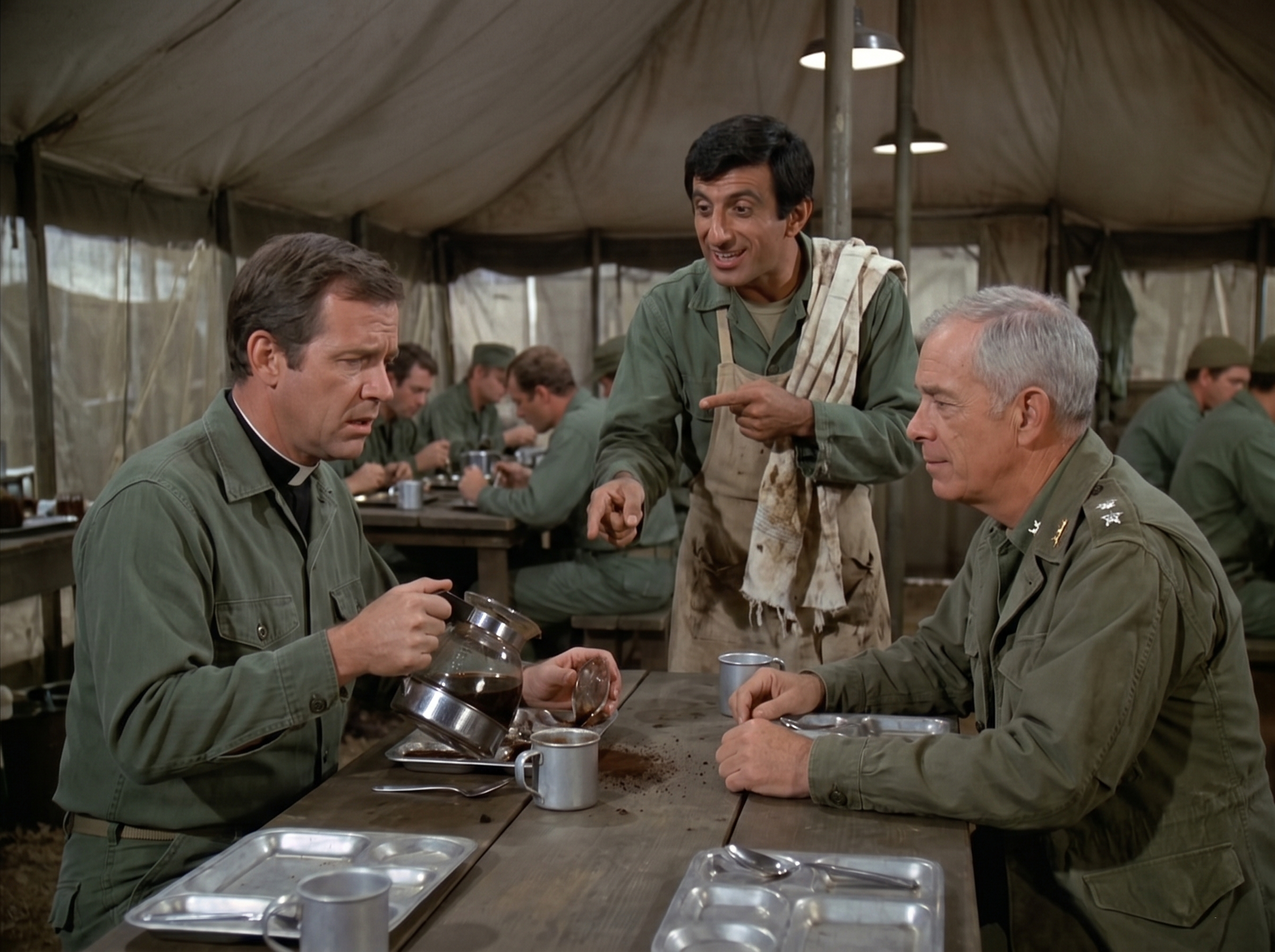
The mess tent smelled exactly like everything else in Korea: damp canvas, scorched coffee, and the lingering, stubborn scent of sheer exhaustion.
It was 03:00 hours, or maybe 14:00—time had a way of losing its shape at the 4077th.
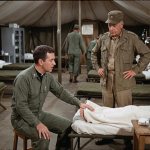
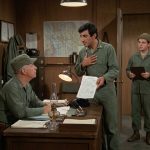
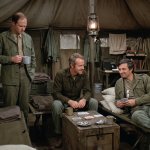
Father Mulcahy sat at the wooden table, his shoulders slumped just enough to betray the weight of a long night in Post-Op.
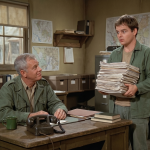
Across from him, Colonel Potter leaned back, his eyes tracing the grain of the rough-hewn table, his usual steel-trap focus momentarily blurred by the haze of duty.
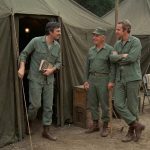
Klinger had appeared out of thin air, a stained apron cinched over his fatigue jacket, his face twisted into a look of mock-exasperation.
He was pointing a finger at the center of the table, his eyes wide, gesturing wildly at the catastrophe unfolding between them.
A coffee pot tilted in the Father’s steady but tired hands, pouring dark, bitter liquid not into a cup, but directly onto the table, splashing across the wood like ink on a map.
Mulcahy blinked, staring at the growing puddle, his mouth slightly agape as he realized he’d missed the mark entirely.
“Father!” Klinger shouted, his voice echoing off the tent poles with a frantic, theatrical flair. “I know we’re trying to build character with the swill they call java, but I’m fairly certain it’s supposed to stay inside the mug!”
The Colonel looked down, then up at the Padre, a slow, crinkling smile forming at the corners of his eyes.
Mulcahy let out a soft, embarrassed sigh, his grip on the handle loosening, his eyes meeting the Colonel’s with a look of pure, defeated surrender.
The silence that followed wasn’t tense—it was heavy with the shared knowledge that they were all, quite simply, run completely dry.
Then, the Colonel reached out a hand, his expression softening into something so profoundly fatherly that it made the very air in the tent feel colder, and he whispered, “Don’t worry, Padre—I think the table was thirsty, too.”
Klinger let out a dramatic groan, throwing his hands up toward the canvas ceiling before grabbing a rag to salvage the situation.
“Thirsty? Colonel, this table is the only thing in this camp that’s actually had a decent drink all day,” Klinger muttered, though the sharpness was gone from his voice.
He wiped the spill with a rhythmic, practiced motion, his movements surprisingly gentle for a man who spent his life trying to get out of the Army.
Mulcahy watched him, a small, humble smile tugging at his lips, the kind of smile that only exists when you’ve spent your life forgiving others for being human.
“I apologize, gentlemen,” Mulcahy said softly, setting the pot down. “I fear my mind was still back in the ward, wondering if young Henderson is going to make it through the night.”
The humor evaporated, replaced by that familiar, crushing reality that lived just outside the tent flaps.
Colonel Potter didn’t look away. He didn’t offer a canned platitude or a stiff military directive.
He simply reached out and placed his hand on the table, right next to the Father’s, his calloused fingers grounding the space.
“Henderson’s a tough kid, Father,” Potter said, his voice low and steady as a heartbeat. “And he’s got the best hands in Korea working on him. You did your part. Now, you’ve got to let the coffee do the rest.”
Klinger paused in his scrubbing, looking between the two men—the man of God and the man of war—and for a split second, the performance vanished.
His shoulders dropped, and he looked just like any other kid a long way from home, caught in a moment of quiet, unspoken connection.
He grabbed a fresh mug, filled it, and slid it toward the Padre with a respectful nod that felt more like a prayer than a gesture of service.
“Drink it, Father,” Klinger said quietly. “It’s not good, but it’s hot, and it’s right here.”
Mulcahy took the mug, wrapping both hands around the tin as if it were a talisman.
For a long minute, no one spoke, and the sounds of the camp—the distant rumble of a jeep, the wind flapping the canvas, the low hum of distant generators—faded into a peaceful, rhythmic background.
They were three very different men, united not by rank or duty, but by the simple, fragile mercy of sitting together in the dark.
They were exhausted, they were thousands of miles from anywhere they belonged, and they were surrounded by a war that made little sense.
But as the steam curled up from the mugs and the Colonel shared a weary, knowing look with the Padre, the shadows in the tent seemed a little less daunting.
They were part of a family that didn’t choose each other by blood, but by the shared weight of the heavy days they survived together.
As the light began to shift, hinting at a new day they weren’t quite ready for, they stayed seated, drawing strength from the shared quiet.
It was just a cup of coffee, a spilled mess, and a few minutes of stillness, but in the heart of the 4077th, it was everything.
Sometimes, the greatest service we can offer is simply to sit and be present for one another.