The Little Sign of Home
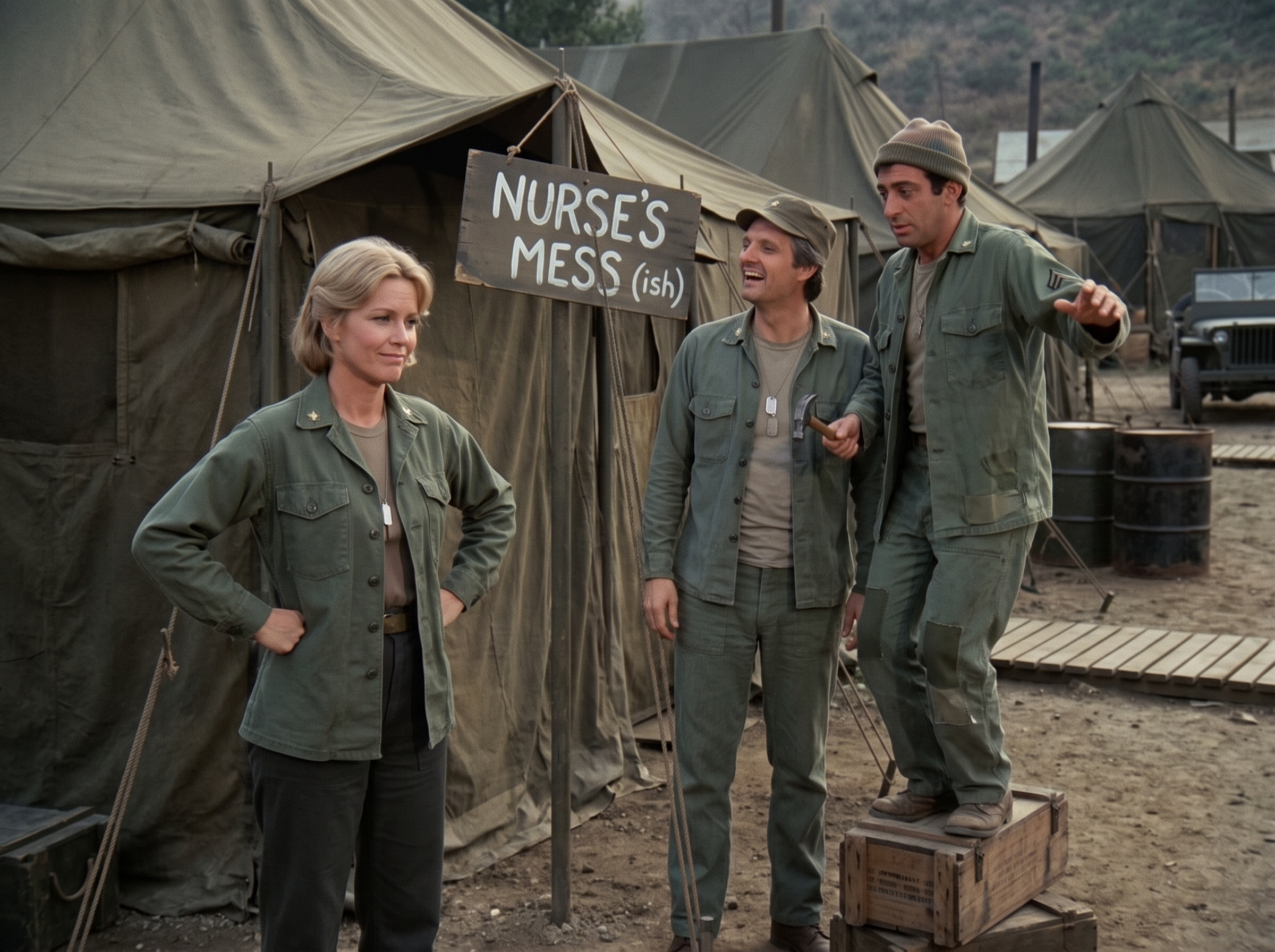
The afternoon sun was doing its best to turn the 4077th into an oven, but the air inside the compound was thick with something else—the quiet, stubborn hum of people trying to forget where they were.
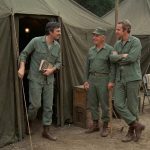
Margaret stood outside the tent with her hands firmly on her hips, her expression a masterclass in controlled exasperation. It was the look she’d perfected over years of managing chaos, a mask of iron that barely hid the exhaustion settling deep in her bones.
Right in front of her, Hawkeye and Trapper—or perhaps it was B.J., the faces of his conspirators often blurred into the same brand of trouble—were at it again. A handmade sign, crooked and defiant, hung above the entrance to the nurses’ quarters: “NURSE’S MESS (ish).”
It was the “ish” that really got to her.
Hawkeye was laughing, that bright, frantic sound he used to keep the darkness at bay, while his partner stood precariously on a wooden supply crate, hammer in hand, pretending to be a master carpenter. The absurdity of it was sharp, a jagged little splinter of humor in a day that had seen too many litters pass through the OR.
Margaret watched them, her jaw set, but her eyes weren’t quite as cold as she wanted them to be. She was ready to deliver a lecture that would peel the paint off the tents, to remind them that she was a Major and they were, at best, glorified children with medical degrees.
She took a sharp breath, her hands tightening on her belt, ready to launch. But before she could speak, the man on the crate shifted his weight. The old, splintered wood groaned, the crate wobbled violently, and for one terrifying, silent second, he teetered on the edge of a very clumsy, very public disaster.
The wood held, but the sudden sway sent a ripple of genuine panic through the group. The laughter died in Hawkeye’s throat, replaced by a sudden, protective reaching out. It was a reflex—the same one they used when the shelling got close, or when a patient was slipping away on the table.
The man on the crate steadied himself, his face flushing a deeper shade of red, and suddenly the tension in the air didn’t evaporate—it transformed.
Margaret didn’t scream. She didn’t lecture. She watched the way Hawkeye’s hand had instinctively caught the tent pole to keep his friend from falling, and the way the “climber” had instinctively reached for the support of the very tent he was joking about.
The anger drained out of her, leaving behind only the profound, aching fatigue of a woman who had seen too much and fought too hard to keep her people alive. She let her hands drop from her hips, her posture softening.
“If you fall and break your neck,” she said, her voice lacking its usual steel, “I’m going to be the one who has to sign the paperwork. And I’ve already done enough paperwork to sink a battleship.”
Hawkeye looked at her, his grin fading into something quieter, something more honest. He saw the flicker of vulnerability she usually kept under lock and key. He knew the joke wasn’t really about the sign, and it wasn’t about the mess hall, either.
It was about marking their territory. It was about saying, *We are here, we are still us, and we haven’t lost our minds yet.*
“Major,” Hawkeye said, his voice dropping the theatrical edge. “We just thought the nurses needed a more accurate description of the food. ‘Mess’ felt a little too generous.”
The man on the crate hopped down, finally placing the hammer on a smaller box with a soft *thud*. The silence that followed wasn’t heavy anymore. It was the comfortable, weary silence of family.
They stood there for a moment in the dust of the Korean hillside, three people who had no business being friends, bound together by the impossible circumstances of a war they didn’t ask for. They were tired, they were dirty, and they were a long way from home.
But for that one moment, under the shade of a crooked sign, the war felt like a distant, muffled radio signal. They didn’t need to say anything else. They didn’t need to fix the sign.
They just stood there, catching their breath, grateful for the simple, fragile grace of being together.
In the heart of the madness, the only thing that really kept us sane was the company we kept.